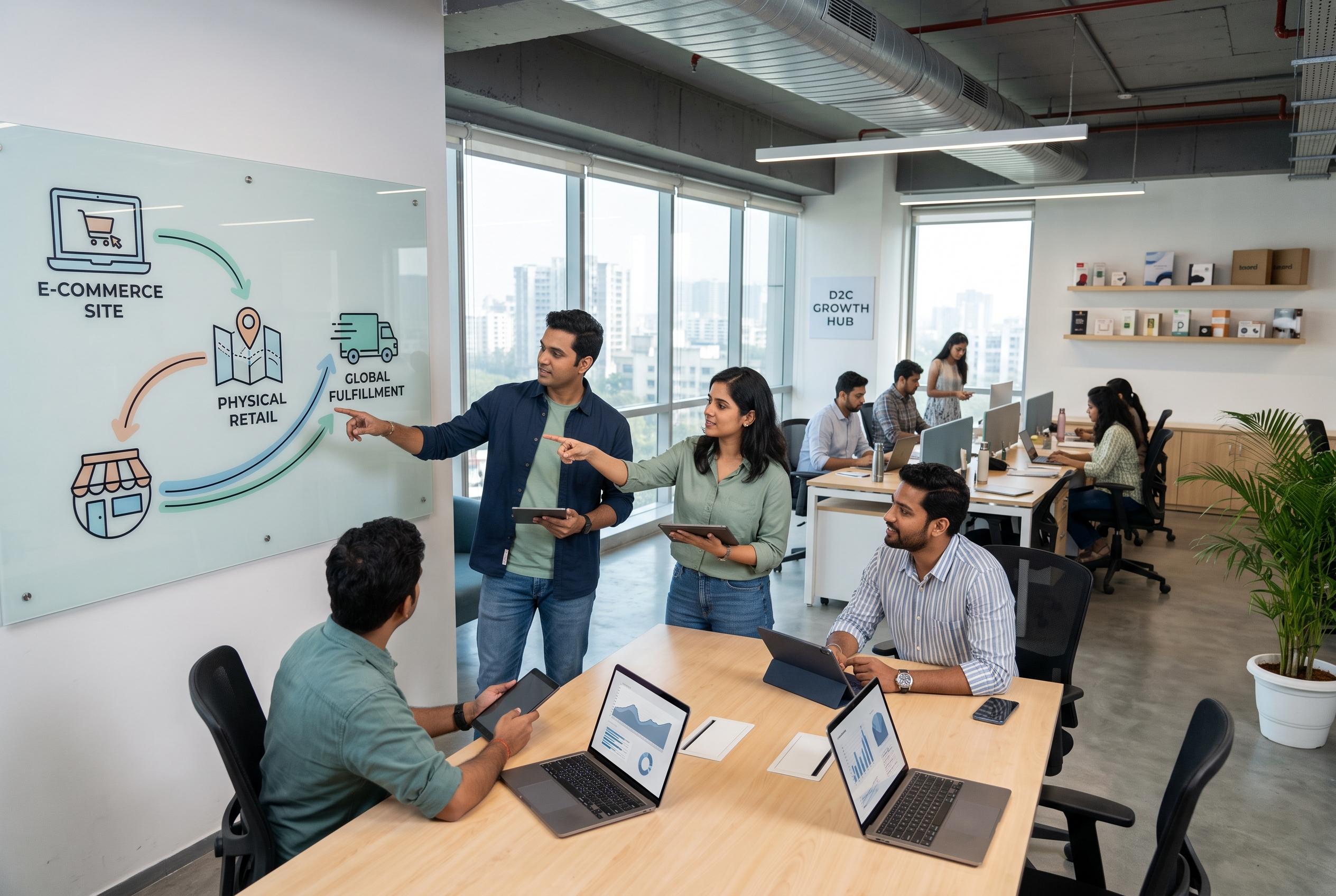

India’s direct-to-consumer market is shifting beyond website-first models to embrace omnichannel retail, as the first D2CX Runway accelerator showcases the growth and maturation of early-stage consumer brands amid rising competition and investor interest.
Inc42 and Rukam Capital have brought together 14 early-stage consumer brands for the first D2CX Runway accelerator, underscoring how India’s direct-to-consumer sector is moving beyond its website-first roots towards a more layered retail model. The seven-week programme ended with Demo Day on August 7, 2026, in New Delhi, where founders pitched to investors and operators against a backdrop of a market that is increasingly being shaped by omnichannel distribution, quicker route-to-market decisions and sharper focus on repeat purchases.
Industry research suggests the timing is significant. One report on India’s D2C landscape said the market could reach $100 billion by December 2026, while another put the sector on course for about $15 billion by FY26 with steady growth beyond that. Both point to the same broad shift: digital-first brands can no longer rely on online channels alone, and many are now pairing marketplaces and their own websites with quick commerce, offline retail and other touchpoints to keep growth moving. Venture funding also remains active, with one industry note saying D2C brands secured ₹2,450 crore in Q1 2026, much of it going to companies already pursuing multi-channel expansion.
That evolution reflects the pressure on young consumer businesses. Research cited in the ecosystem says performance marketing costs have risen, margins are under strain and profitability depends heavily on repeat buying. Another report found that brands with repeat purchase rates above 25% enjoy materially stronger margins than those below 15%, while smaller cities are contributing more to new orders than before. In that context, accelerators offering operational guidance, brand-building help and fundraising preparation are becoming as important as capital itself.
The cohort selected for D2CX Runway spans food, fashion, babycare, jewellery, accessories and automotive, and includes both bootstrapped businesses and venture-backed startups. Among them are 10on10 Foods, 41 Foods, Carvve, Gopiprem, Lemonlords, MEECHU, Nuvie, QB Men, ROOVI, Sawsee, Sockscarving, Sweetch, Lililo and MHYTH. Several already claim multi-crore annual revenue, suggesting the accelerator is working with companies that are past the idea stage and now trying to professionalise scale, sharpen distribution and deepen customer loyalty.
The mix also mirrors the wider direction of India’s leading consumer brands. Established names have already shown that a digital-first start can mature into a broader retail presence, and newer players in the D2CX Runway cohort appear to be following a similar path from the outset. Whether they are selling stone-ground flours, silver jewellery, athleisure or car accessories, the common thread is clear: the next phase of India’s D2C market is likely to reward businesses that can combine product differentiation with operational discipline and a credible presence wherever customers choose to buy.
Disclaimer: This article is intended to inform and educate, not to recommend or endorse any financial product, investment or strategy. Please consider your own financial circumstances and seek professional advice where appropriate before making financial decisions.