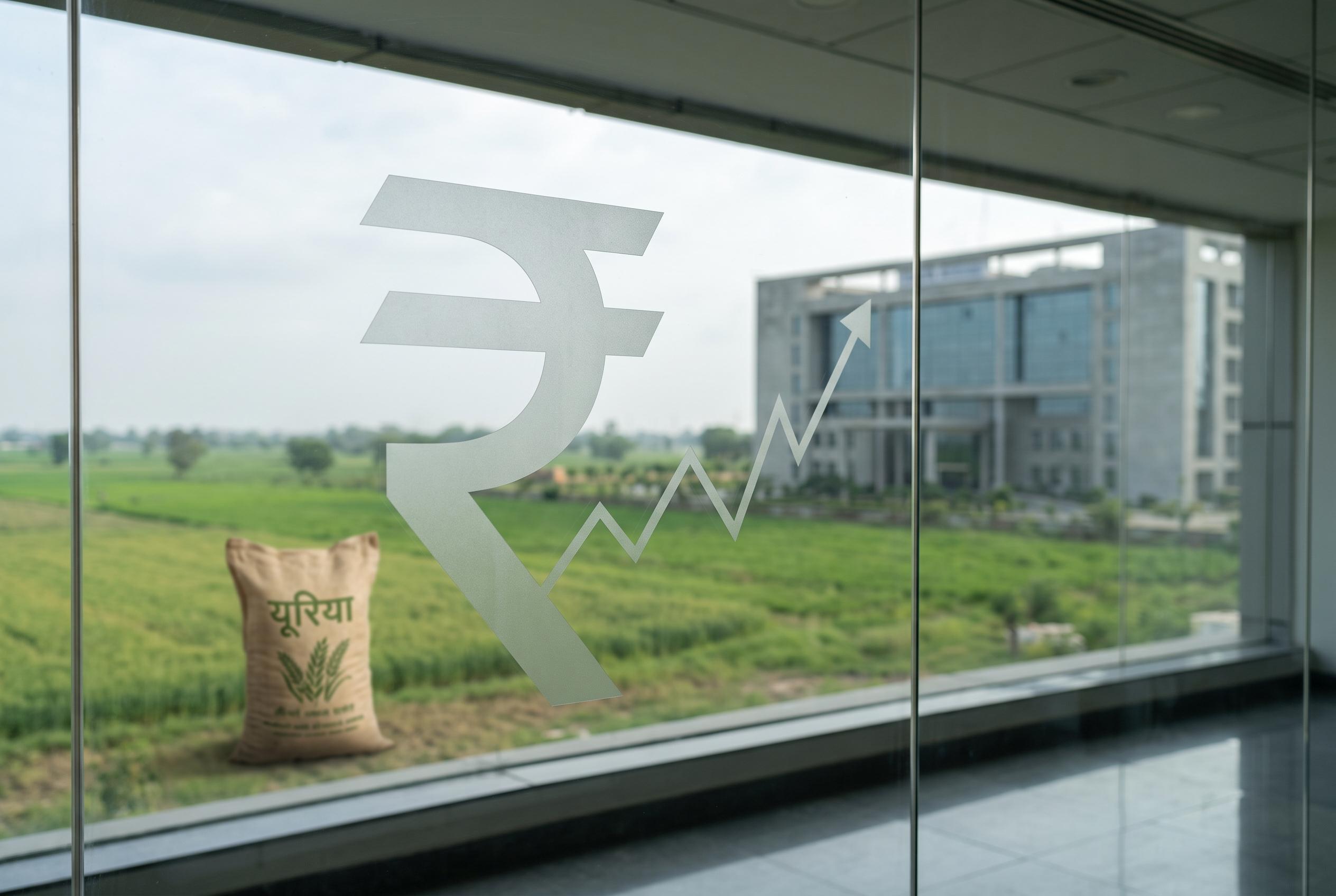

India’s subsidy bill for imported urea has surged by 128.4% in 2025-26, reflecting the impact of global market disruptions, currency pressures, and supply chain challenges on farm input costs.
India’s subsidy bill for imported urea has jumped sharply, highlighting how the state’s effort to keep farm inputs affordable is becoming more expensive as global markets remain volatile. Data obtained by India Today through the Right to Information Act show that the government spent Rs 47,956.24 crore on imported urea in 2025-26, up from Rs 21,000 crore in 2024-25, a rise of 128.4%.
The increase comes as India faces a mix of currency pressure and supply-chain strain. Agriculture expert Vijay Sardana told India Today that the weaker rupee against the US dollar, along with disruptions linked to the US-Iran conflict, helped push up the cost of imports. Urea is India’s most widely used fertiliser and farmers buy it at a government-set subsidised rate for a 45-kg bag, with the Centre covering the gap between that price and the higher import or production cost.
The latest figures also suggest the strain is shifting within the fertiliser system rather than easing. According to the RTI response, subsidy support for domestically produced urea fell to Rs 94,219.50 crore in 2025-26 from Rs 1,03,319.50 crore a year earlier, an 8.8% decline. Even so, the overall urea subsidy bill rose to Rs 1,42,175.74 crore from Rs 1,24,319.50 crore, reflecting the higher burden of imported supplies.
The pressure has not stopped in the current financial year. Between April 1 and July 23, 2026, the government had already disbursed Rs 27,722.45 crore for imported urea and Rs 32,746.51 crore for domestic urea, according to the same data. The Department of Fertilisers said it does not keep month-wise subsidy figures and that revised estimates for the year have not yet been prepared. The trend comes after Business Standard reported that fertiliser subsidy spending had already run ahead of the Centre’s revised estimate for FY26, while the government has separately outlined a 2026-27 urea subsidy allocation that remains subject to change as import costs move.
Disclaimer: This article is intended to inform and educate, not to recommend or endorse any financial product, investment or strategy. Please consider your own financial circumstances and seek professional advice where appropriate before making financial decisions.