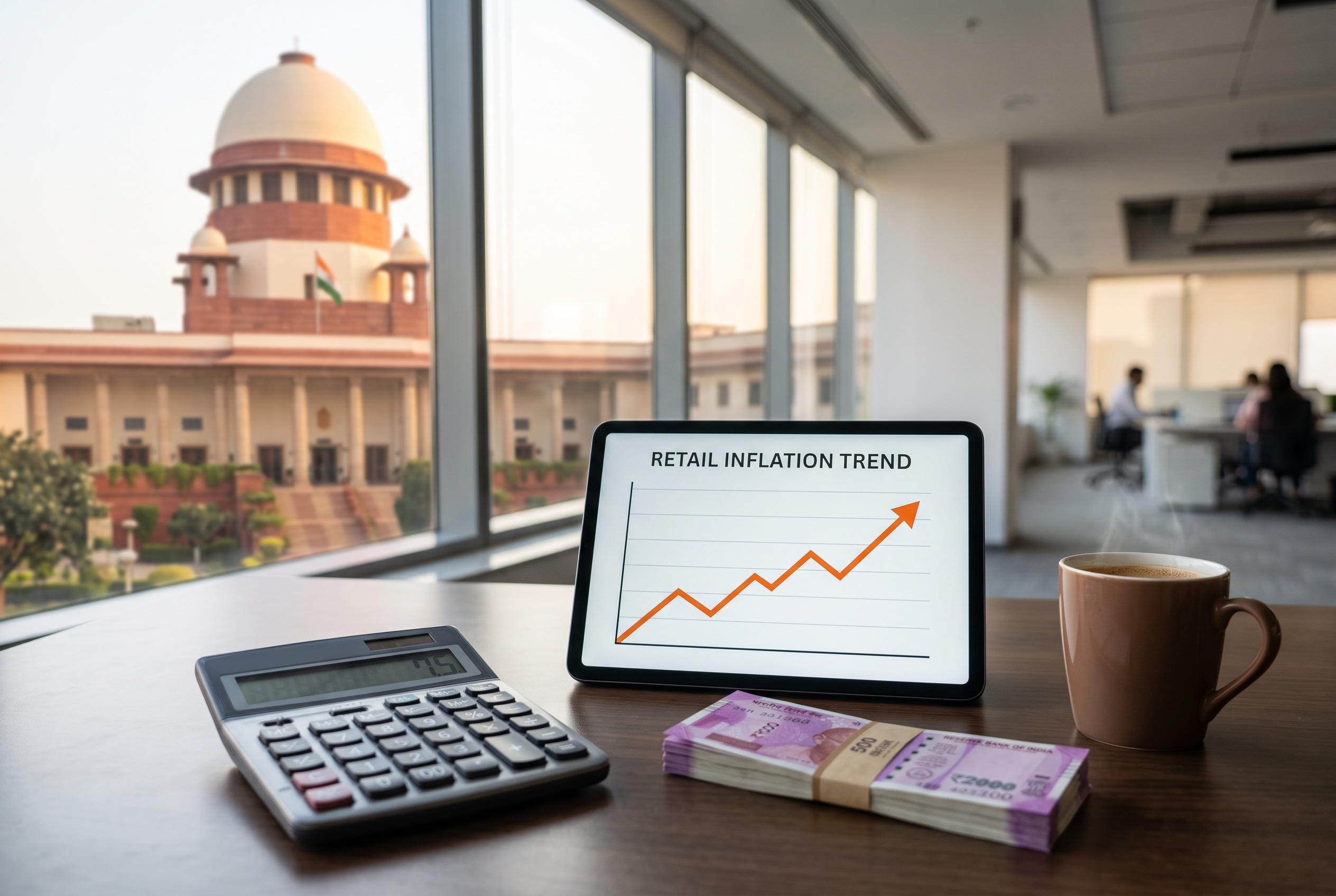

India’s retail inflation stayed above the Reserve Bank of India’s 4% target in July, driven by food price pressures and increased fuel costs, posing a challenge for policymakers ahead of upcoming data releases.
India’s retail inflation is expected to have stayed above the Reserve Bank of India’s 4% midpoint target in July, keeping pressure on policymakers even after the central bank left its key repo rate unchanged earlier this week. Reuters, citing its latest poll of economists, said the consumer price index likely rose to 4.50% from 4.38% in June, underscoring the challenge of balancing growth with persistent price pressures.
The inflation backdrop has deteriorated mainly because of food costs, which matter heavily in household budgets in India. Uneven monsoon rainfall has added strain to supplies of vegetables and other staples, while higher fuel prices have also fed through to transport and broader living costs. India’s June inflation reading had already broken through the RBI’s tolerance band after more than a year below the ceiling, according to recent government data and market reports.
That makes the central bank’s task harder. The RBI kept rates on hold at its latest monetary policy meeting, but Governor Sanjay Malhotra signalled that inflation for the full financial year may average close to 5%, above the bank’s 4% target. Reuters reported that economists now see little room for a near-term cut if price pressures prove sticky, and some said a further rise in food and fuel costs could even force the RBI to consider tightening later on.
The next official test comes on August 12, when the government releases July consumer price data. Reuters’ poll also pointed to wholesale price inflation staying elevated at 9.95%, which would add to the sense that price pressures are broadening beyond the retail basket. For borrowers, that means relief from lending rates may take longer to arrive than many had hoped.
Disclaimer: This article is intended to inform and educate, not to recommend or endorse any financial product, investment or strategy. Please consider your own financial circumstances and seek professional advice where appropriate before making financial decisions.