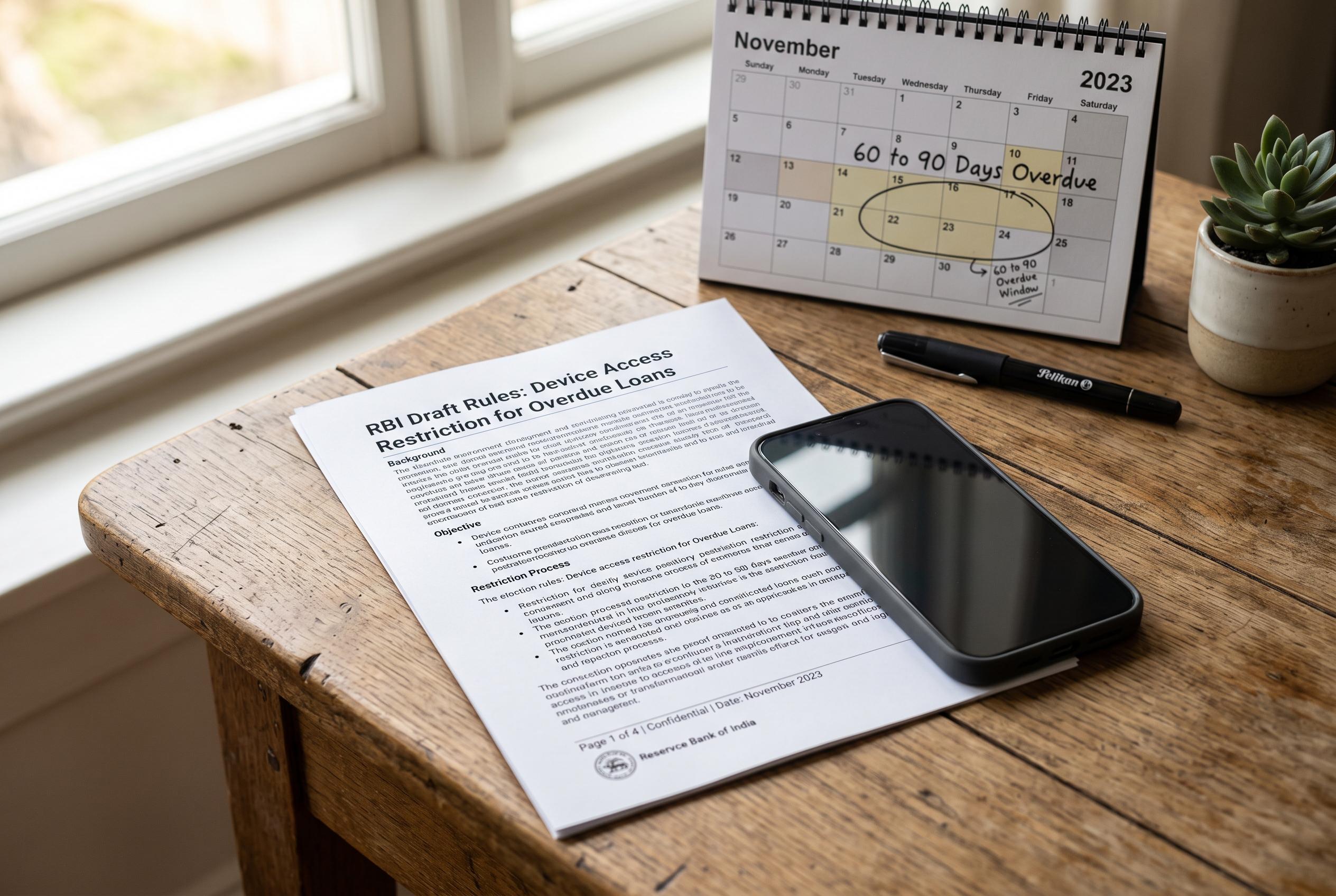

The Reserve Bank of India is drafting rules that could allow lenders to disable functions on smartphones and tablets only for loans overdue by 60 to 90 days, marking a significant shift in enforcement practices and borrower protections in digital finance.
India’s central bank is moving to give lenders a tightly limited power to restrict access to devices bought on credit, a shift that could change how defaults on small consumer loans are handled. According to reports in Livemint, Business Standard, The New Indian Express and The Economic Times, the Reserve Bank of India has been working on draft rules that would allow banks and non-banking financial companies to disable certain functions on a smartphone or tablet only when that specific device was financed through the loan and only if the borrower falls significantly behind on repayments.
The proposals are not a licence for lenders to switch off any phone they choose. The reports say the restriction would apply only to the financed device, not to a borrower’s existing handset, laptop or other electronics taken out under a personal loan, car loan or home loan. That distinction is central to the draft framework, which is meant to protect recovery rights for lenders without opening the door to broad control over a customer’s personal equipment or data.
There is, however, some disagreement in the reporting over the timing. Analytics Insight said restrictions would not begin immediately after a missed EMI, and that lenders would need to wait at least 30 days before any limitation, with a full lock possible only after 60 days of overdue payments. By contrast, other outlets, including Livemint, Business Standard, The New Indian Express and The Economic Times, described a more cautious draft process: action only after loans are 60 to 90 days overdue, with advance notices, a cure period and a final warning before any device function is restricted. Across those accounts, the common thread is that the RBI is trying to make the process gradual rather than instant.
The wider policy goal appears to be a response to rising defaults in small-ticket consumer lending, particularly in the digital finance market. Upstox reported that the RBI may fold the measure into its Fair Practices Code, while The Economic Times said the proposal is part of a broader overhaul of recovery rules and borrower protections. Industry commentary also suggests lenders would need explicit consent in the loan agreement, while essential services such as emergency calling would remain available and personal data would stay off limits. If finalised, the rules would formalise a practice some digital lenders have already used, but under stricter regulatory guardrails.
Disclaimer: This article is intended to inform and educate, not to recommend or endorse any financial product, investment or strategy. Please consider your own financial circumstances and seek professional advice where appropriate before making financial decisions.