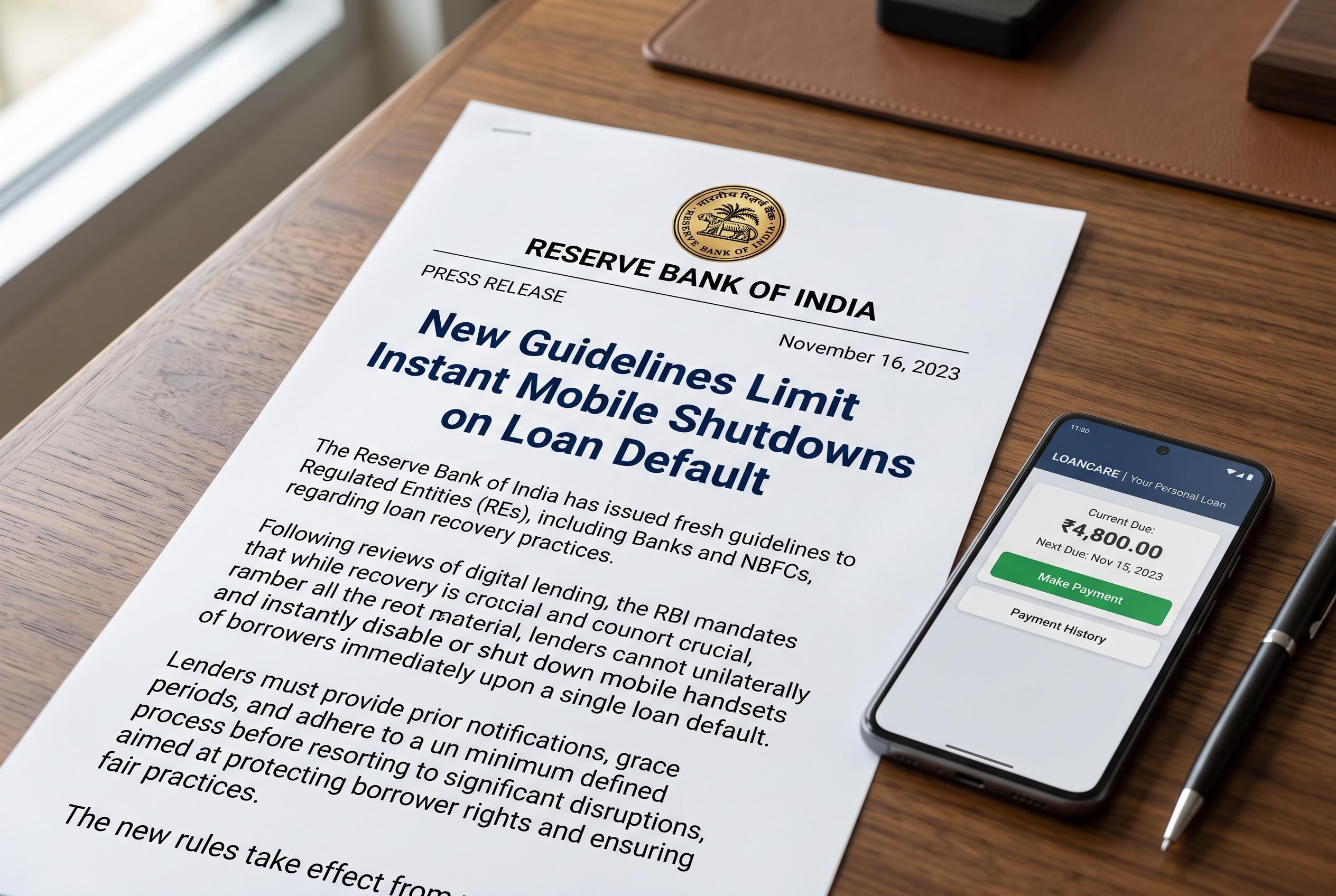

The Reserve Bank of India is set to tighten restrictions on how lenders can disable smartphones tied to loans, introducing safeguards to protect borrower privacy and ensure fair recovery practices amid industry debate.
The Reserve Bank of India is moving to tighten the rules around how lenders recover loans tied to smartphones and other devices, after a series of draft proposals that drew significant feedback from banks, fintech firms and privacy advocates. According to Livemint, the central bank’s revised framework would allow lenders to lock or disable financed devices only after a substantial delay in repayment, rather than as an immediate response to a missed instalment, and would add safeguards intended to protect borrower privacy.
That marks a shift from the simpler message circulating in some local reports, which say a missed EMI will not trigger instant phone shutdown and that customers must first be given notice. Those reports also say the new rules are due to take effect on January 1, though the broader policy direction appears to be rooted in the RBI’s draft recovery framework rather than a blanket ban on lenders’ use of device-locking tools.
Business Standard reported that the RBI’s revised draft directions would require lenders to serve notice once a loan is 60 days past due and give borrowers at least 21 days to clear the arrears, while also setting conduct standards for recovery agents and compensation rules for wrongful action. MediaNama said the loan contract would have to spell out clearly that device restrictions may be imposed, along with the notice process, repayment timeline and grievance route.
The New Indian Express reported that the proposed powers would apply only where the loan was taken specifically to buy the device, not to personal, car or home loans. It also said restrictions could be imposed only after dues remained unpaid for more than 90 days and the contract expressly allowed it. Even then, according to the revised draft ideas reported by ABP Live, basic functions such as emergency calling and access to key services would still have to remain available.
Disclaimer: This article is intended to inform and educate, not to recommend or endorse any financial product, investment or strategy. Please consider your own financial circumstances and seek professional advice where appropriate before making financial decisions.