

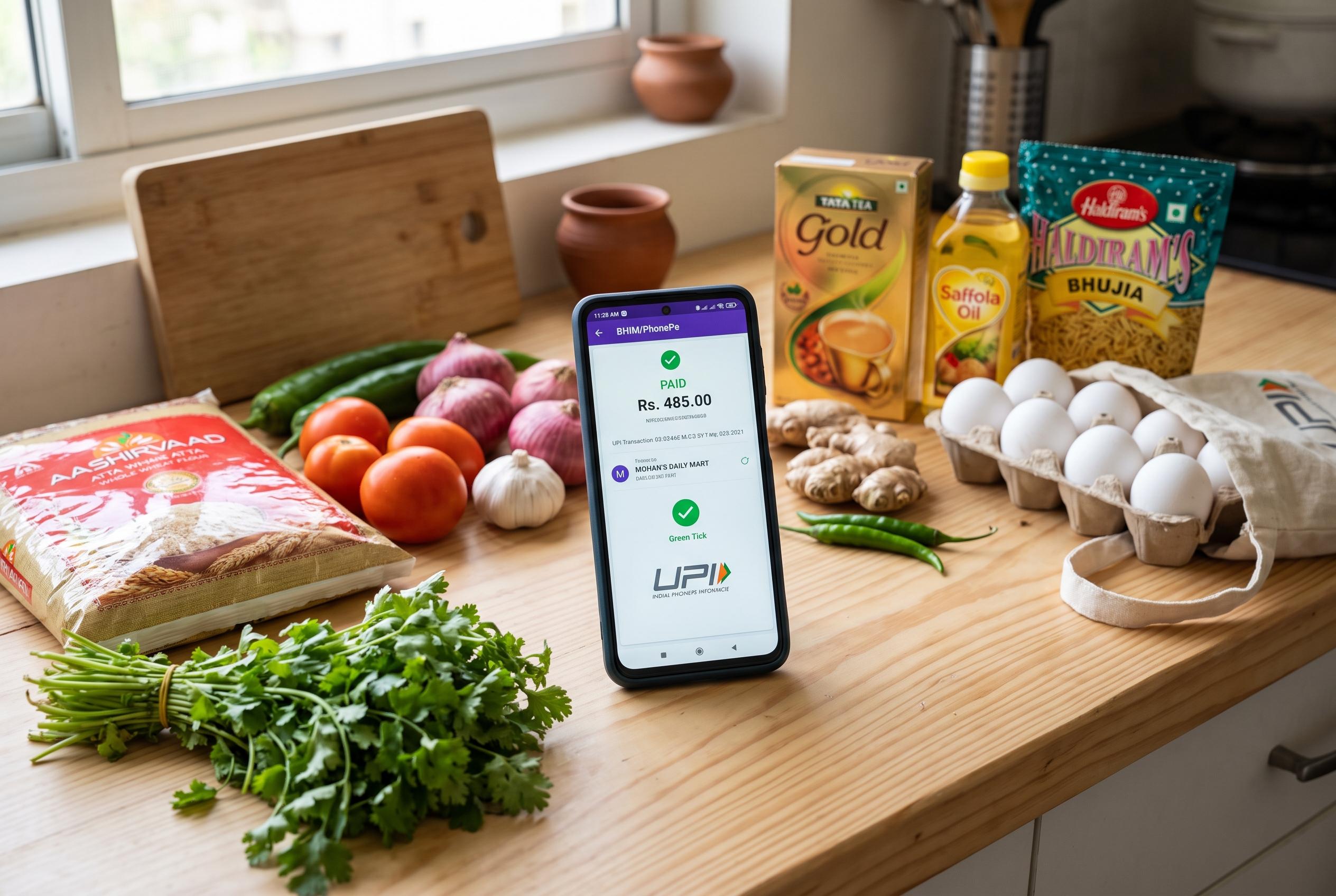

India’s Unified Payments Interface has transformed not just how people pay but also what they buy and how often, fostering faster, habitual food purchases while subtly shifting consumer spending habits and retail dynamics.
India’s Unified Payments Interface has changed more than how people settle bills; it has begun to shape what they buy and how often they buy it. As small digital payments have become routine, ordinary food habits have quietly shifted too, with transactions that once felt worth making in cash now happening almost automatically on a phone. Mint has reported that average daily UPI activity has expanded sharply in both value and volume over the past five years, while the system has become the country’s most widely used payment channel.
That shift is most visible in the smallest purchases. Every day spending on groceries, snacks and meals out has become easier to justify when payment takes only a tap, and that convenience has helped turn micro-transactions into a normal part of consumption. Mint also noted that UPI still leads India’s digital payments because it is fast and simple to use, while Fortune India described the rise of so-called habit payments, where routine checkouts begin to feel less like deliberate purchases and more like reflexes.
The behavioural effect is not always benign. India Today reported in April that frequent UPI use can make household spending harder to track, because the ease of payment weakens the mental friction that cash once created. In practical terms, that means a person may buy one more tea, one more snack or one more meal without feeling the cumulative cost until the month-end budget is already under pressure.
The impact is also changing the wider retail economy. According to Mint, the long-standing practice of handing out toffees instead of small cash change has been eroded by digital payments, while the Economic Times has reported that groceries and supermarkets have become the biggest beneficiaries of UPI growth. The paper said their share of UPI transactions rose to 24.6% in August 2025 from 22.4% a year earlier, underlining how everyday food spending has become central to the platform’s expansion.
At the same time, the broader payments picture suggests consumers are becoming more selective. Mint reported that UPI accounted for 67% of digital transactions in 2025, but also noted weakening use of EMIs and continued strength in cards for retail spending. That mix points to a consumer base that is still highly digital, but increasingly conscious about how and where money is being spent. In that sense, UPI has not simply made payments easier; it has helped create a new rhythm of food buying, one that is faster, more frequent and often less visible.
Disclaimer: This article is intended to inform and educate, not to recommend or endorse any financial product, investment or strategy. Please consider your own financial circumstances and seek professional advice where appropriate before making financial decisions.



