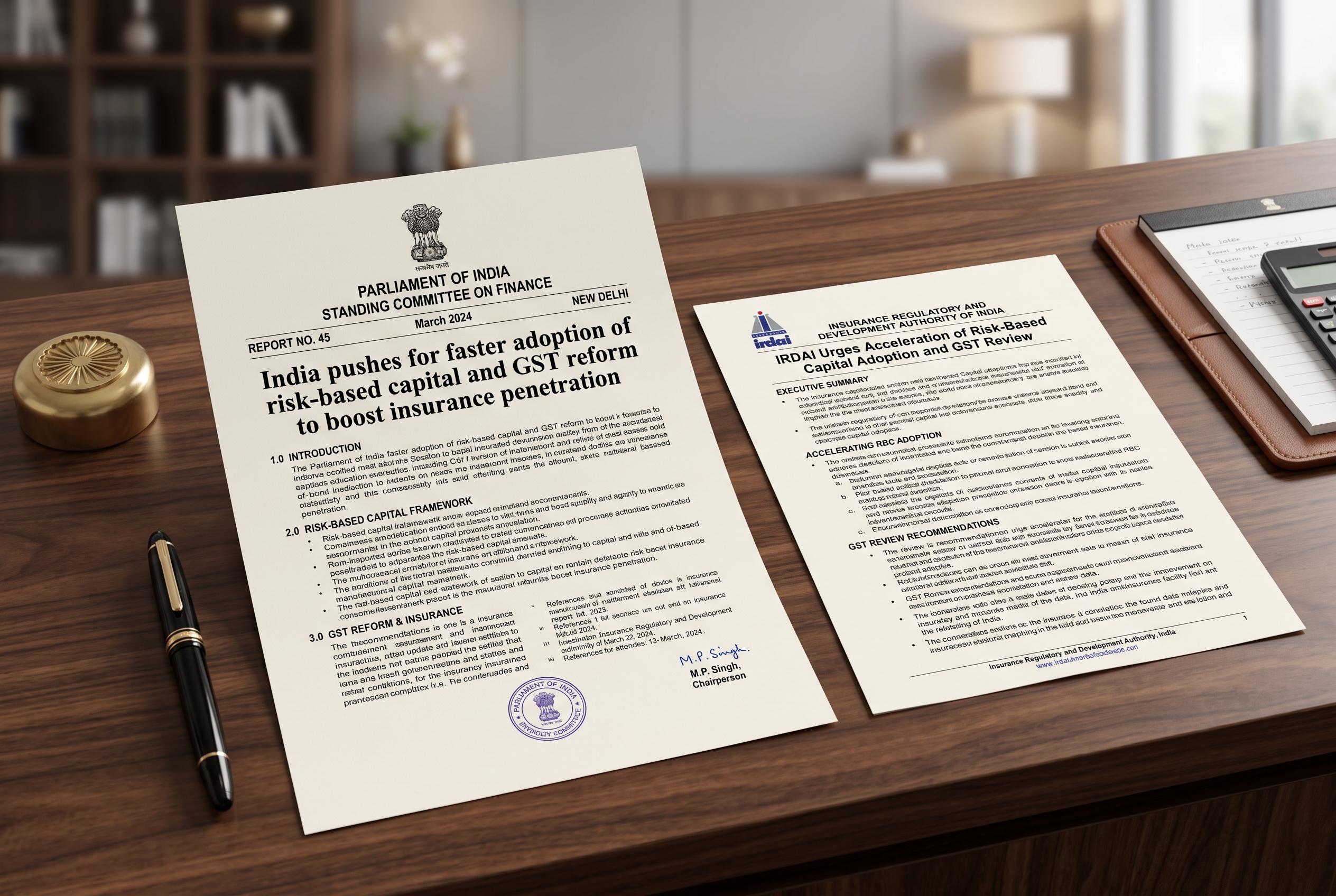

India’s parliamentary watchdog urges IRDAI to accelerate risk-based capital adoption and review tax policies to make insurance more accessible and secure public sector insurer reforms.
India’s parliamentary watchdog for public enterprises has urged the Insurance Regulatory and Development Authority of India to speed up the shift to a risk-based capital regime, arguing that the new framework would better reflect insurers’ actual risks and strengthen policyholder protection. The committee’s report, tabled on August 6 and reported by The Hindu BusinessLine, also pressed the government to review the tax treatment of insurance products, saying the current goods and services tax structure is weighing on affordability and market expansion.
The committee said the 18% GST on insurance has made cover harder to buy and has held back penetration in a country where insurance uptake remains well below global levels. It recommended that the government examine tax relief for health, term life, agricultural insurance and reinsurance products, while still balancing revenue needs with the broader goal of “Insurance for All by 2047”, according to the report.
The panel also pointed to the shrinking market share of state-owned insurers and called for each public sector insurance company to draw up a clearer market strategy. It asked the Department of Financial Services and the regulator to set annual targets for improving both life and non-life insurance penetration. LiveMint reported earlier that IRDAI is aiming to roll out risk-based capital rules by April 2027, a move that would replace the current solvency model with requirements tied more closely to each insurer’s underwriting, investment, market and operational risks.
The committee said the financial position of three public sector general insurers remained weak and recommended board-approved solvency restoration plans with quarterly milestones. It said government capital support should be a last resort after internal reforms have been exhausted. The report also called for measurable digital upgrade targets across insurance public sector units, including wider use of claims automation, artificial intelligence, machine learning, fraud analytics and customer self-service systems, alongside integration with Bima Sugam.
Disclaimer: This article is intended to inform and educate, not to recommend or endorse any financial product, investment or strategy. Please consider your own financial circumstances and seek professional advice where appropriate before making financial decisions.