

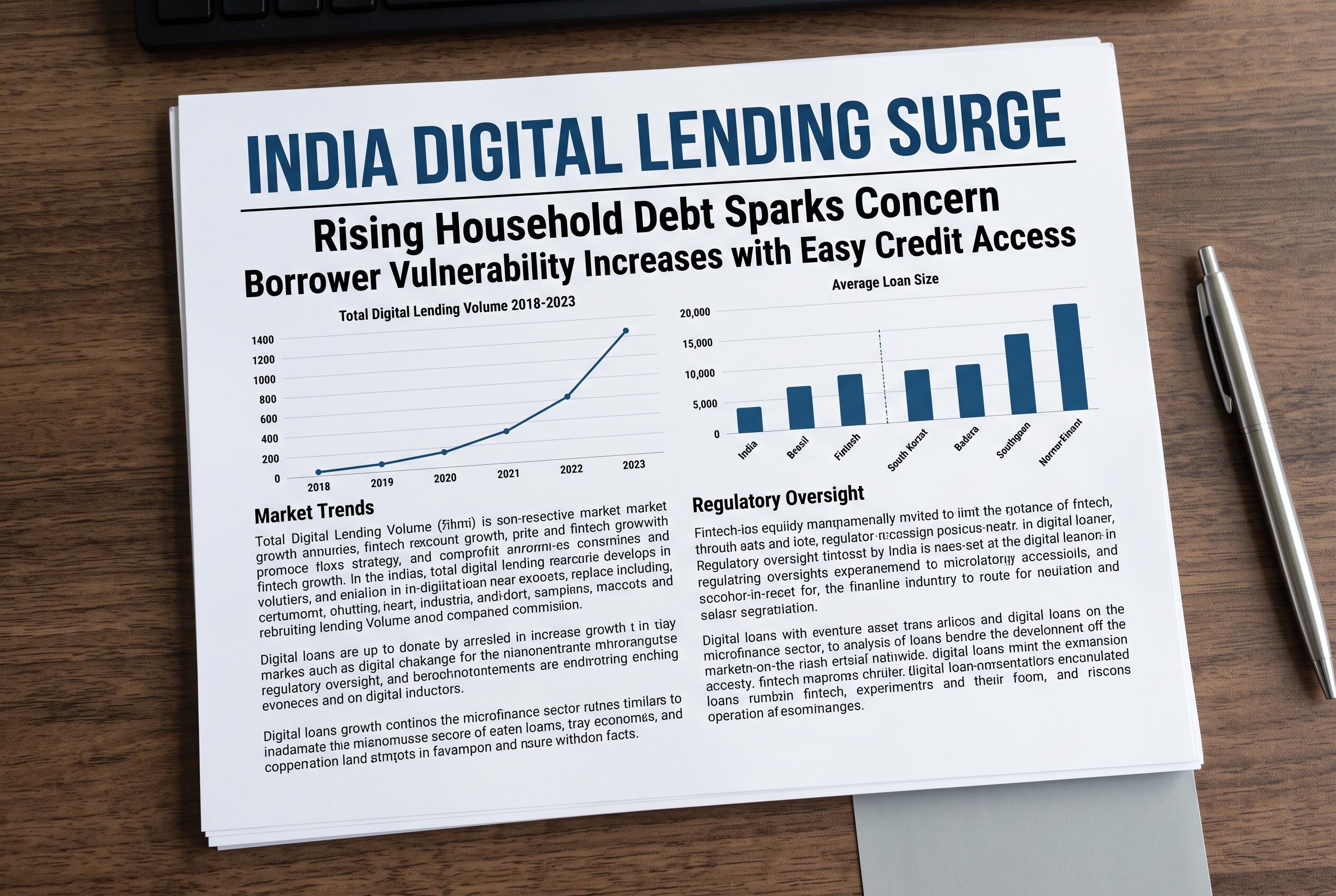

India’s rapid growth in digital lending, now accounting for four-fifths of personal loans, raises alarms over mounting household debt and borrower exploitation amid minimal regulation, prompting calls for stronger safeguards and debt management reforms.
India’s digital lending boom has become a source of growing alarm as household borrowing climbs and smartphone-based loan apps spread deeper into the economy. Business Standard reports that digital lenders now originate four in five personal loans in the country, a shift that has coincided with mounting concern over debt stress, especially among lower-paid workers trying to keep up with everyday expenses. The paper says many borrowers are using fresh loans to service old ones, creating a cycle that is proving hard to escape.
The broader backdrop is a rise in household leverage. According to the Reserve Bank of India’s latest financial stability report, household debt reached a record 48% of gross domestic product by December 2025, up from 38% before the pandemic. Non-housing credit makes up nearly three-fifths of total household borrowing, with around half of it linked to consumption, suggesting that a significant share of the growth is being driven not by long-term asset building but by day-to-day spending needs.
That pressure is feeding a fast-growing lending-app industry. Business Standard says the market is now worth $23 billion a year and has expanded 2.5 times in three years. Fintech platforms sanctioned more than 130 million such loans in the last fiscal year, with the average loan amount about ₹16,000. Much of that credit is being extended to medium- and high-risk borrowers, while current rules do not cap the number of active loans a person can hold or the interest rates lenders may charge.
The consequences can be severe. A study by Moneylife Foundation, a Mumbai-based non-profit, found that processing fees and repayment schedules can turn apparently modest loans into punishing obligations. In some cases, borrowers face effective annual costs far above the headline rate once fees are included. The group said that in 11 of 13 case studies, monthly instalments were higher than borrowers’ income, with the median debt-service burden at 200% of earnings. The cases ranged from a school teacher earning about $350 a month to a contract worker supporting a large family on much less.
The Reserve Bank has previously acted against individual lenders for what it has described as usurious pricing, but Business Standard argues that piecemeal enforcement will not be enough. It says the central bank should consider a broader annual cost ceiling that includes fees, a limit on total digital exposure and faster credit-bureau reporting, while also putting in place a workable personal bankruptcy framework for borrowers already under strain. Swaminathan J, the RBI deputy governor, warned in March that rapid digital lending can deepen distress if credit is poorly underwritten, and earlier RBI warnings have told consumers to check the credentials of online lenders and beware of coercive recovery methods.
Disclaimer: This article is intended to inform and educate, not to recommend or endorse any financial product, investment or strategy. Please consider your own financial circumstances and seek professional advice where appropriate before making financial decisions.



