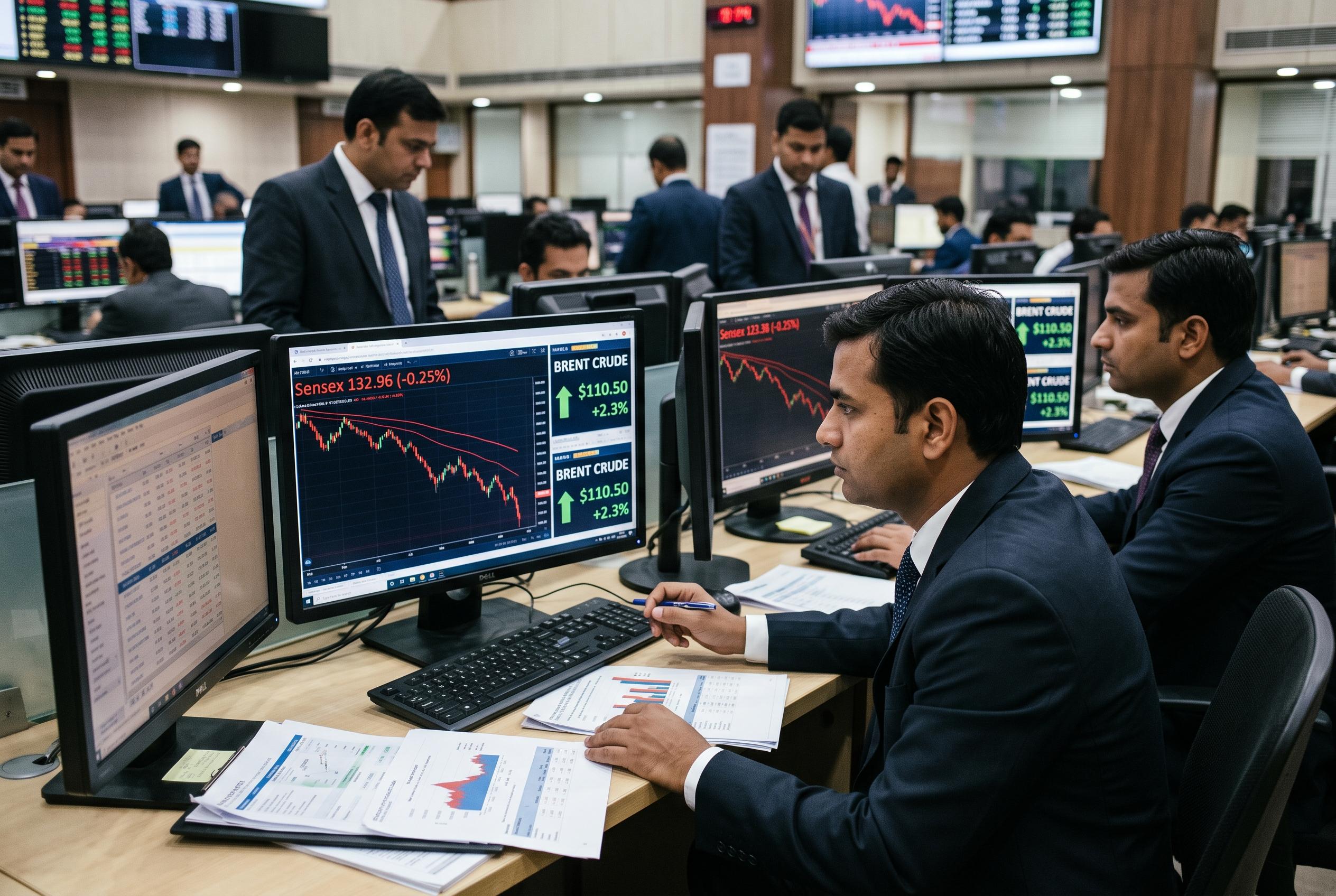

Indian markets are likely to open cautiously on Friday amid rising crude oil prices and geopolitical concerns over the Middle East, with traders wary of weekend developments affecting market stability.
Indian shares are set for a weaker opening on Friday as investors weigh a jump in crude oil prices and fresh unease over tensions in the Middle East. The GIFT Nifty was signalling a lower start for the benchmarks, after Thursday’s session ended slightly firmer, with the Sensex and Nifty 50 edging higher on domestic buying support.
The latest pressure point for Dalal Street is Brent crude, which has moved back above the $80-a-barrel mark and was trading around $83.45 a barrel, according to market reports. Zee Business managing editor Anil Singhvi said concern has grown around the Strait of Hormuz, one of the world’s most important shipping routes, after reports that Iran has proposed a toll on vessels passing through the waterway and Oman has also considered a transit fee.
Attention is now fixed on US-Iran talks, with traders trying to judge whether diplomacy can ease the market’s anxiety before the weekend. Reuters reported that Donald Trump said discussions were continuing and that he hoped the conflict would end soon, while Iran’s parliament speaker dismissed the US position as “drama diplomacy”. That clash in tone has reinforced the sense that markets are entering the weekend without clear direction.
Singhvi said the crude move itself is not dramatic in isolation, but trading above $80 a barrel has a psychological effect on investors. He warned that the bigger issue is weekend risk: if no agreement is reached, or if talks break down, Monday could bring a sharp gap in local markets. By contrast, a deal could quickly improve sentiment.
Even so, there are still some supports for Indian equities. Singhvi pointed to continued buying by foreign and domestic institutions, a recovery in the rupee, reduced turmoil around the closing auction session and a comfortable put-call ratio. Broader market commentary has also suggested that traders remain selective rather than aggressive, with a preference for buying on dips while global cues and crude prices continue to steer near-term direction.
Disclaimer: This article is intended to inform and educate, not to recommend or endorse any financial product, investment or strategy. Please consider your own financial circumstances and seek professional advice where appropriate before making financial decisions.