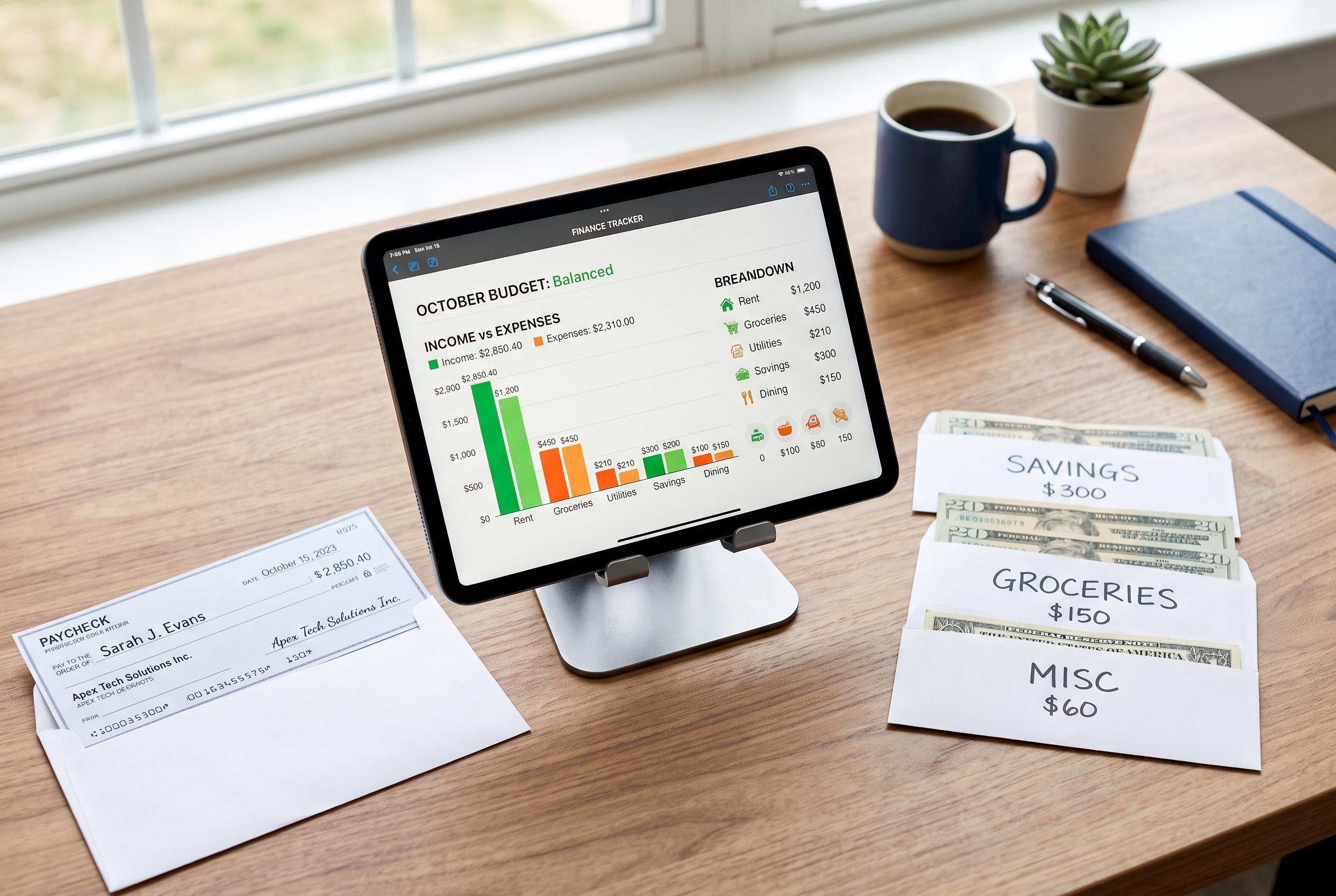

A growing number of households are adopting paycheck-based budgeting to better manage income and expenses, offering a practical approach to reducing financial stress and building savings, especially for those living paycheck to paycheck.
Budgeting by paycheck is gaining attention because it matches the reality of how many people are paid and spent. Instead of building a monthly plan around an idealised calendar, the method maps income to the dates it actually arrives, then assigns each dollar before it disappears. That can make cash flow easier to follow for workers on weekly or fortnightly pay, freelancers with uneven income and anyone who feels they are constantly waiting for the next pay day. LendingTree has reported that 64% of Americans live pay-check to pay-check, while NerdWallet found that the pattern affects a broad cross-section of households, including some higher earners.
The basic idea is simple: give every dollar a job as soon as it lands in your account. Fixed bills such as rent, insurance and loan payments are lined up first, then essentials such as groceries, transport and utilities, with the remainder directed towards savings, debt reduction and irregular costs. Stash says the approach works best when people separate fixed and variable spending and build in savings targets from the start, rather than hoping money will be left over at the end of the month.
Supporters of the method say it can reduce overdrafts, limit impulsive spending and make financial stress more manageable because it breaks a large budget into smaller, practical decisions. The system can also be paired with a calendar, spreadsheet or budgeting app to show when a pay cheque must stretch across a longer gap. CBS News has reported that many households have little room for error because most of their income is already committed to essentials, which helps explain why planning around pay dates can be so effective.
The technique is especially useful for people trying to get out of debt or build a buffer for emergencies. By setting aside money for sinking funds, a term used for predictable but irregular expenses such as car repairs, annual insurance bills or medical costs, households can avoid using credit when those costs appear. LendingTree’s survey also found that many consumers would struggle to cover a $400 emergency without borrowing or selling assets, underlining the value of an organised cash reserve.
Still, budgeting by paycheck is not a cure-all. It demands discipline, regular review and realistic assumptions about spending. NerdWallet’s research suggests that even households with comfortable incomes can still live under financial pressure, which means the method works best when it is treated as a living plan rather than a one-off exercise. For many people, though, that structure is exactly the point: it turns uncertainty into a sequence of decisions that can be managed paycheck by paycheck.
Disclaimer: This article is intended to inform and educate, not to recommend or endorse any financial product, investment or strategy. Please consider your own financial circumstances and seek professional advice where appropriate before making financial decisions.