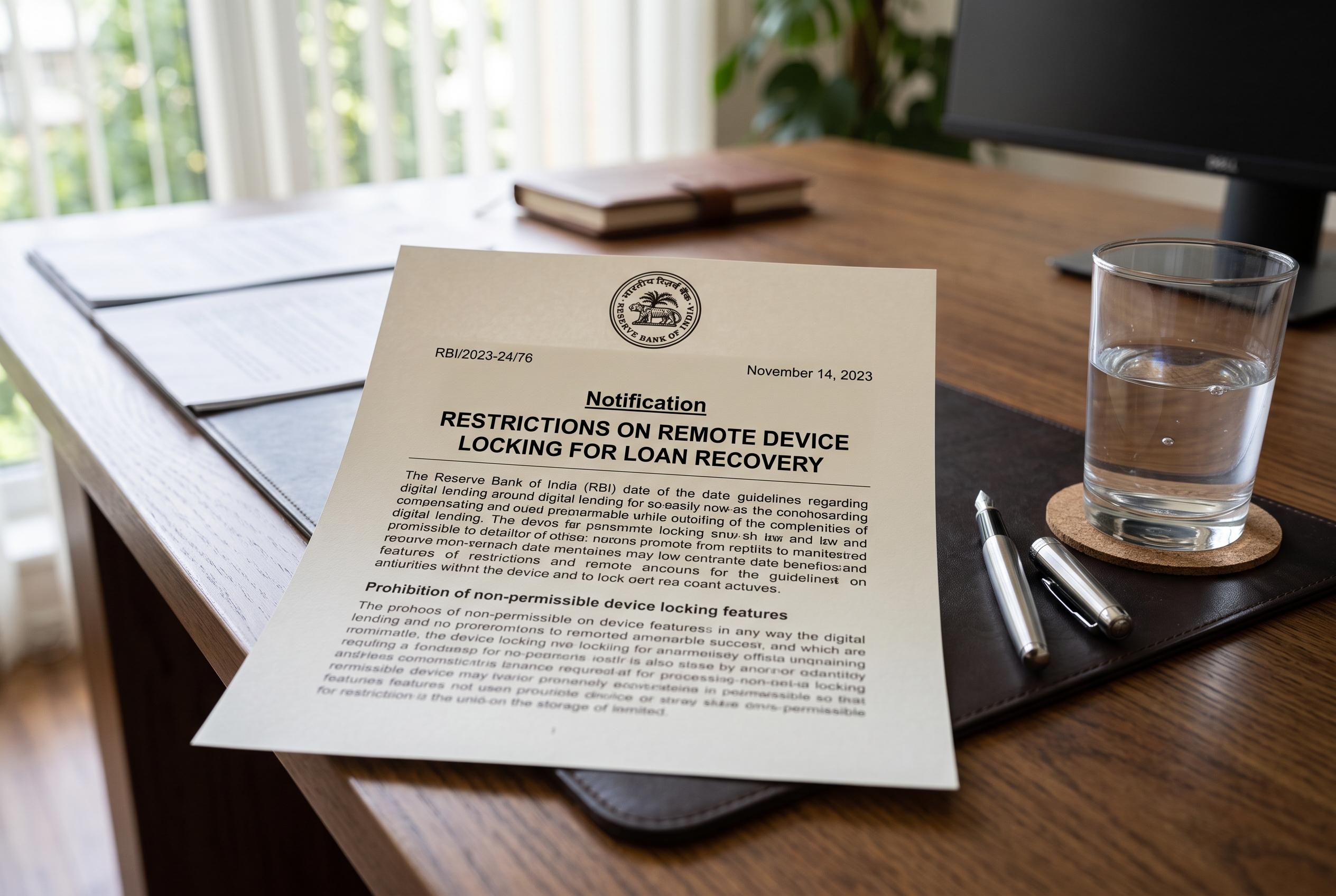

The Reserve Bank of India has introduced new regulations limiting the use of technology for remotely restricting borrowers’ mobile phones during loan recovery, aiming to curb aggressive practices while safeguarding borrower rights.
India’s central bank has moved to draw a sharper line around one of the most controversial loan-recovery tactics in consumer finance: remotely locking a borrower’s phone. According to the Reserve Bank of India, banks and non-bank lenders may use such technology only when the loan was taken specifically to finance that mobile device, tablet or laptop, and only if the agreement signed by the customer clearly spells out the power to do so and the process that will follow.
The revised approach is part of a wider tightening of recovery rules, with the RBI also requiring lenders to put in place a formal recovery policy, vet outside agencies more carefully and ensure that only certified recovery agents deal with borrowers. The aim is to curb aggressive collection methods while giving lenders a narrowly defined tool for default cases involving the financed device itself.
There are also strict timing limits. Business Standard reported in May that the RBI’s framework allows notices to be issued after an account is 60 days past due, with at least 21 days for the borrower to regularise the loan, and restrictions only after 90 days of default. But Business Today, reporting on the finalised norms, said banks cannot begin disabling functions until a loan is 30 days overdue, with fuller restrictions allowed only after 60 days. Under either account, the RBI is clearly insisting on a staged process rather than immediate lockout.
Even when a device is restricted, the central bank says essential services must stay on. Incoming calls, SMS, emergency SOS functions and other safety-related features cannot be blocked, and borrowers must still be able to use the phone for work-related activity. The RBI has also said the device owner should be able to see the status of any restriction at any time.
The new rules also include a hard deadline for restoration. Once a borrower clears the dues, the bank must remove the lock within one hour. If the delay is the lender’s fault, compensation is set at ₹250 an hour, capped at the amount originally disbursed. The RBI has also barred banks and their technology partners from using personal data such as contacts, messages, call logs, photographs or location history for recovery purposes, while preserving the borrower’s right to prepay the loan in part or in full at any stage.
Disclaimer: This article is intended to inform and educate, not to recommend or endorse any financial product, investment or strategy. Please consider your own financial circumstances and seek professional advice where appropriate before making financial decisions.