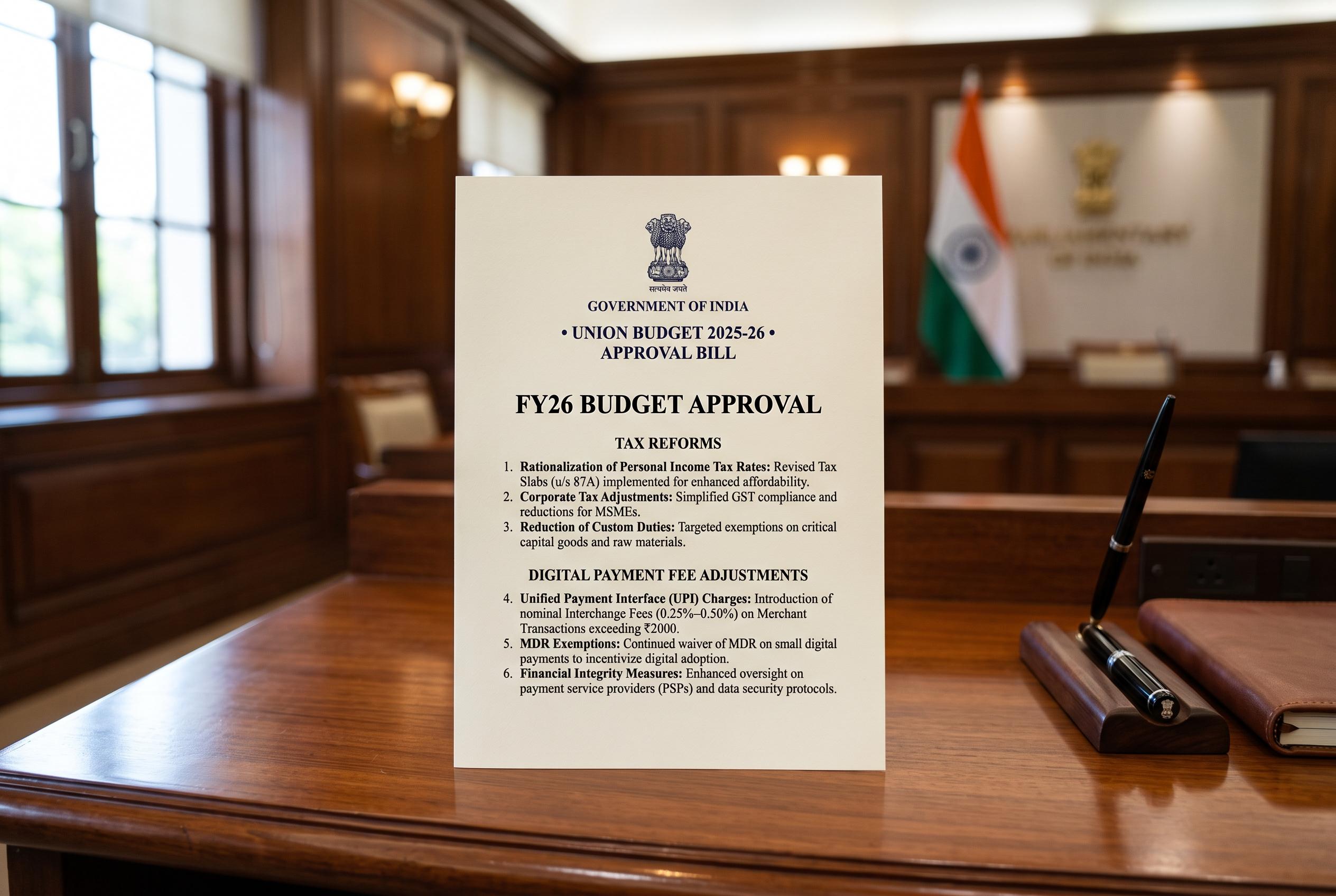

Parliament speeds up key tax reforms and approves additional government spending for 2025-26, with potential impacts on digital payment fees and investment rules.
Parliament moved two finance measures forward on Thursday, with the Lok Sabha passing the Taxation and Other Laws (Amendment) Bill, 2026, and the Rajya Sabha approving an appropriation bill that clears the way for additional spending in the 2025-26 financial year. Mint reported that the tax bill is designed to tidy up India’s payments and tax architecture by amending the Payment and Settlement Systems Act, 2007, the Income-tax Act, 2025, and the Finance Act, 2026. The changes are intended to align the new direct tax regime with recent reforms, remove ambiguities in the finance law and update rules for payment systems as technology and regulation evolve.
One possible implication of the payments changes is that banks could eventually be allowed to levy merchant discount rate fees on large Unified Payments Interface transactions, a shift that would affect the economics of digital payments if implemented. The bill also seeks to simplify the rules for eligible offshore investment funds, reduce compliance burdens while keeping anti-abuse checks in place and extend selected tax benefits to manufacturing sectors such as electronics, which have been hit by global supply-chain disruptions. That fits into the broader push behind the new Income Tax Act, which replaced the old framework with a simpler structure aimed at reducing disputes and improving compliance, according to Mint.
Separately, the Rajya Sabha returned the Appropriation (No. 3) Bill, 2026, after approval, completing the parliamentary process for authorising extra government expenditure in 2025-26. Such bills are constitutionally required and allow the government to draw money from the Consolidated Fund of India after Parliament has approved supplementary demands for grants. The additional spending covers items that were either not fully provided for in the original Budget or became necessary later in the year, giving the Centre legal cover for the extra commitments.
Disclaimer: This article is intended to inform and educate, not to recommend or endorse any financial product, investment or strategy. Please consider your own financial circumstances and seek professional advice where appropriate before making financial decisions.