

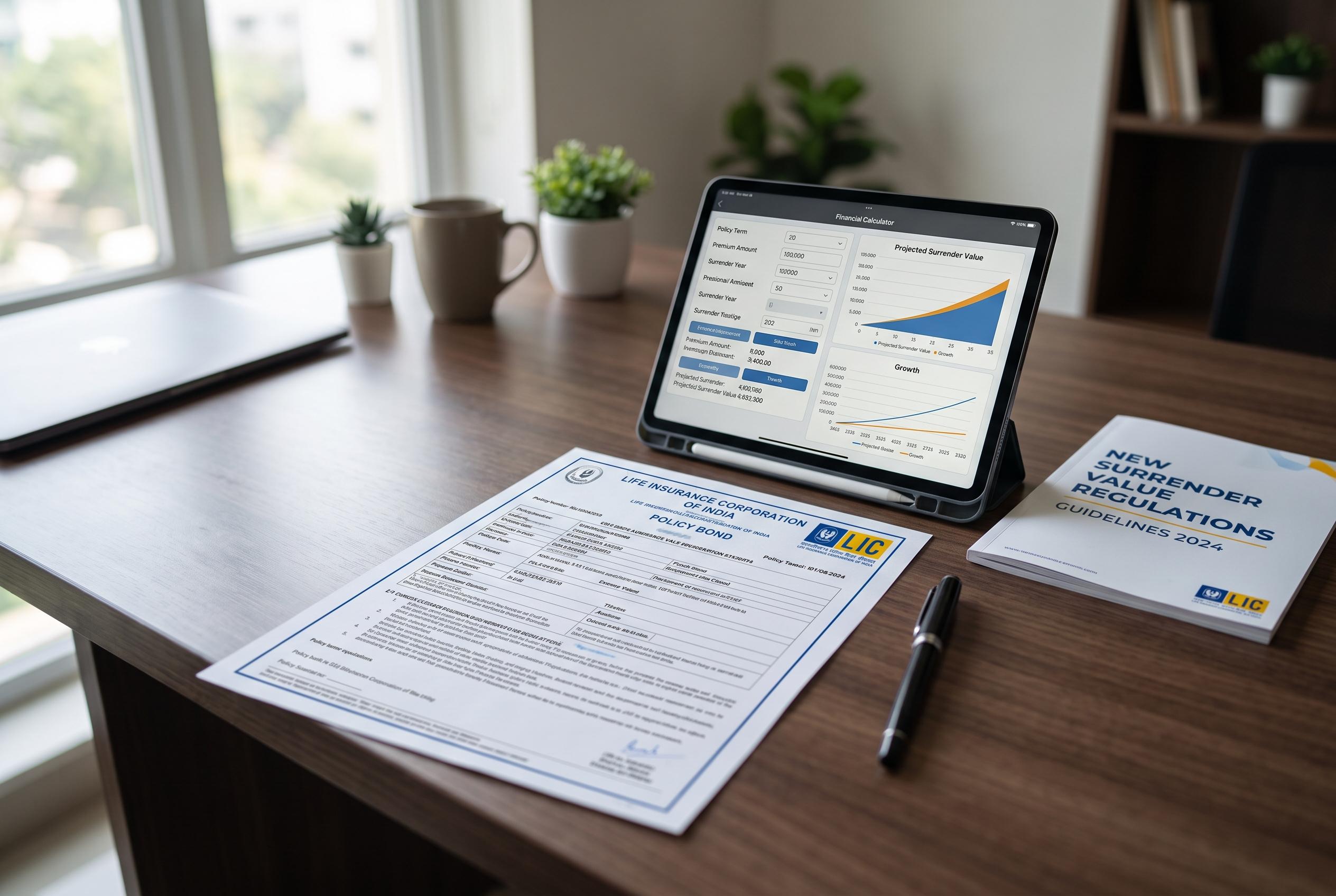

Online calculators offer rough estimates for LIC policy surrender values but require careful consideration of policy terms, regulations, and vested bonuses, with recent rule changes adding complexity to the process.
An online LIC surrender value calculator can give policyholders a rough idea of what they may receive if they end a life insurance policy before maturity, but it cannot provide a final figure. That is because the payout depends on the plan’s terms, the policy year, bonuses already vested and the surrender value factors applied by LIC. The insurer does not offer a public, standalone calculator on its website, so the exact amount still has to be confirmed through a policy benefit illustration or at a LIC branch.
For traditional LIC policies, the company works out two figures: the Guaranteed Surrender Value, or GSV, and the Special Surrender Value, or SSV. LIC then pays whichever is higher after deducting any outstanding loan and interest. Industry guides explain that GSV is the guaranteed floor, usually linked to a percentage of eligible premiums paid, while SSV is an actuarial calculation that also reflects the policy’s paid-up value and vested bonuses. In practice, that means newer or longer-held with-profit policies can produce a better result than a simple guaranteed formula might suggest.
The rules also depend on when the policy was issued. According to LIC-related guidance that reflects the Insurance Regulatory and Development Authority of India’s revised framework, policies sold from 1 October 2024 may follow different surrender provisions from older contracts, while earlier policies remain governed by their original terms. The regulator notified new insurance product regulations in April 2024 and later issued a master circular in June, with insurers given until the end of September 2024 to align products with the updated regime. That makes the policy issue date an important detail when estimating any surrender amount.
Several factors can push the payout up or down. The longer premiums have been paid, the more likely the surrender value is to improve. Only bonuses already declared and vested are counted, while future bonuses are ignored. Outstanding policy loans reduce the final amount, and participating traditional plans generally build more value than non-participating ones because they can accrue bonuses. LIC also requires policyholders to acknowledge, through Form 5074, that surrender ends life cover and may not be the best financial choice.
For many customers, surrender is not the only option. A paid-up policy can preserve a reduced level of cover without further premium payments, which may be preferable if immediate cash is not needed. LIC-linked guides also warn against surrendering too early, relying solely on an online estimate or replacing a policy before new cover is in force. On tax, the treatment depends on the policy type and issue date, with different thresholds applying to traditional policies and ULIPs. In other words, a calculator can help with planning, but it should be treated as an estimate rather than a final answer.
Disclaimer: This article is intended to inform and educate, not to recommend or endorse any financial product, investment or strategy. Please consider your own financial circumstances and seek professional advice where appropriate before making financial decisions.



