

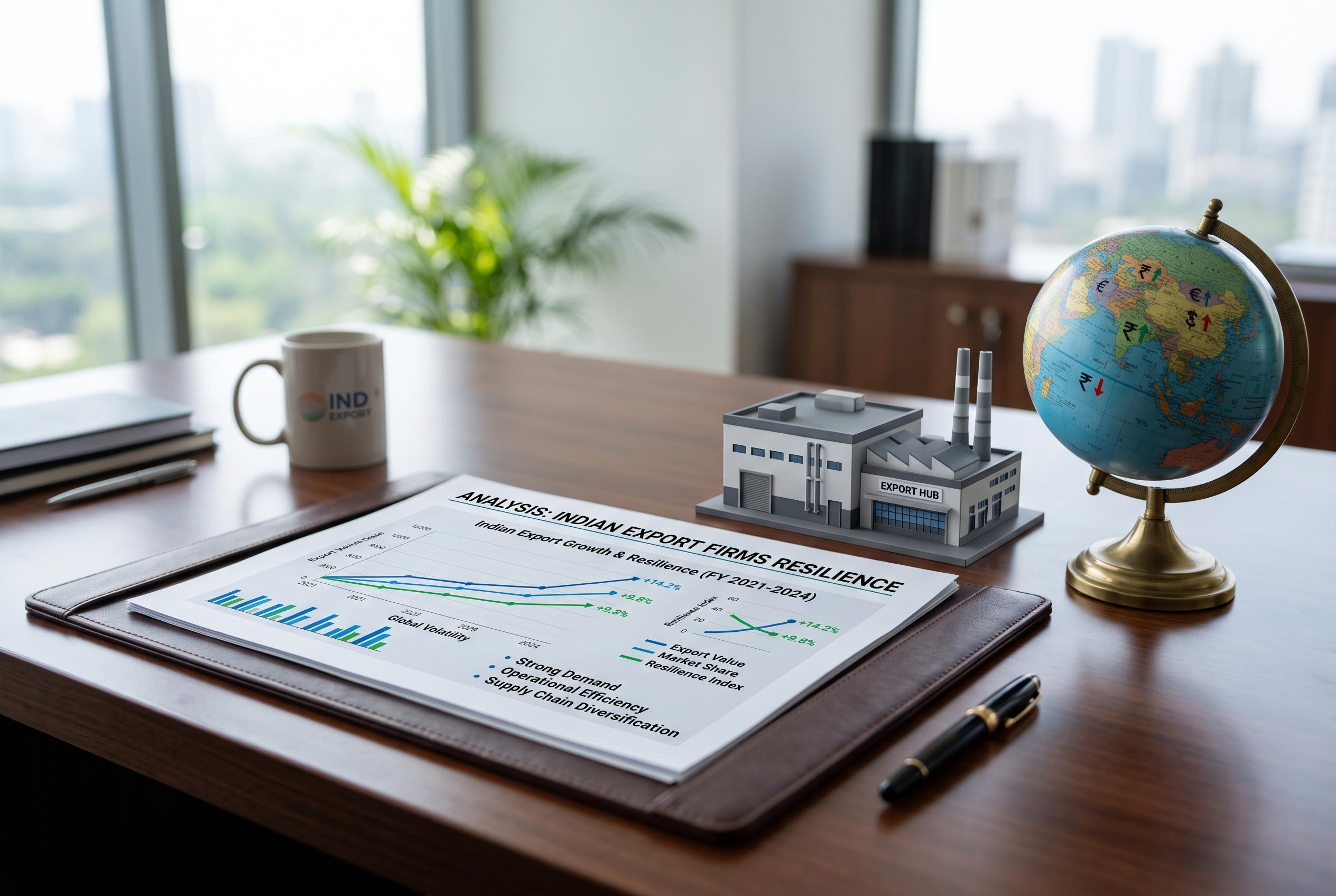

Indian companies with over half of their revenue from exports, such as Bharat Forge and PI Industries, demonstrate both resilience and vulnerability amid fluctuating global demand, currency shifts, and industry cycles, offering insights into their capacity to withstand international downturns.
Export-heavy Indian companies can offer investors a built-in hedge against weakness in the domestic economy, but they also face the ups and downs of global demand, currency moves and industry cycles. A Trade Brains roundup highlighted four listed names with more than half of revenue tied to overseas markets: Bharat Forge, PI Industries, Welspun Living and Sona BLW Precision Forgings. Recent results show why that model can be both resilient and vulnerable, with some firms still growing strongly while others have felt pressure from softer overseas demand.
Bharat Forge has remained the strongest operating story in the group. Livemint reported that the Pune-based forgings maker posted a 17.5% drop in consolidated profit for the March quarter after a large one-time provision for a subsidiary, yet full-year profit rose 14.72% and revenue increased 11.17% in FY26. The company also recommended a final dividend of ₹6.50 per share and said it still expects 25% revenue growth in FY27, unless geopolitical shocks disrupt demand. Separate reporting from ICICI Direct and The Company Check showed that the profit hit was tied to a ₹493 crore provision, while Bharat Forge’s market value remained above ₹1 lakh crore, underlining investor confidence in its export-led industrial portfolio.
PI Industries has offered a more mixed picture. ICICI Direct said the agrochemicals and custom synthesis company delivered ₹15,652 million in revenue in the March quarter, but that was still down 12.42% from a year earlier, and full-year revenue fell 15.84% to ₹67,137 million. Business Standard reported that quarterly profit dropped 39% and revenue from operations declined 12%, with agri-chem exports falling nearly 15% as the global agrochemical market weakened. Even so, the company’s ability to serve both domestic agriculture and international customers helps explain why it remains a frequent inclusion on long-term watchlists.
The broader appeal of the theme is that export-oriented businesses are less dependent on one economy and can gain from diversified customer bases, but the same dependence can magnify slowdowns abroad. That is why companies such as Welspun Living, which sells home textiles to global retailers, and Sona BLW Precision Forgings, which supplies drivetrain and electric-vehicle components to international automakers, often attract investor attention alongside Bharat Forge and PI Industries. For portfolio watchers, the key question is not just how much of revenue comes from exports, but how well each company can absorb a downturn in its biggest overseas markets.
Disclaimer: This article is intended to inform and educate, not to recommend or endorse any financial product, investment or strategy. Please consider your own financial circumstances and seek professional advice where appropriate before making financial decisions.



