

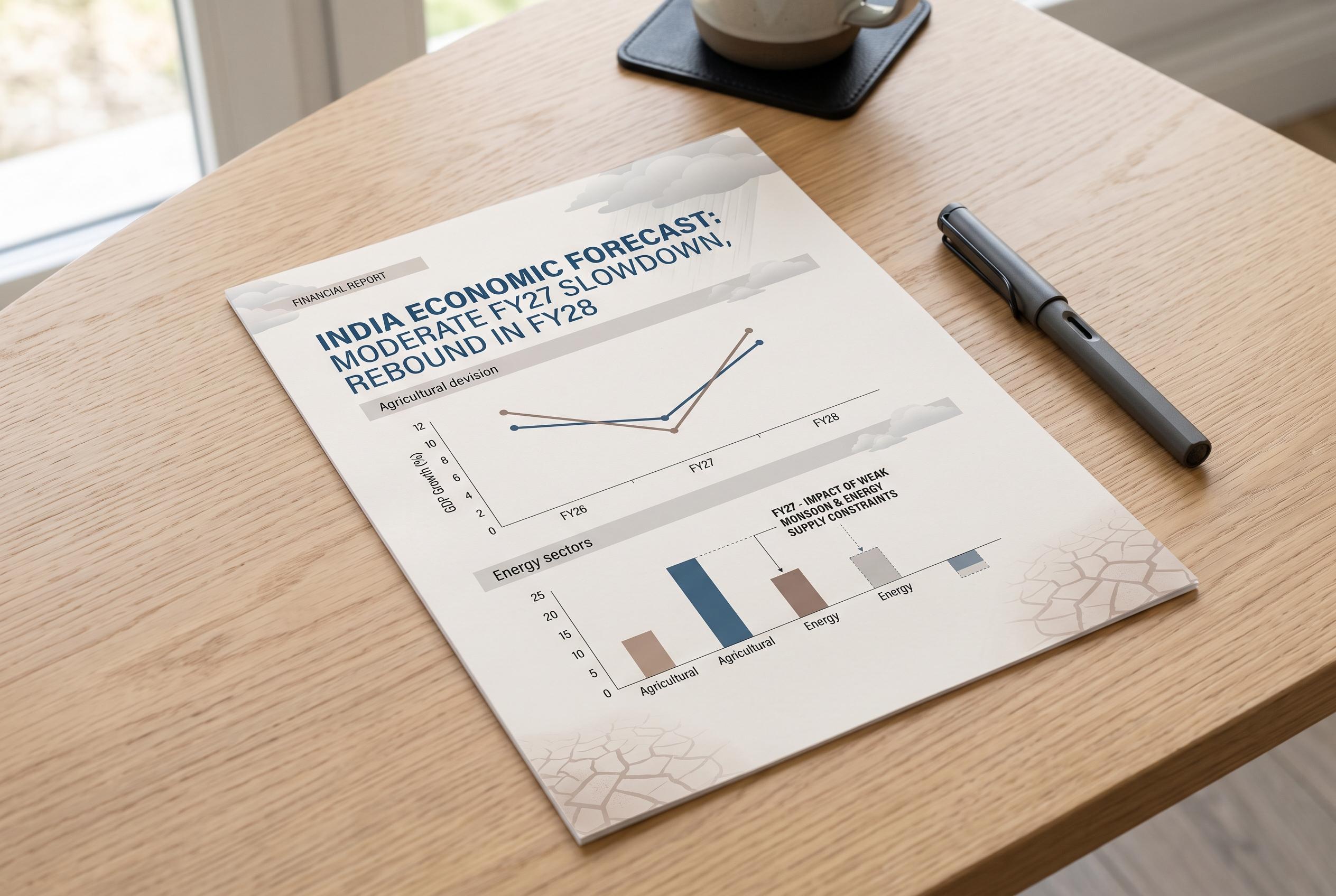

While ICICI Bank predicts a moderation in India’s FY27 growth followed by a rebound in FY28, diverging forecasts highlight concerns over energy stress, monsoon weakness, and global uncertainties affecting the nation’s economic outlook.
India’s economic expansion is expected to cool in the second half of FY27 before picking up again the following year, with ICICI Bank forecasting growth of 6.9% for FY27 and about 7.2% in FY28. The bank said the slowdown later in the year would mainly reflect a high base effect rather than a sharp loss of momentum, while near-term indicators still point to a solid first quarter and a steady start to the second.
The broader outlook, however, remains split among forecasters. S&P Global Ratings has pegged India’s FY27 growth at 6.6%, warning that energy stress, a weak monsoon and slower global activity could weigh on output. The Reserve Bank of India has also taken a more cautious stance, trimming its FY27 forecast to 6.6% and citing risks from West Asia tensions, elevated energy costs, supply disruptions and weather uncertainty.
Other institutions remain more upbeat. The Asian Development Bank has raised its FY27 estimate to 6.9% and sees growth strengthening to 7.3% in FY28, helped by reforms, stronger consumption and investment, while Morgan Stanley has lifted its FY27 base-case projection to 6.7% and expects 7% in FY28. The World Bank, meanwhile, has nudged its FY27 estimate up to 6.6%, saying India continues to act as one of the main engines of growth in South Asia.
ICICI Bank said domestic indicators, aside from softer purchasing managers’ index readings, continue to suggest an economy on an improving path. It also said the RBI now appears to see growth and inflation risks as more balanced than before, which could leave room for policy flexibility. The bank said another 50 basis points of rate increases remains possible, depending on inflation and oil prices, though any tightening cycle could be delayed if crude stays contained. It also expects liquidity to remain supportive, helped by inflows linked to foreign currency non-resident deposits.
Disclaimer: This article is intended to inform and educate, not to recommend or endorse any financial product, investment or strategy. Please consider your own financial circumstances and seek professional advice where appropriate before making financial decisions.



