

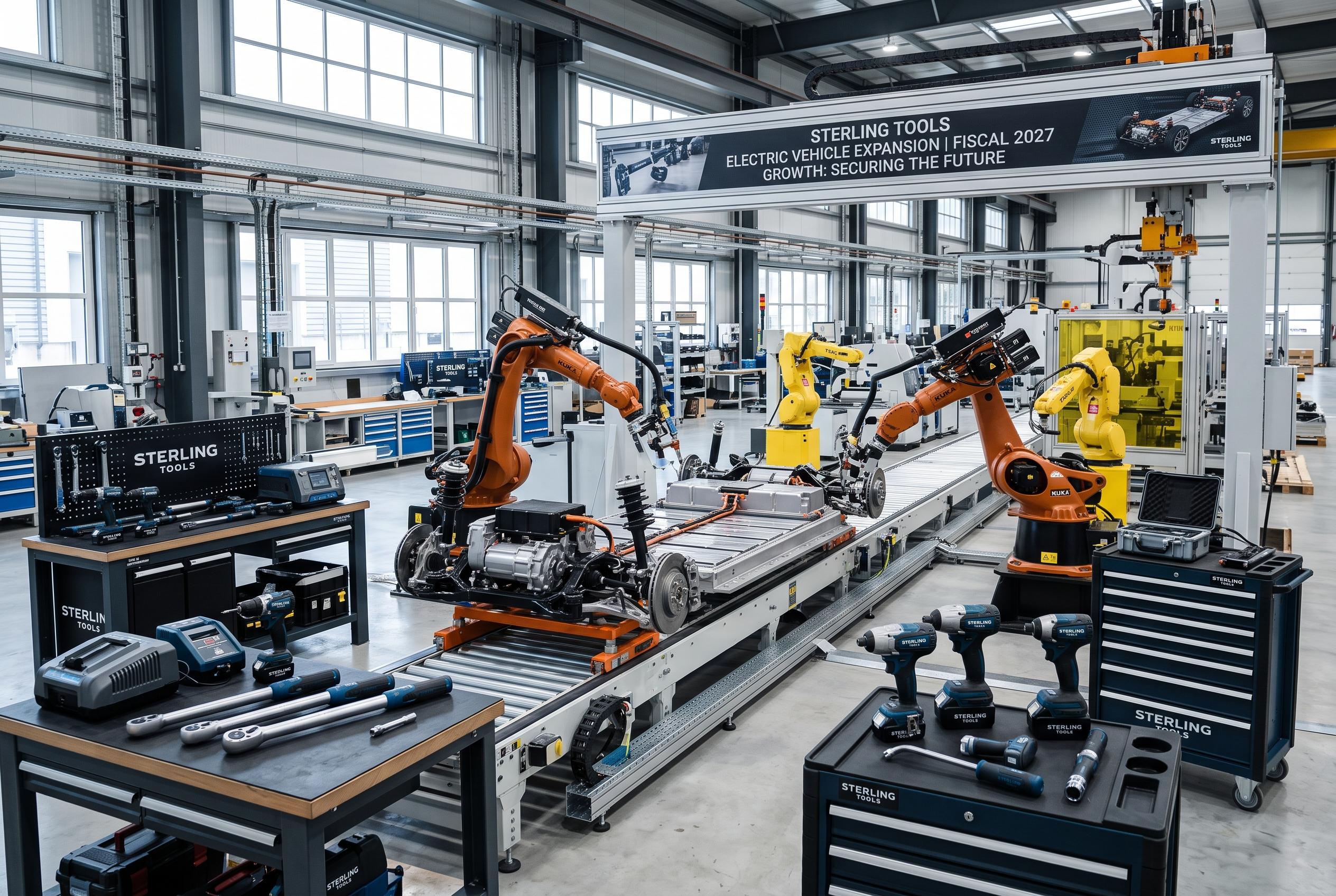

Sterling Tools Ltd reports a strong start to fiscal 2027, driven by increased demand and strategic expansion into electrification, despite facing rising input costs and ongoing losses in mobility divisions.
Sterling Tools Ltd said its first-quarter performance for fiscal 2027 was driven by stronger underlying demand, improved margins and progress in its electric-vehicle push, even as it faced rising input costs and continuing losses in its newer mobility businesses.
According to the company’s earnings call highlights, consolidated standalone income rose 23.7% from a year earlier and profit after tax climbed 48.4%. EBITDA margin improved to 15.4% from 15% a year ago, helped by operational efficiency and tighter financial control. The fasteners business remained cash-generative and debt-free on a standalone basis, giving the group room to keep investing ahead of demand.
Management said the company is increasing its footprint in commercial vehicle programmes, particularly in light commercial and heavy commercial vehicles, while also expanding into electrification. Sterling E-Mobility has 33 active customer programmes and has secured business confirmations from four original equipment manufacturers. Production lines for onboard chargers and multifunction units are expected to be commissioned in the second quarter of fiscal 2027, while Sterling Tech Mobility has won seven programmes for high-voltage DC contactors and relays, with supplies due to begin from the same quarter.
The company also highlighted work on advanced driver-assistance systems and driver monitoring technology, citing an Indian regulatory timetable that would require such features in medium and heavy commercial vehicles from October 2027. At the same time, it acknowledged pressure from higher steel, commodity and wage costs, saying price negotiations with customers are under way. Chief executive Atul Agarwal said capacity in the fasteners division is running at 90% to 95%, while the EV businesses are still burning cash and are expected to reach break-even in fiscal 2028.
Disclaimer: This article is intended to inform and educate, not to recommend or endorse any financial product, investment or strategy. Please consider your own financial circumstances and seek professional advice where appropriate before making financial decisions.



