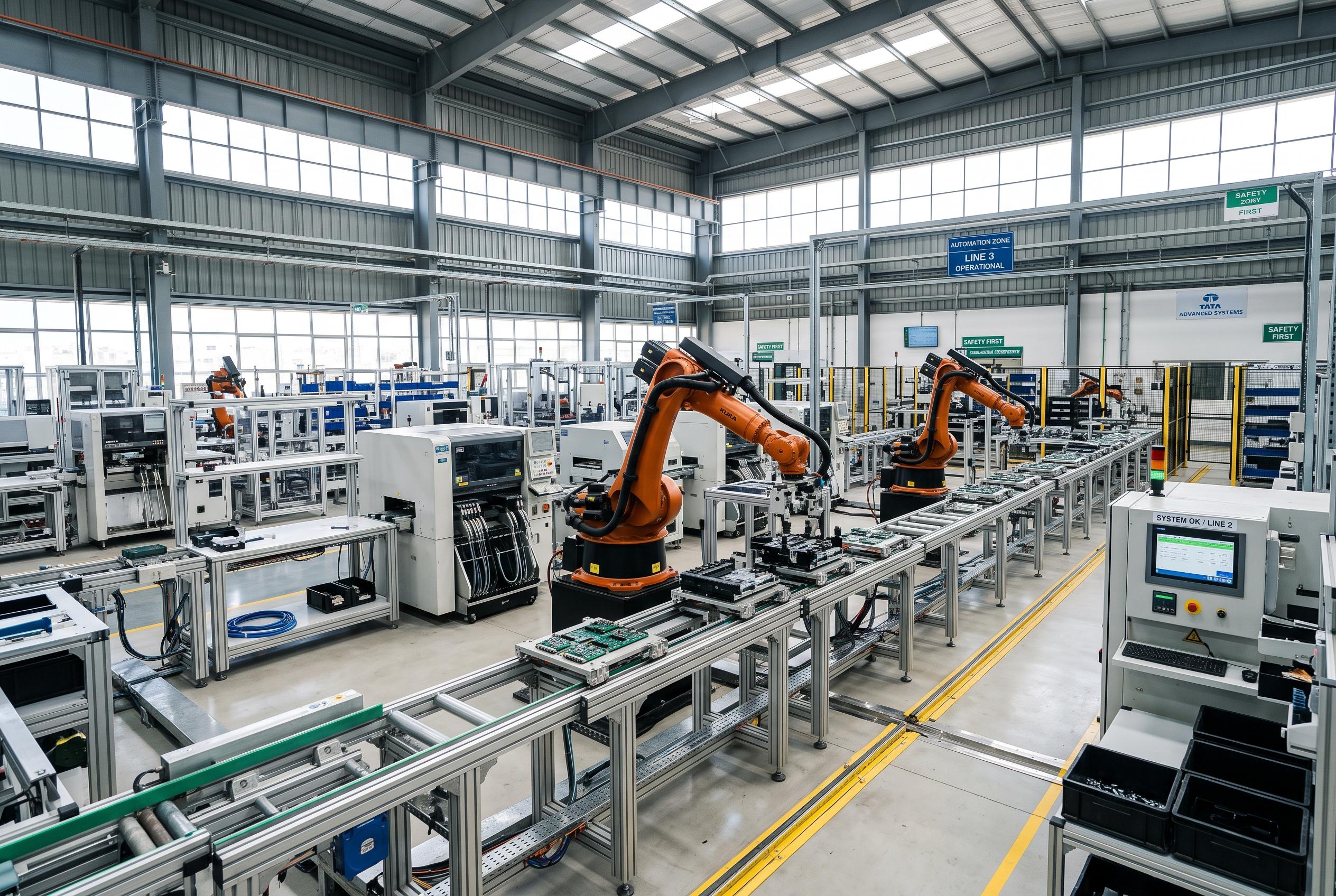

A parliamentary standing committee warns India that expanding trade pacts alone is insufficient, emphasising the need for industrial strength, innovation, and diversification to truly embed the country in future supply chains amid shifting global dynamics.
India needs to look beyond tariff talks if it wants a durable place in global trade, a parliamentary standing committee on commerce has warned, arguing that the country’s export strategy must be built around advanced manufacturing, stronger small businesses and technology-intensive goods rather than market access alone. The committee’s 200th report on India-US trade relations says the bigger prize lies in helping Indian industries become essential parts of international supply chains as tariffs, geopolitics and trade fragmentation reshape commerce.
The report comes as New Delhi and Washington pursue “Mission 500”, a target to raise bilateral trade to $500 billion by 2030. While the committee supports an early conclusion to a proposed India-US bilateral trade agreement, it also urges India to cut logistics costs, remove non-tariff barriers, strengthen export competitiveness and set up quicker institutional systems for resolving disputes. The message is that trade pacts can open doors, but industrial strength decides who benefits most.
A major part of that strategy centres on micro, small and medium enterprises, which the committee sees as critical to sectors such as engineering goods, auto components, textiles, leather, chemicals, agriculture and marine products. It recommends easier export credit, technology upgrades, compliance support and market diversification, alongside digital export systems, overseas warehousing and early warnings on regulatory changes. The emphasis mirrors wider policy thinking in India, with Niti Aayog also pushing for more domestic value addition in electronics, stronger research and development and a shift away from low-value assembly towards component production and design.
Technology, however, is the clearest marker of where India wants to go next. The committee calls for deeper cooperation with the US in semiconductors, artificial intelligence, critical minerals, quantum technologies, advanced communications, clean energy and digital infrastructure, while also highlighting global capability centres, engineering research, cloud computing and cybersecurity as growth areas. That fits with other official ambitions now taking shape, including Niti Aayog’s target of building a $120 billion to $150 billion semiconductor value chain by 2035 and broader efforts to make India a more reliable manufacturing and export hub.
India is also being encouraged to widen its commercial footprint beyond the US by reaching deeper into Europe, ASEAN, Africa, the Gulf and Latin America. The committee says that diversification is increasingly important as companies worldwide redesign supply chains for resilience rather than pure cost efficiency. For India, the opportunity is clear: if it can combine manufacturing scale, policy stability and a stronger MSME base with higher-end technology capabilities, it could become one of the more attractive alternatives in a changing global trade map.
Disclaimer: This article is intended to inform and educate, not to recommend or endorse any financial product, investment or strategy. Please consider your own financial circumstances and seek professional advice where appropriate before making financial decisions.