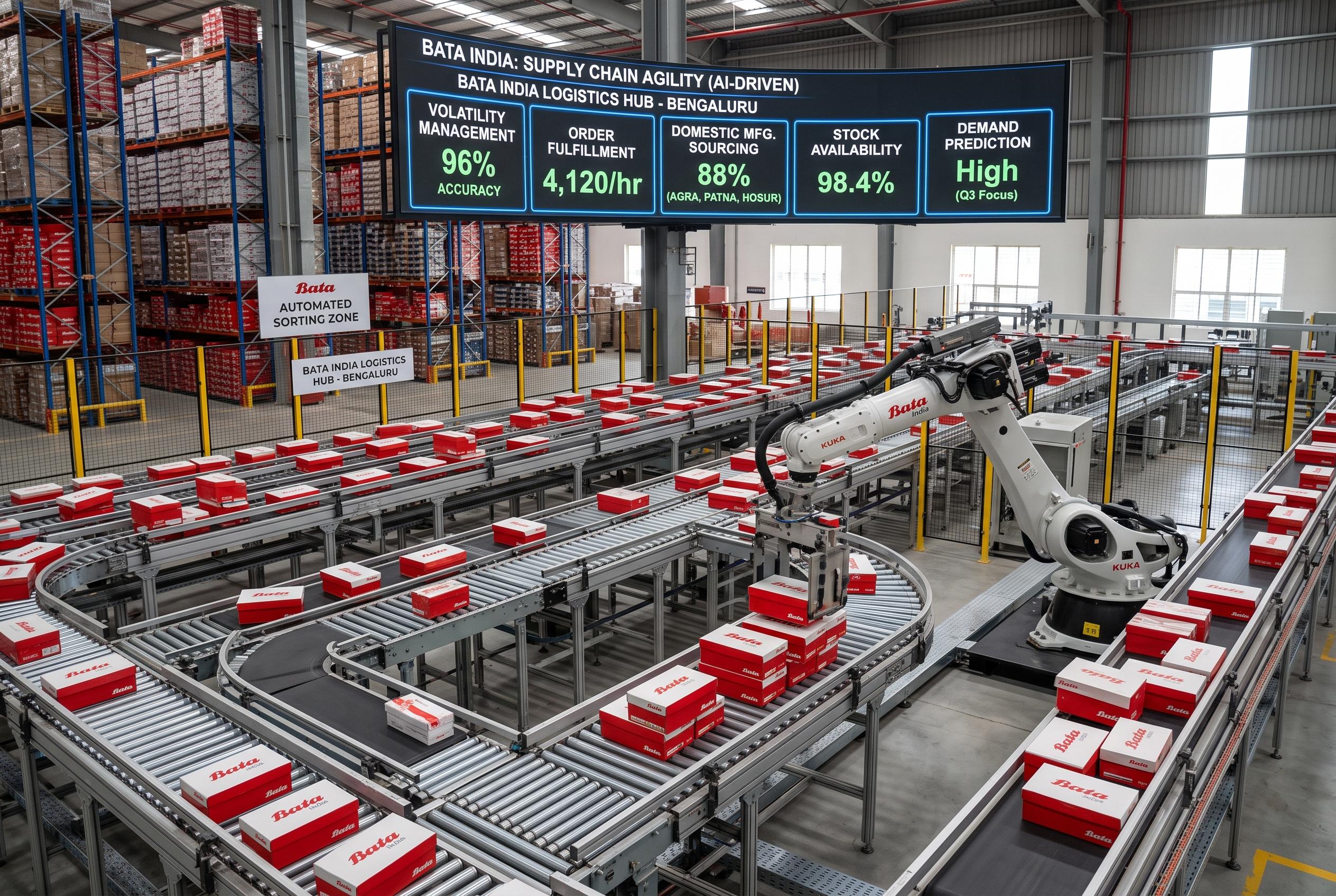

Bata India is overhauling its supply chain to boost resilience amid geopolitical tensions and shifting consumer habits, leveraging domestic manufacturing and advanced technology to streamline operations and meet omnichannel demand.
Bata India is reworking the way it moves shoes from factory to shelf as it faces a more volatile retail environment, with geopolitical tensions, shifting trade policies and repeated logistics disruptions forcing companies to build more resilient supply chains. In an interview with Logistics Insider, Anjan Kundu, the company’s head of supply chain management for India and Africa, said India now accounts for nearly a third of Bata’s global business and that about 99% of the materials used in the country are made domestically. He said that scale has allowed Bata to rely on a supply chain built around Indian manufacturing and sourcing rather than imported inputs.
The company has also been tightening its supplier base. Kundu said Bata has deliberately reduced the number of manufacturing partners in favour of fewer, larger ones, arguing that the approach improves economies of scale, supports capability investment and makes operations more efficient. The company has two manufacturing units and a wider network of partners, but its focus has shifted towards greater consolidation, better inventory visibility and closer coordination between manufacturing, procurement and retail.
Technology is now central to that effort. Bata India is using artificial intelligence and machine learning to improve demand forecasting and has adopted store-level assortment planning through zero-based merchandising, which means each outlet can be stocked according to its own customer profile rather than a broad national template. Kundu said these changes have shortened replenishment cycles, including milk-run night dispatches that cut the time from more than 11 days to nearly 5 days. That kind of speed matters as the company tries to reduce stock-outs and excess inventory while supporting nearly 2,000 stores and a growing omnichannel business. TechCircle reported earlier this year that Bata has spent the past five to six years modernising its technology stack, moving core workloads to Oracle Cloud Infrastructure and standardising systems across the business, while Indian Retailer said its zero-based merchandising rollout across 146 stores cut SKUs by 40% and inventory by 25%.
Bata’s supply chain strategy is also being reshaped by changing shopping habits. Consumers now expect the same product to be available in store, online and through quick commerce, and Kundu said that has pushed the company towards one integrated omnichannel network rather than separate channel-specific systems. According to earlier reports by Mint, Bata has been leaning into a digital-first model and targeting younger shoppers, particularly in sneakers and casual footwear, while aiming to make a larger share of revenue come through digital channels. The broader message from the company is clear: future-ready retail will depend on tighter integration between merchandising, manufacturing and distribution, backed by data, automation and a more flexible domestic supply base.
Disclaimer: This article is intended to inform and educate, not to recommend or endorse any financial product, investment or strategy. Please consider your own financial circumstances and seek professional advice where appropriate before making financial decisions.