

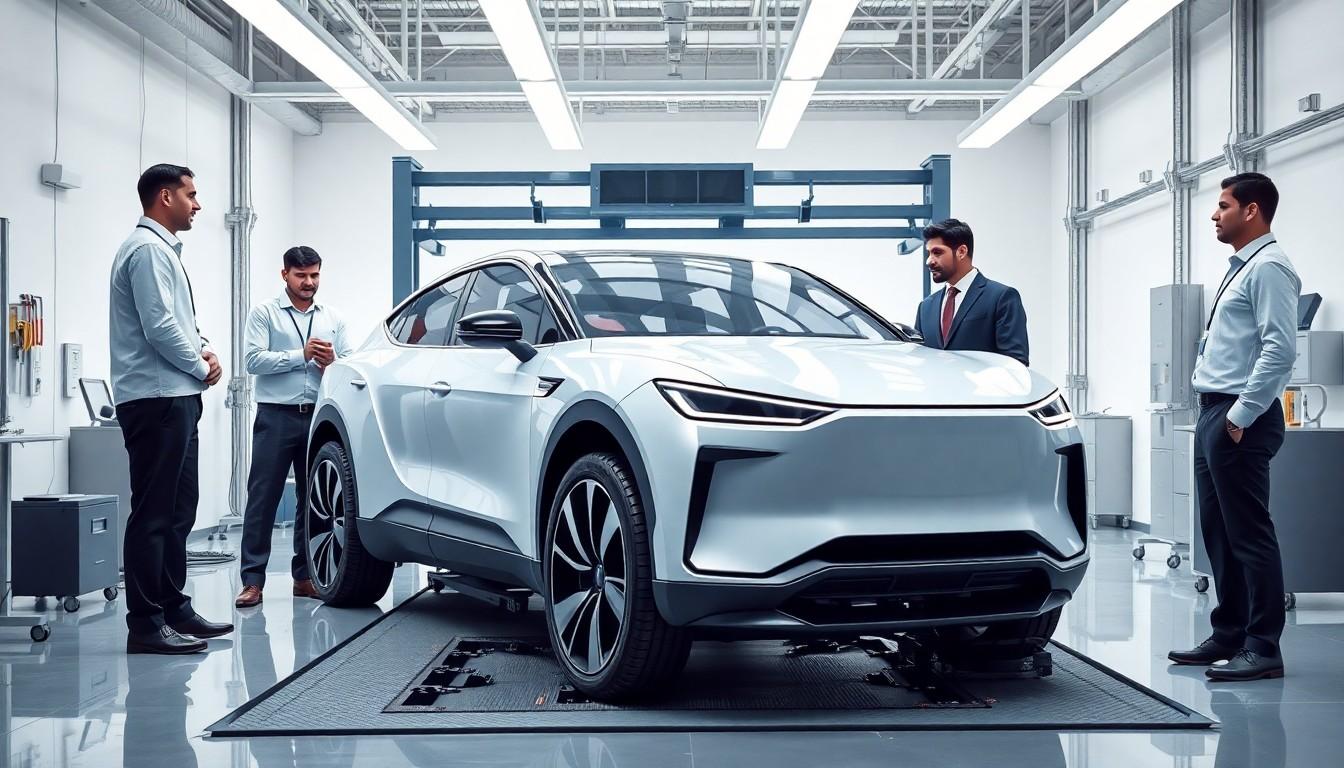

Kotak Institutional Equities reports that India’s automotive research and development budgets are expected to stay under strain until 2026, as domestic manufacturers focus on defending market share against fierce Chinese EV competition and a slower transition to electric vehicles.
Kotak Institutional Equities said India’s automotive research and development budgets are likely to stay under strain into 2026 as carmakers contend with tougher Chinese competition and a slower-than-expected shift to battery electric vehicles. The brokerage said original equipment manufacturers are putting money into existing platforms and models rather than bold new launches, a sign that the industry is trying to defend market share while keeping costs tight. The Hindubusinessline reported the note was published on August 6, 2026.
That shift matters because the global EV market is still being reshaped by China’s scale and pricing power. The International Energy Agency said Chinese makers accounted for nearly two-thirds of global light EV sales in 2025, while a separate McKinsey analysis noted that automakers remain under pressure from heavy upfront investment needs and fierce price competition even as battery technology and charging infrastructure improve. For India, that combination is pushing local manufacturers to be more selective about where they spend, especially when demand for fully electric cars is advancing more gradually than some had expected.
Kotak said the work that is still getting funded is concentrated in body engineering, value analysis and homologation, the certification process needed to confirm a vehicle meets regulatory requirements in a market. That points to more demand for mechanical engineering services, while new platform development programmes have been delayed or dropped. The brokerage’s view also fits with recent reporting that Indian EV component makers face a 20% to 30% cost disadvantage versus Chinese suppliers, reflecting fragmented demand, lower volumes and dependence on imported inputs such as semiconductors, rare-earth magnets and advanced materials.
Even so, not all parts of the sector are weakening. Kotak said commercial vehicles and off-highway equipment remain comparatively resilient, helped by spending on alternative powertrains and autonomous systems, and those outlays should stay healthy for the next 3 to 4 quarters. The IEA has also said emerging markets including India are building more local EV production capacity, even as Chinese exports continue to pressure rivals. That suggests the investment cycle in India’s auto industry is not disappearing, but it is becoming more targeted, more defensive and more tightly linked to near-term commercial returns.
Disclaimer: This article is intended to inform and educate, not to recommend or endorse any financial product, investment or strategy. Please consider your own financial circumstances and seek professional advice where appropriate before making financial decisions.



