

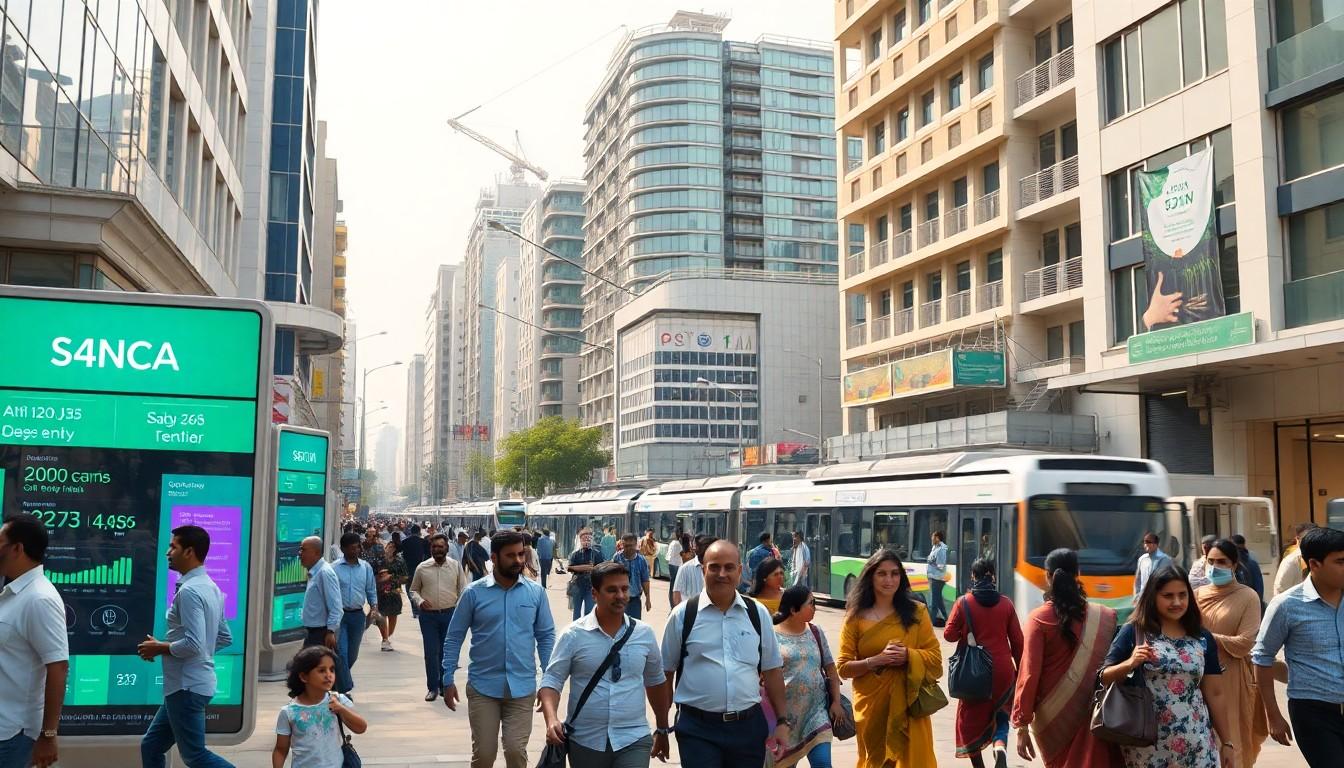

India’s vision for 2047 underscores a comprehensive approach combining growth, social inclusion, environmental sustainability, and financial sector reform to transform the nation into a developed economy amid emerging challenges.
India’s plan to become a developed nation by 2047 rests on a sweeping agenda that spans growth, social equity, environmental sustainability and institutional reform. The broader vision, set out in NITI Aayog’s approach paper for Bharat @ 2047, imagines an economy of roughly USD 30 trillion to USD 40 trillion, backed by far higher per capita incomes, near-universal access to quality services and a stronger global role. Drishti IAS notes that this ambition is tied to deep reform rather than incremental change, with governance, bureaucracy and fiscal management all expected to evolve alongside the economy.
At the heart of the programme are several linked priorities: empowering youth, women, farmers and poorer households; strengthening manufacturing, services and exports; and building a more innovative, better governed economy. The approach paper also places emphasis on sunrise sectors such as digital public infrastructure, renewable energy and advanced technology, while keeping agriculture, micro, small and medium enterprises, investment and exports at the centre of the growth model. That combination reflects an attempt to balance rapid industrial expansion with inclusion and sustainability.
The infrastructure challenge is just as large. Roads, railways, ports, airports, smart cities, energy systems and digital networks will all need major expansion if India is to sustain high growth over the next two decades. Drishti IAS says these changes will depend on both public capital spending and a more effective system of governance, including reduced compliance burdens, more accountable institutions and stronger fiscal discipline. The government’s own national programmes, including Make in India, Digital India, Skill India, PM Gati Shakti and the National Education Policy 2020, are expected to serve as building blocks for this wider transformation.
Social development remains a defining test. The vision calls for universal education, better vocational skills, wider healthcare access and a serious push towards poverty reduction and social inclusion. It also recognises that growth alone will not be enough if inequality, gender gaps and the rural-urban divide remain entrenched. The reform agenda therefore places weight on human capital, with education quality, employability and public health presented as essential to making development both durable and inclusive.
Banks are expected to play a central role in translating that ambition into financing. In the article by Dr V. S. Kaveri for Banking Finance, the sector is cast as the financial backbone of Viksit Bharat, responsible for supplying long-term capital for infrastructure while also expanding credit to MSMEs, green projects and rural development. The piece argues that lenders will need to move towards cash flow-based lending, sharper early-warning systems, better internal ratings, more advanced collection methods and greater use of data and automation. It also points to partnerships with fintech firms, product innovation around open banking and CBDCs, and stronger cyber security as banks modernise their operations.
The larger warning is that the Viksit Bharat target will not be achieved through policy declarations alone. India still faces the risks of a middle-income trap, weak job creation, inflation pressures, social inequality, rapid urbanisation and climate stress. That is why both the development framework and the banking-sector role described in the Banking Finance article converge on the same conclusion: the next phase will demand sustained investment, cleaner governance, wider financial inclusion, stronger institutions and a much closer partnership between the state, markets and citizens.
Disclaimer: This article is intended to inform and educate, not to recommend or endorse any financial product, investment or strategy. Please consider your own financial circumstances and seek professional advice where appropriate before making financial decisions.



