

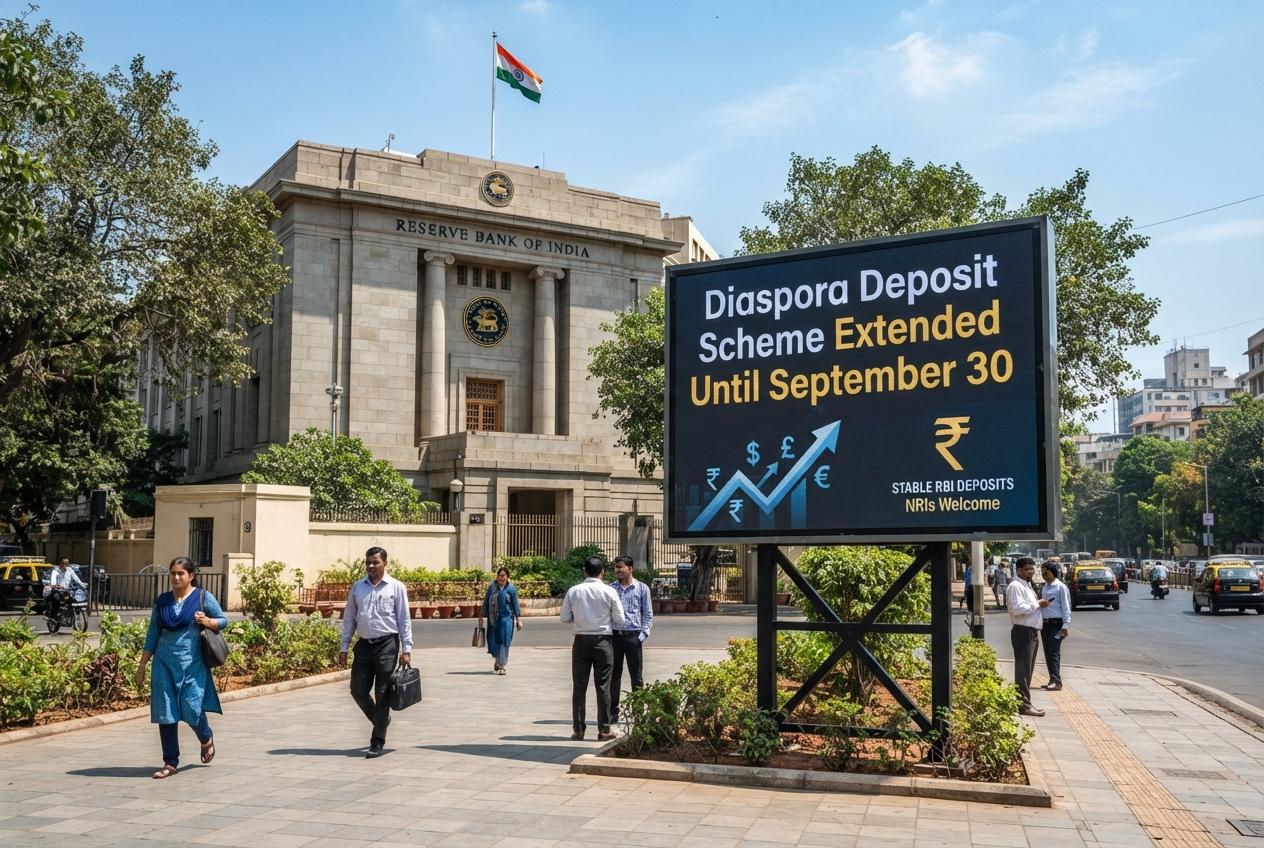

India’s Reserve Bank will keep its overseas deposit window open until September 30, as a surge in foreign currency inflows supports the rupee and bolsters reserves, with expectations of surpassing $50 billion in total deposits.
India’s central bank will keep its overseas deposit window open until the end of September, with Governor Sanjay Malhotra signalling that there is no plan to shut it early. Speaking in Mumbai on Tuesday, he said the Reserve Bank of India expects “good, healthy flows” from the scheme, which has become a key way to pull foreign currency into the system while the rupee remains under pressure.
The programme, launched in June, allows banks to raise foreign-currency deposits from non-resident Indians on more attractive terms because the RBI is covering part of the hedging cost. In plain terms, that makes it cheaper for banks to protect themselves against currency swings, so they can offer better rates to savers abroad without taking on quite as much risk. The setup matters for the roughly 35 million Indians living overseas, many of whom already send money home or keep financial links with India.
The response so far has been substantial. RBI data show FCNR(B) deposits had reached $36.72 billion by July 31, before August flows were even counted. When those deposits are combined with other overseas borrowing and foreign-currency loans, the total rises to about $41 billion. State Bank of India was the biggest holder among domestic and foreign lenders, with $13.82 billion of FCNR(B) deposits as of July 30. Separate reporting by The Indian Express said banks had already mobilised $17.4 billion under the special window, with expectations that the overall tally could top $50 billion before the scheme closes.
For Indian households and investors, the immediate point is timing. The window stays open until September 30, so the next few weeks will show how much more money comes in. If inflows continue at the current pace, India’s foreign-exchange reserves should get a lift, which can help support the rupee and give the RBI a little more room to manage market stress. That is why the scheme matters beyond banking desks: it can feed through to the currency, overseas investor sentiment and, indirectly, the value of Indian assets.
Disclaimer: This article is intended to inform and educate, not to recommend or endorse any financial product, investment or strategy. Please consider your own financial circumstances and seek professional advice where appropriate before making financial decisions.



