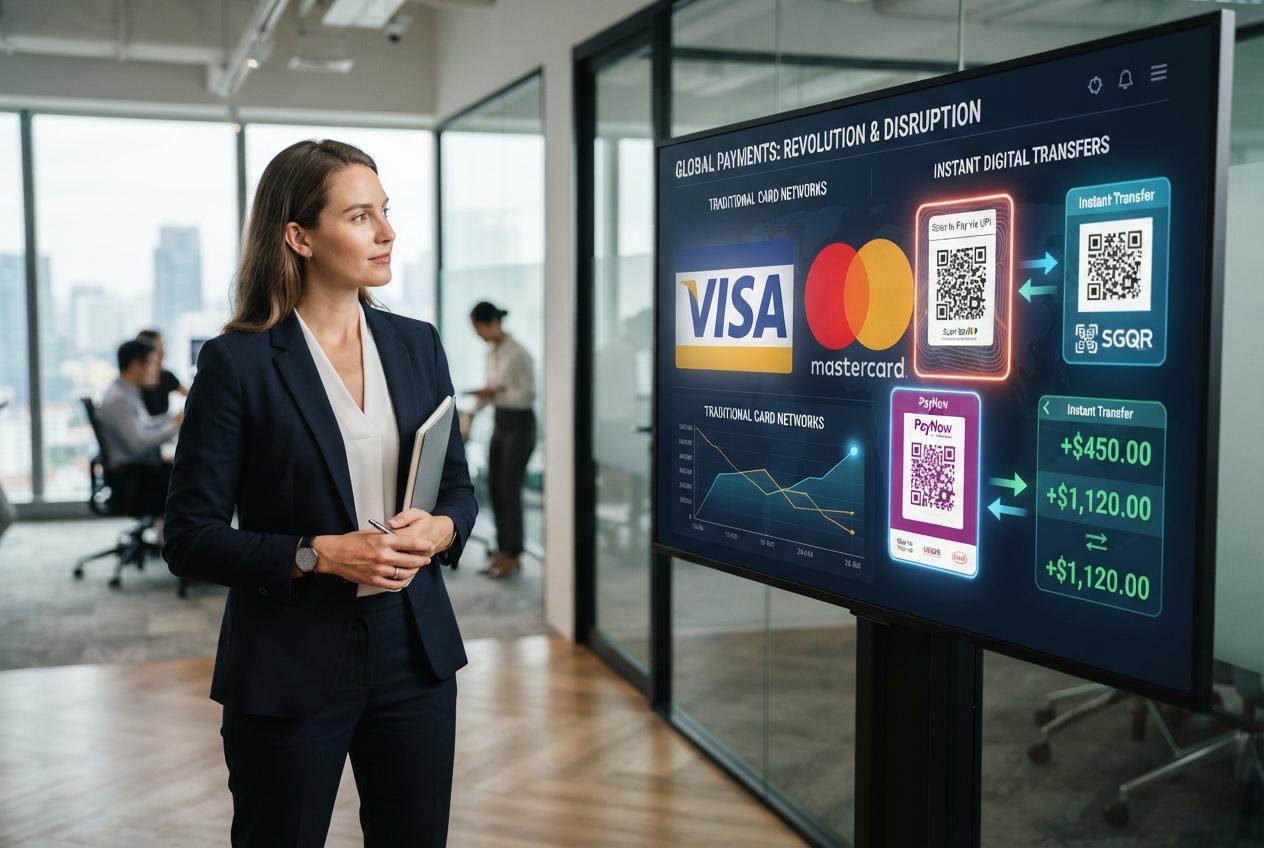

As QR codes and instant funds transfer systems become more prevalent worldwide, traditional card networks like Visa and Mastercard face a transforming landscape, raising questions about their future role in domestic and cross-border transactions.
For decades, the humble payment card has been making money movement faster, simpler and less visible. What began as a convenience for shoppers and travellers has steadily expanded into the backbone of everyday commerce, from buying dinner abroad to paying rent from a phone in Cuenca. The result, as one observer notes, is a world in which people can now move funds with far less effort than it once took to find cash, write a cheque or stand in line at a bank.
The modern card era took shape in Britain in 1966, when Barclaycard entered the market using a system modelled on BankAmericard, the American network that later became Visa. Access followed in 1972 and became linked with Mastercard. Mastercard’s own history shows that it grew out of the Interbank Card Association, formed in 1966, before evolving into a global payments network. What began as a relatively crude shop payment method, involving carbon paper and mechanical imprinters, gradually became a trusted way to pay in person and, later, across borders.
Its real breakthrough came in travel. Before card networks became widely accepted, going overseas meant estimating how much cash to carry or relying on traveller’s cheques, which were safer but awkward to use and not universally accepted. In the United States in particular, foreign visitors often had to depend on hotels, exchange bureaux or banks willing to handle unfamiliar payment instruments. Credit cards reduced much of that friction, allowing people to book hotels, eat in restaurants and handle emergencies without carrying bundles of cash.
The next wave of change came with ATMs, debit cards and direct deposit. Wages and pensions began arriving straight into bank accounts, while standing orders and direct debits took over routine bills. Cheques did not disappear at once, but they faded as the need for paper-based handling diminished. The internet then gave cards a second life by turning them into a simple way to pay strangers at a distance, whether for airline tickets, online shopping or any other purchase made without a physical counter.
That digital shift is now being pushed further by QR-code payments and instant-transfer systems. In Cuenca, the article says, banking apps already allow residents to settle rent and household bills from home, while services such as Deuna and Sipy let users scan a code and pay without handing over a card. Brazil’s Pix system has gone further still. Operated by the central bank, it allows money to move between accounts within seconds, at little or no cost, and has become especially important for businesses that want funds quickly rather than waiting days for card settlements.
For Visa and Mastercard, that creates a more complicated future. Their global reach, fraud protection, chargeback rights and ability to support borrowing still give them a strong role, especially for travel, hotels and cross-border purchases. But instant-payment systems could take over more domestic spending, leaving card networks to serve as premium services rather than the default method for every transaction. That would bring payments full circle to the old advice that started the piece: use credit cards for the protection and convenience they offer, but pay them off in full and do not confuse ease of payment with affordability.
Disclaimer: This article is intended to inform and educate, not to recommend or endorse any financial product, investment or strategy. Please consider your own financial circumstances and seek professional advice where appropriate before making financial decisions.