

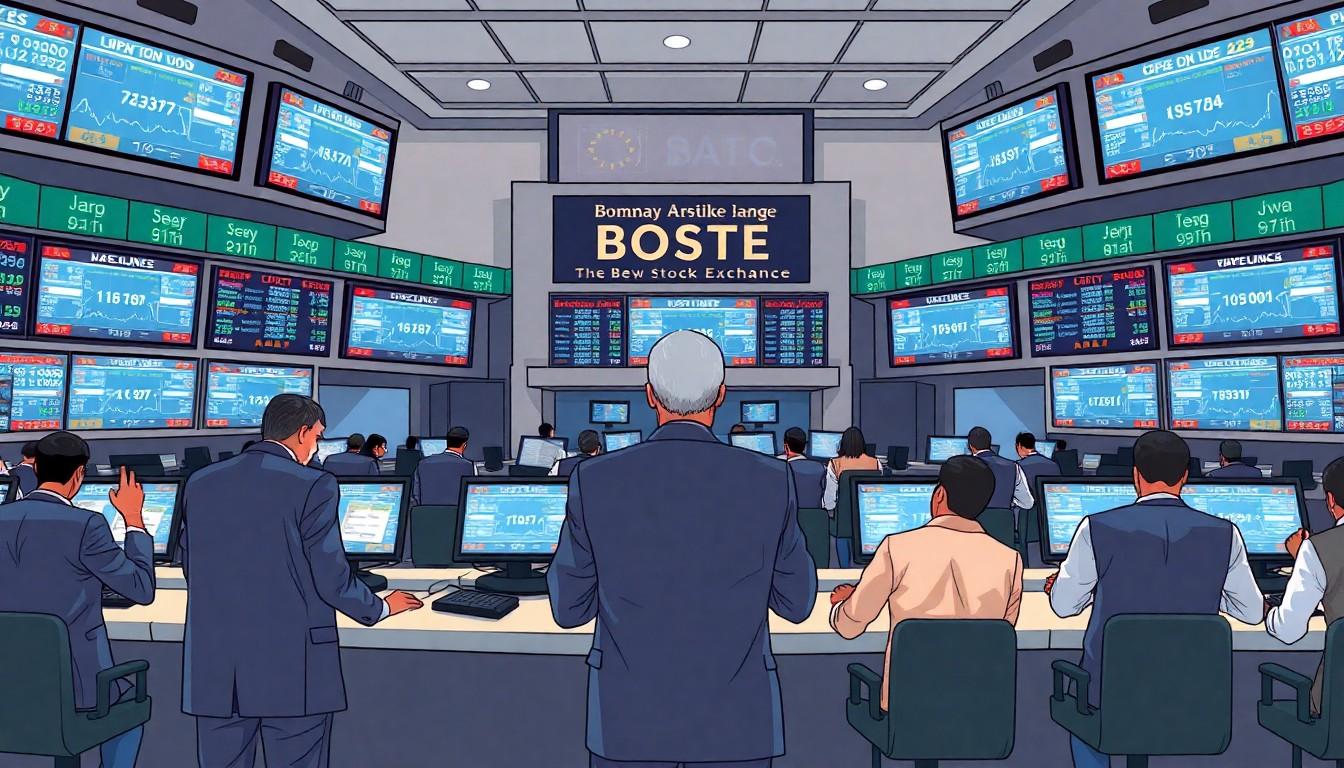

The Bombay Stock Exchange has introduced a new end-of-day Closing Auction Session to enhance transparency and fairness in determining closing prices, impacting traders and investors with derivatives contracts and benchmark indices.
BSE has told investors and trading members to get familiar with the Closing Auction Session, a new end-of-day mechanism that now plays a bigger role in setting official closing prices for stocks with derivatives contracts. The exchange’s note follows recent Sebi and BSE circulars that introduced the revised framework, which is meant to make the closing price more orderly, transparent and less vulnerable to late-session swings.
For ordinary investors, the change matters because the closing price is not just a number on a screen. It feeds into benchmark index levels, including the Sensex, and also helps determine daily mark-to-market gains and losses in the derivatives market. That means it can affect everything from how futures and options are settled to whether an options contract expires in or out of the money. In simple terms, the last price of the day now carries even more weight for traders and passive investors alike.
According to Sebi’s January circular, the Closing Auction Session is a 20-minute window from 3:15 pm to 3:35 pm, with a random close in the final two minutes. Orders are matched using an equilibrium-price process designed to maximise executable volume, with only market and limit orders allowed and a ±3% band around the reference price. Unexecuted eligible limit orders from the normal trading session can move into the auction with priority, while stop-loss and iceberg orders are excluded. The regulator has said the aim is to improve fairness and bring India’s market plumbing closer to global practice.
BSE has urged members to show indicative prices clearly on trading platforms, route orders smartly across exchanges and educate clients about the new setup. The exchange has also encouraged wider participation from retail investors, institutions, proprietary desks, market makers and intermediaries, arguing that deeper participation should improve the quality of the closing price. For investors in India, the practical takeaway is that the final minutes of trading may become even more important, particularly on days when expiry, index movement or large institutional flows are in play.
Disclaimer: This article is intended to inform and educate, not to recommend or endorse any financial product, investment or strategy. Please consider your own financial circumstances and seek professional advice where appropriate before making financial decisions.



