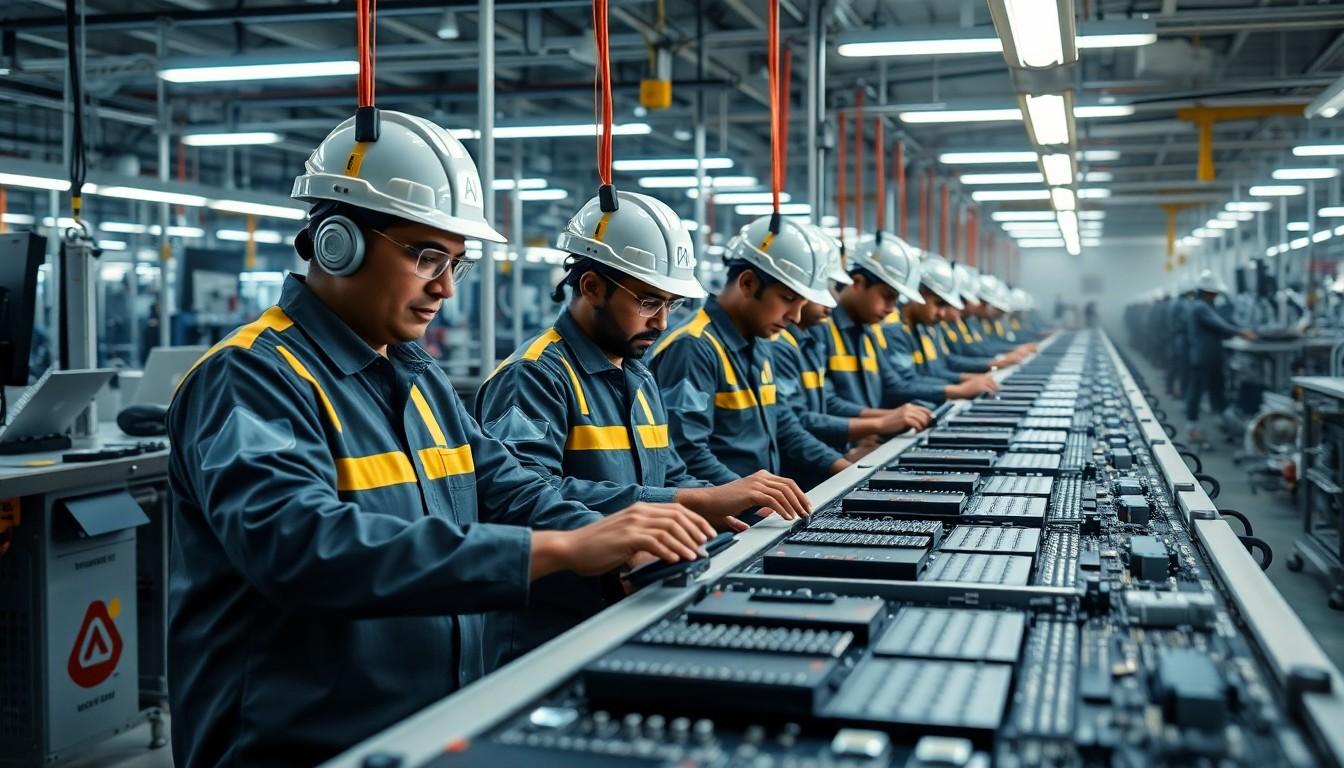

India’s proposed extension of a tax exemption until 2041 could solidify its position as Apple’s main iPhone manufacturing hub, signalling a significant shift in global supply chains and investment strategies.
India’s move to extend a tax break for foreign firms supplying machinery to local contract manufacturers could give Apple and its suppliers a longer runway to keep shifting iPhone production out of China and into India. According to Reuters, a draft of proposed tax changes seen by the news agency would push the exemption’s end date to 31 March 2041, ten years beyond what the law passed in February had set out. For Apple, which has spent months pressing New Delhi for certainty, that matters because it reduces the risk that financing production equipment for partners such as Foxconn and Tata Electronics could trigger an unwanted tax bill in India.
The practical issue is straightforward: if Apple pays for machines used in Indian factories, the company does not want that support treated as a taxable business presence in the country. Reuters reported that India’s tax rules had created exactly that concern, forcing suppliers to buy equipment themselves even when Apple needed the machinery for its own manufacturing chain. The proposed extension would let Apple and its contractors plan longer term, and potentially invest in higher-end equipment without worrying that the structure of those deals will be reclassified by tax officials later.
That is especially important because Apple’s footprint in India is no longer small. MacRumors reported in March that Apple assembled about 55 million iPhones in India in 2025, around a quarter of its global output, up sharply from the previous year. TechSpot said the India shift has become central to Apple’s supply strategy, as the company looks to spread production risk while U.S.-China trade tensions remain a background concern. Another industry report estimated that Apple wants India to account for roughly 30% to 32% of its global iPhone production by fiscal 2026-27, showing how quickly the country is moving from backup site to core manufacturing hub.
India’s own policy is clearly trying to match that ambition. Legal and business briefings on the 2026 budget say the government’s exemption was designed to support electronics manufacturing by giving foreign suppliers more tax certainty when they provide capital goods, equipment or tooling to Indian factories. The draft extension to 2041 would go further, giving companies a much longer planning horizon. That could help not only iPhones, but also tablets, laptops, wearables and other Apple hardware, as well as storage and component supply operations in India.
For readers, the bigger takeaway is that this is less about a single tax rule and more about where the next generation of Apple devices will be built. If India becomes the stable home for a larger share of Apple’s production, it could reshape supply chains, investment patterns and the economics of premium electronics manufacturing for years. The limits are still real: quality control, engineering know-how and scale remain harder to replicate than policy incentives. But the direction is now clear. India is no longer just offering Apple an alternative to China; it is trying to become the company’s long-term manufacturing base.
Disclaimer: This article is intended to inform and educate, not to recommend or endorse any financial product, investment or strategy. Please consider your own financial circumstances and seek professional advice where appropriate before making financial decisions.