

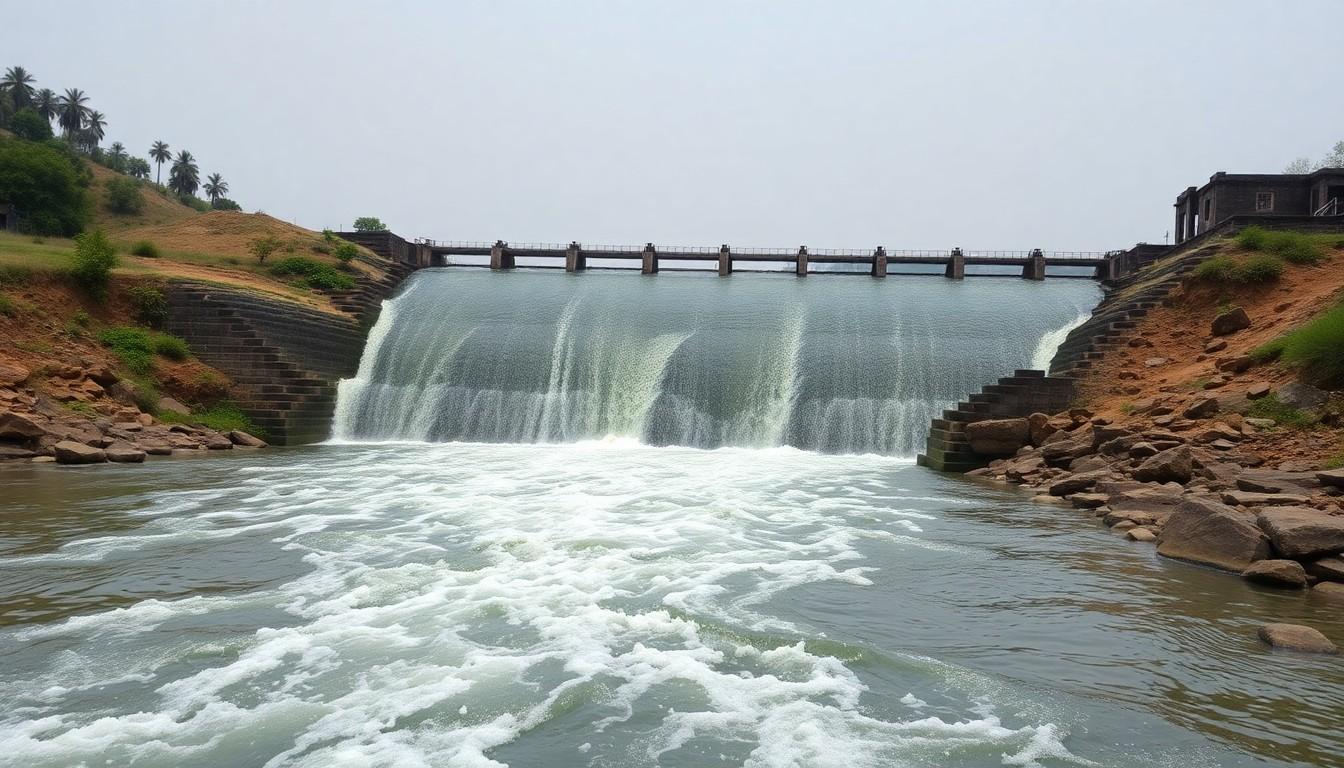

Water from Karnataka’s Kabini reservoir starts flowing into Tamil Nadu’s Cauvery basin, easing drought stress. Meanwhile, the Supreme Court extends vehicle insurance mandates amid a food safety crackdown on Dabur India’s misleading labels, reflecting evolving regulatory priorities.
Water released from Karnataka’s Kabini reservoir has finally begun making its way into Tamil Nadu, lifting flows at Hogenakkal and gradually feeding the Stanley Reservoir at Mettur after a dry spell left the Cauvery riverbed hungry for water. According to local reporting from The Hindu and The Times of India, the release took longer than expected to travel downstream because the dry channel absorbed part of the flow, but the inflow at Biligundlu and then Hogenakkal rose through Tuesday morning, prompting district officials to halt bathing and coracle rides as a precaution.
The broader significance is straightforward for farmers and households in the Cauvery basin: more water upstream tends to ease pressure on irrigation supplies and drinking water storage in Tamil Nadu, especially in Salem and the delta districts that depend on Mettur. The Times of India has reported in earlier Cauvery updates that heavier releases from Karnataka in 2025 also pushed up water levels at Mettur and Hogenakkal, underscoring how quickly conditions can change when catchment rainfall improves. That said, the reservoir is still far from full, so the immediate gain is in flow, not abundance.
In a separate development with wider relevance for motorists and insurers, the Supreme Court has extended compulsory third-party insurance for new vehicles by one year. Under the new order, buyers of new cars will need cover for four years and new two-wheelers for six years. The court said too many vehicles are still being driven without valid insurance, leaving accident victims to chase compensation through long legal battles, and it directed the Insurance Regulatory and Development Authority of India to issue instructions to put the rule into effect.
The bench also pushed for tighter enforcement. According to the court’s directions, ANPR cameras should be linked with the Insurance Information Bureau of India and the VAHAN registration database, while state police officers should be given mobile apps to check insurance status in real time and issue challans where needed. For everyday motorists, that could mean fewer gaps between buying a vehicle and keeping it legally covered. For victims of crashes, it should improve the chances of compensation being available when it is most needed.
Meanwhile, the Food Safety and Standards Authority of India has ordered Dabur India to remove several food products from the market over misleading “100%” claims, including honey, apple cider vinegar, coconut oil, sesame oil, ghee, coconut water and coconut milk. The regulator said those labels and online listings could mislead consumers and did not meet the advertising and claims rules, while some products were also said to have used the Jaivik Bharat logo without the right organic endorsement. Dabur told stock exchanges it believes its labelling complies with law and industry practice, though it said it had already begun removing the disputed claims and changing labels and advertisements.
The market reacted quickly. Dabur’s shares fell by about 4% after the order became public, reflecting investor concern that regulatory scrutiny can still hurt even well-known consumer brands. The company has said the order will have only a limited effect on its business because it relates to specific food items, but the episode is a reminder that food-label claims are no small matter: for consumers, they shape trust; for companies, they can affect sales, compliance costs and, as this week showed, share prices too.
Disclaimer: This article is intended to inform and educate, not to recommend or endorse any financial product, investment or strategy. Please consider your own financial circumstances and seek professional advice where appropriate before making financial decisions.



