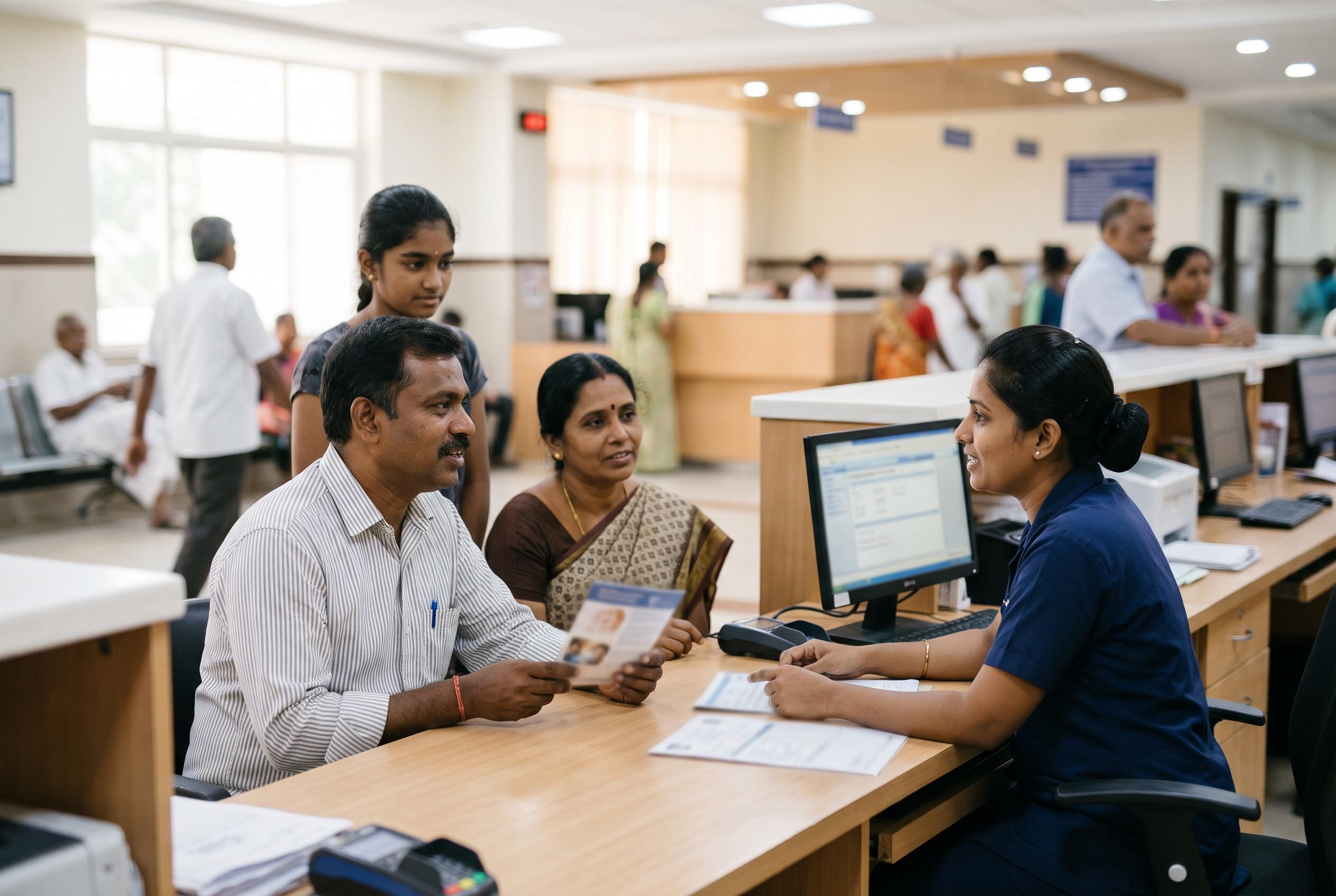

The change more than doubles the eligibility limit, with revised cover of up to Rs 25 lakh expected to begin in January 2027.
Tamil Nadu has sharply widened access to its state health insurance programme by lifting the annual family income ceiling to Rs 2.5 lakh, a move that will bring many more households into the Chief Minister’s Comprehensive Health Insurance Scheme. The change replaces the earlier threshold of Rs 1.2 lakh, according to the scheme’s official eligibility page and reports in Indian newspapers on Friday, and marks a significant expansion of cover for families that had previously been left out despite still facing serious hospital bills.
The updated framework is being introduced through a new tender for the scheme, with reports saying it will take effect from January 2027. Under the revised design, annual treatment cover is expected to rise to Rs 25 lakh at empanelled hospitals, while the insurer’s liability will remain capped at Rs 5 lakh and the state’s corpus fund will meet qualifying claims above that level. The New Indian Express said the 2027 guidelines also provide for treatment costs above Rs 5 lakh to be paid from the government corpus, underscoring how the state is shifting a larger share of the burden onto public finances.
The scheme’s expanded scope is also expected to cover a broader set of hospital expenses, including bed charges, medicines, diagnostic tests and follow-up treatment, according to reports on the tender details. Applicants will still need to provide standard documents such as a family ration card and income certificate, and the official scheme page says enrolment is handled through district card-issuing centres. The move therefore appears to be an extension of an existing administrative structure rather than the creation of an entirely new programme.
Tamil Nadu’s decision comes amid a wider pattern of state governments broadening health cover beyond the poorest households. Haryana has separately expanded its own scheme to middle-income families, according to The Times of India, in a reminder that hospitalisation costs can overwhelm households well above the traditional poverty line. Together, these measures reflect a growing recognition that health shocks can destabilise families across the income spectrum, not only those already in poverty. Separately, Tamil Nadu has also raised the upper age limit for direct recruitment into government service by five years, part of a broader policy push that responds to long-running demands from job seekers.
Disclaimer: This article is intended to inform and educate, not to recommend or endorse any financial product, investment or strategy. Please consider your own financial circumstances and seek professional advice where appropriate before making financial decisions.