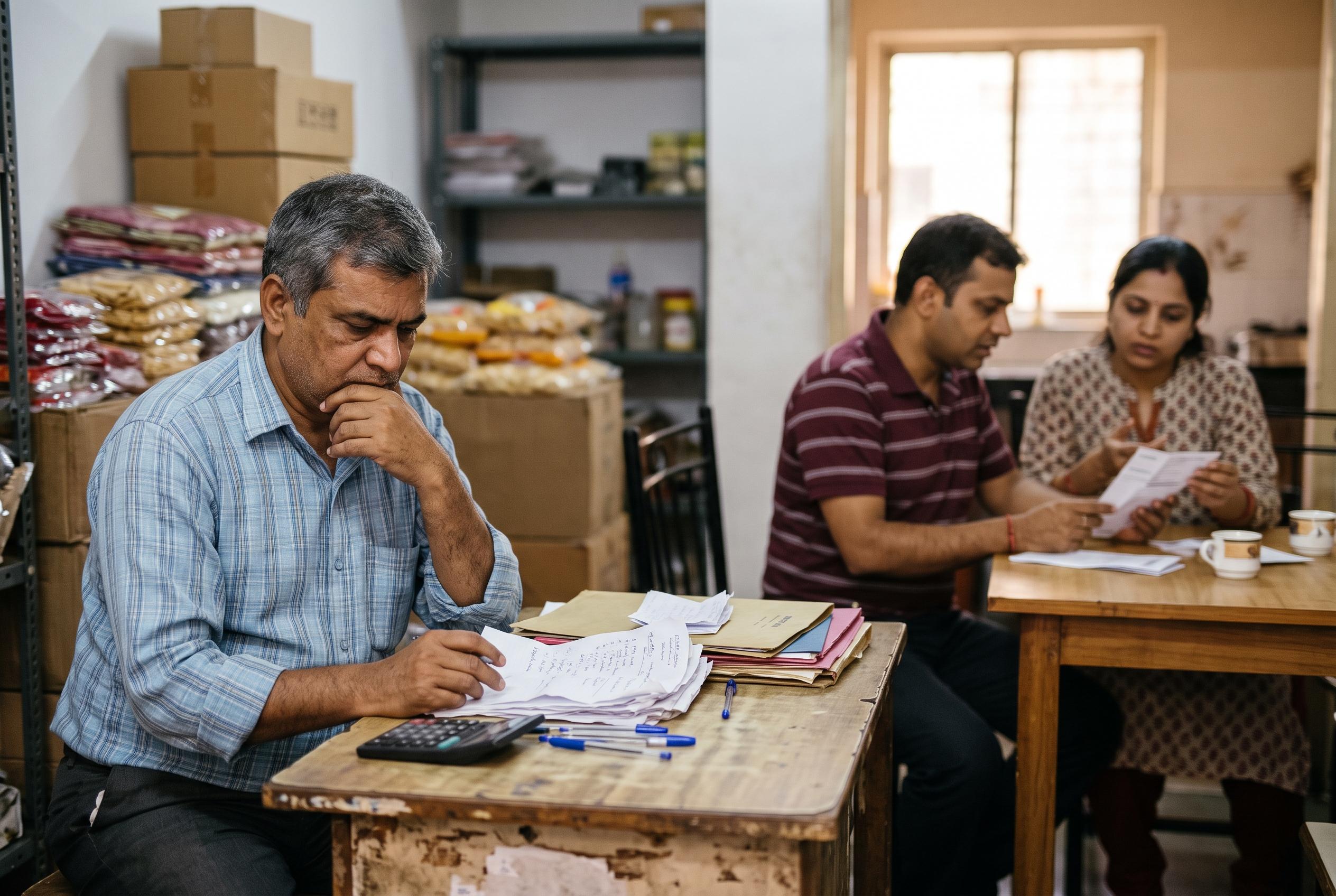

Even a limited rise in India’s repo rate could push up home-loan costs, squeeze MSMEs and weaken consumption as slower income growth leaves borrowers with less room to absorb higher EMIs.
India’s borrowing costs are likely to keep edging higher, but the larger test for households and companies may come from a slower, more uneven economic backdrop rather than the size of the next rate increase. Minutes of the Reserve Bank of India’s latest Monetary Policy Committee meeting show policymakers weighing either another increase in the repo rate or a pause, with concern growing that inflation is broadening beyond food and fuel. The central bank has already lifted the benchmark rate by 25 basis points to 5.50%, and analysts expect at least two more moves, even if the total tightening cycle proves shallower than last year’s.
That would still leave borrowers exposed. According to Business Standard, economists believe the cumulative increase may be limited to 50 to 75 basis points, well below the 250 basis points delivered in 2022. But the starting point is now higher, which means even a modest further rise can add materially to monthly repayments. Unlike the post-pandemic period, households no longer have the same buffer from reduced spending on travel, dining out and commuting, while food and fuel costs remain elevated. That combination leaves less room to absorb higher EMIs, especially if wage growth weakens.
The effect on home loans is clear. Adhil Shetty, chief executive of BankBazaar, told Business Standard that a ₹40 lakh loan over 20 years at 8% would rise to 8.25% if lenders passed on a 25 basis point increase in full. In his calculation, keeping the EMI higher would add roughly ₹1.5 lakh to total interest costs, while holding the EMI steady would extend the loan by about a year and increase the interest bill by around ₹4 lakh. For many borrowers, the practical choice is not between comfortable options, but between a larger monthly outgo now or a longer, costlier repayment schedule later.
Senior bankers quoted by Business Standard said the cycle is likely to hit retail borrowers and micro, small and medium-sized enterprises, though perhaps not in the same way as the immediate post-Covid tightening. One banker said higher EMIs could curb discretionary spending and weigh on demand, but argued that the broader consumption effect may be limited because Indian households are generally less rate-sensitive than borrowers in some other markets. Another said many home-loan customers may choose longer tenures to keep repayments manageable, while MSMEs operating on thin margins would face a heavier interest burden without necessarily being pushed into distress.
There is also a limit to how much borrowers can stretch. A senior public sector bank executive told the paper that some customers are already close to the edge on leverage, leaving limited room either to lengthen tenures further or to increase EMIs significantly. Even so, the bigger macroeconomic risk may come less from loan costs themselves than from household income growth. Gaura Sen Gupta, chief economist at IDFC First Bank, said persistently high crude prices could squeeze corporate profitability, slow pay increases and erode real incomes. In her view, that would matter more for consumption than the increase in borrowing costs alone.
Disclaimer: This article is intended to inform and educate, not to recommend or endorse any financial product, investment or strategy. Please consider your own financial circumstances and seek professional advice where appropriate before making financial decisions.