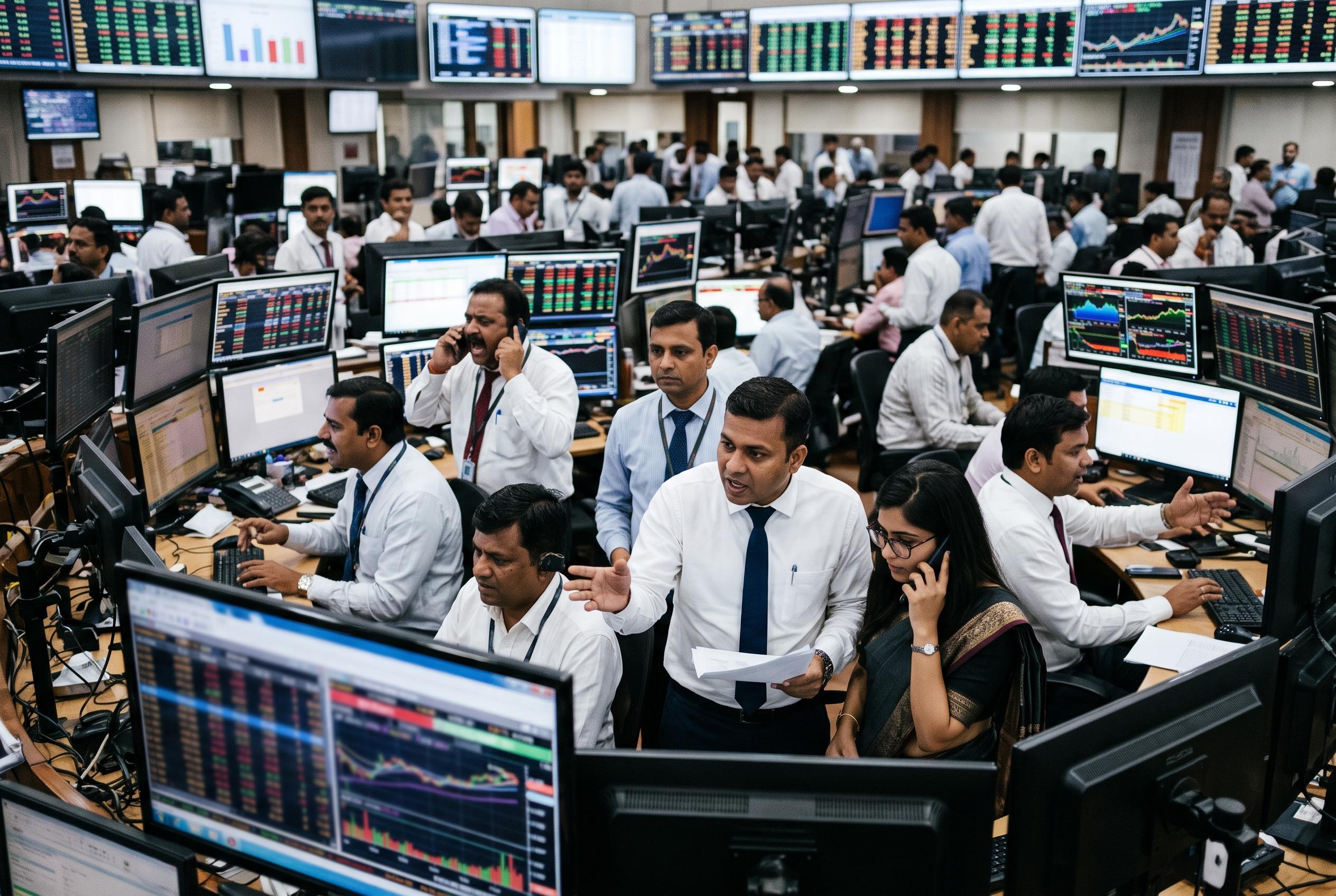

The Sensex fell more than 600 points and the Nifty dropped 1% in early trading as surging crude prices, high US bond yields and inflation fears hit equities across sectors and market-cap segments.
Indian equities opened sharply lower on Thursday, with the benchmark indices under pressure as selling spread across autos, metals, FMCG and the broader market. News18 reported that by 9:21 am the BSE Sensex was down 610.30 points, or 0.83%, at 73,099.39, while the NSE Nifty had slipped 229.55 points, or 1.01%, to 22,581.80, taking it below the 22,600 level.
The decline was not limited to large-cap names. Broad-based weakness hit mid- and small-cap shares as well, with the Nifty Midcap Select and Nifty Next 50 both falling around 1.6%, according to News18, while the Nifty Midcap 100 and Nifty Smallcap 100 also lost ground. Moneycontrol said the India VIX, a gauge of expected volatility, climbed to 16.55, pointing to growing investor caution, while another market report noted that volatility had moved higher as crude prices stayed elevated.
Sector performance showed the strain on cyclical names. News18 said the Nifty Chemicals index led losses, followed by metals, autos and cement, while consumer durables and healthcare also declined. Within the Sensex pack, Power Grid, Maruti Suzuki, Mahindra & Mahindra and Tata Steel were among the biggest laggards, even as Eternal, Axis Bank and ICICI Bank managed small gains or held steady.
Market strategists said the sell-off reflected more than a one-day wobble. V K Vijayakumar, chief investment strategist at Geojit Investments, told News18 that large-cap shares have been outperforming mid- and small-caps recently and argued that the gap between richly priced smaller stocks and relatively cheaper large-caps was likely to narrow. Other reports pointed to the same external pressures: Brent crude trading above $110 a barrel, high US bond yields and concern that rising oil prices could feed into inflation in India, the world’s third-largest oil importer.
Disclaimer: This article is intended to inform and educate, not to recommend or endorse any financial product, investment or strategy. Please consider your own financial circumstances and seek professional advice where appropriate before making financial decisions.