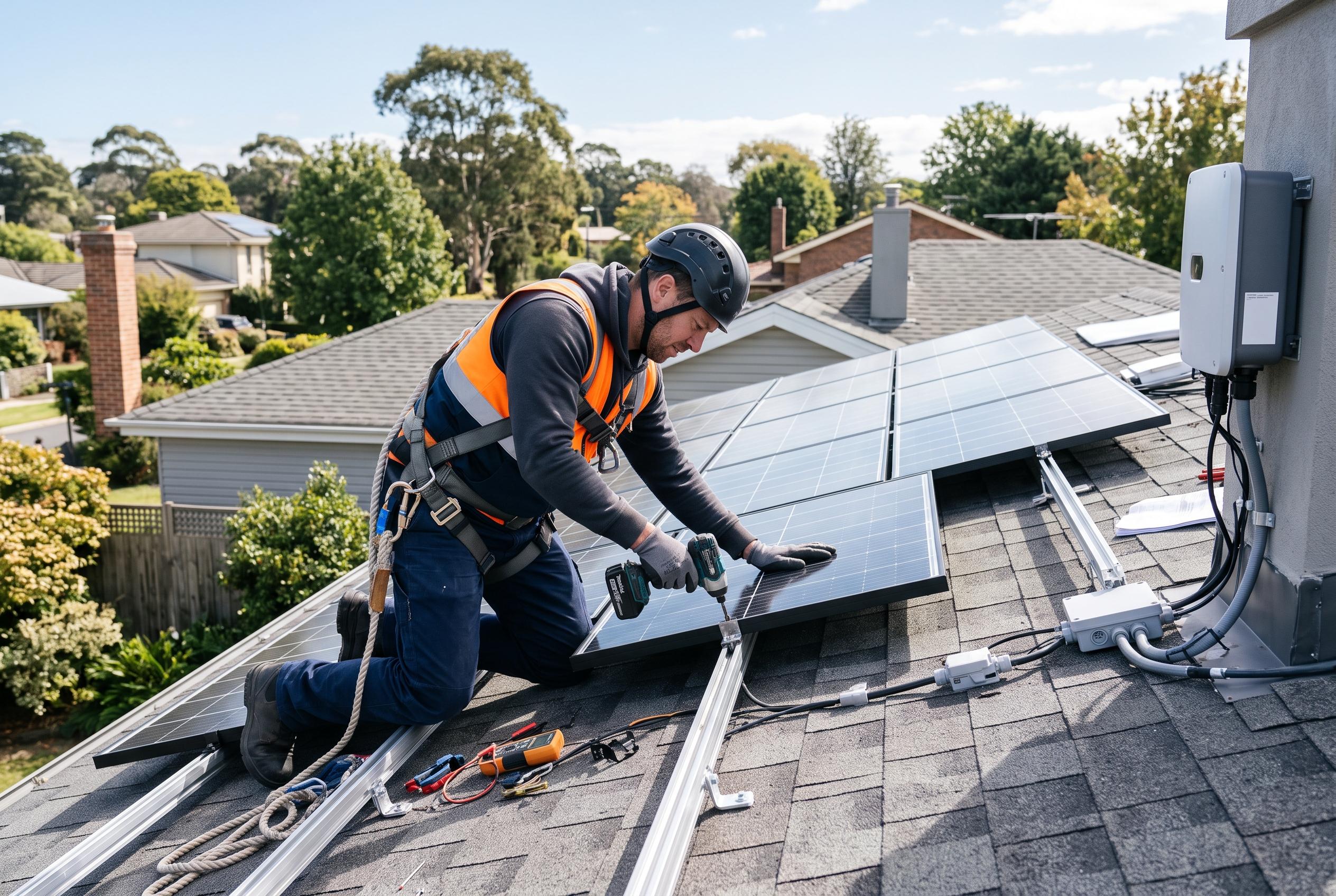

Panels and inverters qualify for 5% GST, but installation and other system components remain taxed at 18%, leaving typical turnkey rooftop projects with an effective rate of 8.9%.
India’s goods and services tax on solar panels and qualifying inverters stands at 5% in 2026, following the cut from 12% that took effect on 22 September 2025, according to SolarSquare’s guide and supporting industry explainers. The lower rate applies to solar modules and inverters, but a complete rooftop system is taxed in pieces rather than at a single flat rate, which is why the headline 5% figure can be misleading for buyers comparing quotations. Sources that track the current regime say the rest of the system, including several balance-of-system items and installation work, still draws 18% GST.
For a typical turnkey rooftop installation, the prevailing industry assumption is a 70:30 split between the equipment that qualifies for 5% GST and the remaining components and services taxed at 18%. SolarSquare and other industry guides say panels and inverters usually make up about 70% of project value, while mounting structures, cables, meters, protection gear and installation account for the remaining 30%. On that basis, the effective tax rate on the whole project comes to 8.9%, even though the underlying rates remain 5% and 18%.
The classification of the equipment also matters. Industry references say solar photovoltaic products sit under HSN heading 8541, with separate eight-digit codes for cells and finished modules. SolarSquare says 85414200 is used for photovoltaic cells that have not yet been assembled into modules, while 85414300 applies to cells assembled into modules, which is the more common classification for finished solar panels sold to households, housing societies and businesses. Other guides stress that the precise code should match the goods supplied, because the right classification can affect tax treatment and customs compliance.
The tax hit becomes clearer in worked examples. SolarSquare’s illustration for a residential system priced at ₹3,00,000 before tax shows ₹10,500 of GST on the panels and inverter portion and ₹16,200 on the rest, producing total GST of ₹26,700 and a final cost of ₹3,26,700. A commercial example using a ₹50,00,000 system produces ₹1,75,000 of GST on the equipment taxed at 5% and ₹2,70,000 on the remaining 30%, taking the total tax to ₹4,45,000 and the gross project value to ₹54,45,000. Similar calculations appear in other industry explainers, which use the same deemed split to show how turnkey pricing is built up.
Input tax credit is where the practical difference between residential and commercial buyers becomes most important. Residential households generally cannot claim ITC on solar installed for personal use, even where a subsidy is involved. Businesses, by contrast, may be able to claim credit if the system is used for taxable activity, the supplier has issued a valid invoice, the goods and services have been received, and the supplier has reported the supply correctly. Housing societies sit in a more nuanced position: eligibility depends on registration status, the nature of the supply and whether the installation supports taxable activity. Industry guides also recommend checking quotations carefully for GSTIN details, HSN or SAC codes, taxable value, tax rate and whether the price is GST-inclusive or exclusive before signing off on a project.
Disclaimer: This article is intended to inform and educate, not to recommend or endorse any financial product, investment or strategy. Please consider your own financial circumstances and seek professional advice where appropriate before making financial decisions.