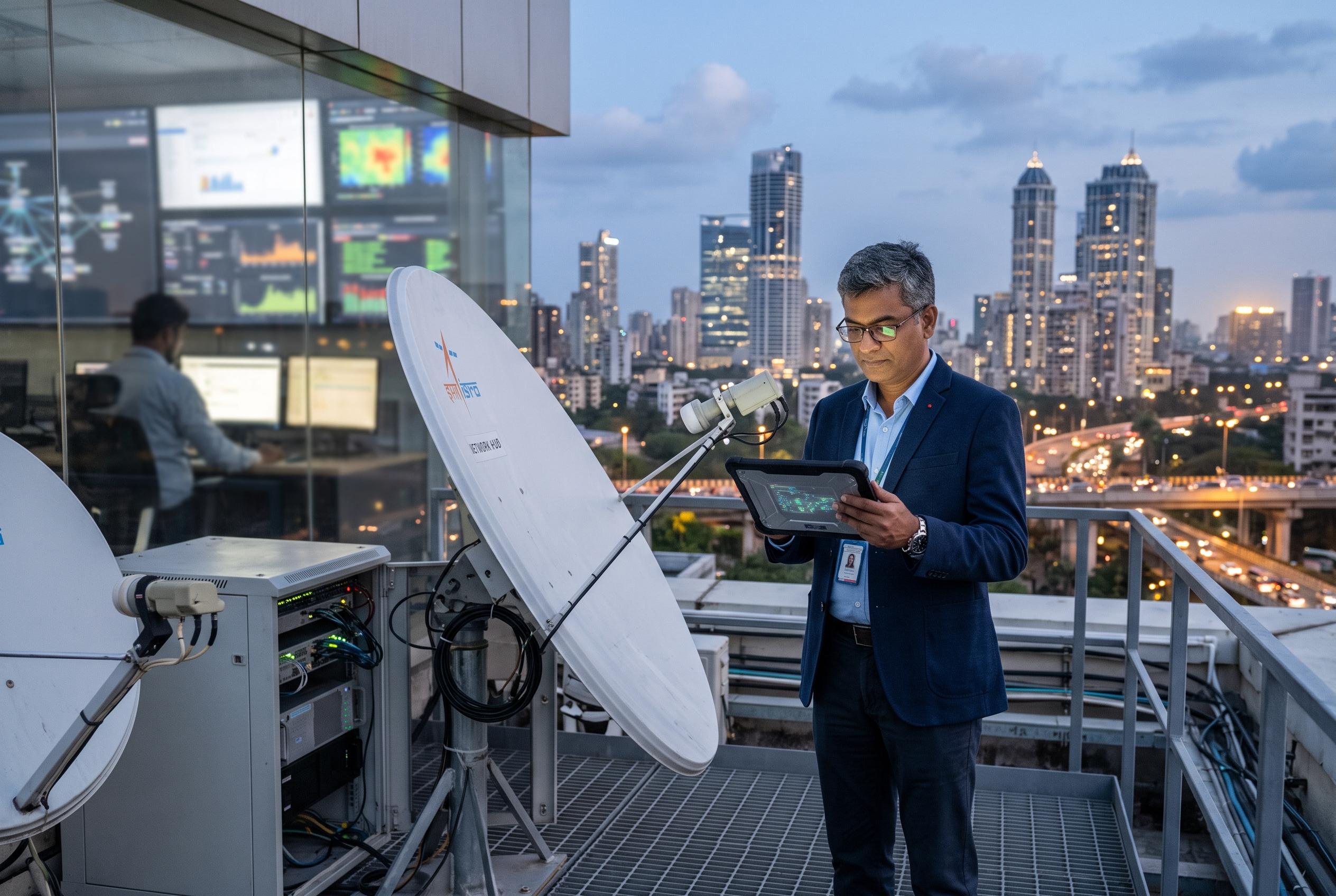

The Ukraine episode highlights how satellite networks, cloud platforms, payments and defence suppliers could give foreign companies or governments leverage over India’s critical systems.
Elon Musk’s decision to curb Starshield service to Ukraine has drawn fresh attention to a question that goes well beyond the war in Europe: how vulnerable are countries to foreign technology providers when geopolitics intrudes? The Wall Street Journal reported that Musk had throttled the military-grade network supplied by SpaceX after Ukrainian attacks on Russian oil infrastructure, reviving concerns about the power held by private companies over critical systems.
For India, the warning is especially sharp. New Delhi has so far held back on a full rollout of Starlink, even as Musk continues to push for entry. Yet India is already reliant, in varying degrees, on foreign-controlled technology across satellites, cloud services, digital payments and defence procurement, creating potential pressure points if commercial decisions or state action abroad were ever to interrupt access.
Satellite communications is one area where India has limited direct dependence on foreign networks for everyday use, but the risks are still real. The government has licensed Starlink, Eutelsat OneWeb and Jio Satellite Communications to provide satellite communications services, though none had received the security clearance needed to offer broadband services as of October 16, according to the article. Eutelsat OneWeb is linked to the French and British states as well as Bharti, while the Jio-SES venture gives Indian ownership of the business without control of the underlying satellite network.
India’s bigger weakness may lie in navigation. Jitendra Singh, the minister of state for space, told Parliament on July 29 that only three NavIC satellites were currently capable of providing positioning, navigation and timing signals, meaning the system cannot yet stand alone. At least four satellites are needed for that purpose, leaving India more exposed than it would like to be in a domain where the United States ended its policy of deliberately degrading civilian GPS accuracy in 2000 but still retains military denial capabilities in specific areas.
Cloud computing presents another layer of dependence. Amazon Web Services, Microsoft Azure and Google Cloud support thousands of Indian organisations, and Gartner has projected that spending on cloud services in India will reach $17.5 billion in 2026. The government does operate MeghRaj through the National Informatics Centre, but it still relies on private providers, including foreign companies. In February, AWS and Yotta announced plans to use AWS Outposts for MeghRaj 2.0, a model that keeps data physically in India while still depending on AWS-managed systems for control and updates.
That pattern also appears in digital payments and industrial technology. India’s Unified Payments Interface gives the country more autonomy than card networks such as Visa and Mastercard, but foreign companies still dominate some consumer-facing layers, including Google Pay. The article notes that a shutdown of one app would not break UPI itself, because users could switch to alternatives such as PhonePe. Still, banks remain linked to foreign correspondent networks, leaving them potentially vulnerable to sanctions or other external shocks.
The wider lesson is that domestic systems can reduce exposure, but they rarely eliminate it. India’s 1998 experience after the Pokhran nuclear tests, when US sanctions disrupted a helicopter engine procurement, remains a reminder that political decisions abroad can derail Indian plans even when companies are acting within the law. More recently, the article points to the CrowdStrike outage that disrupted Windows systems around the world, including in Indian aviation and finance, as evidence that disruption does not always come from retaliation, but can be just as damaging.
In defence, the dependence is even more striking. A Stockholm International Peace Research Institute analysis published in March said India was the world’s second-largest importer of major arms between 2021 and 2025, with Russia supplying 40% of those imports and France, Israel and the United States also playing major roles. Even India’s indigenous Tejas fighter programme depends on GE Aerospace engines from the US, and delivery delays have already affected production timelines.
Disclaimer: This article is intended to inform and educate, not to recommend or endorse any financial product, investment or strategy. Please consider your own financial circumstances and seek professional advice where appropriate before making financial decisions.