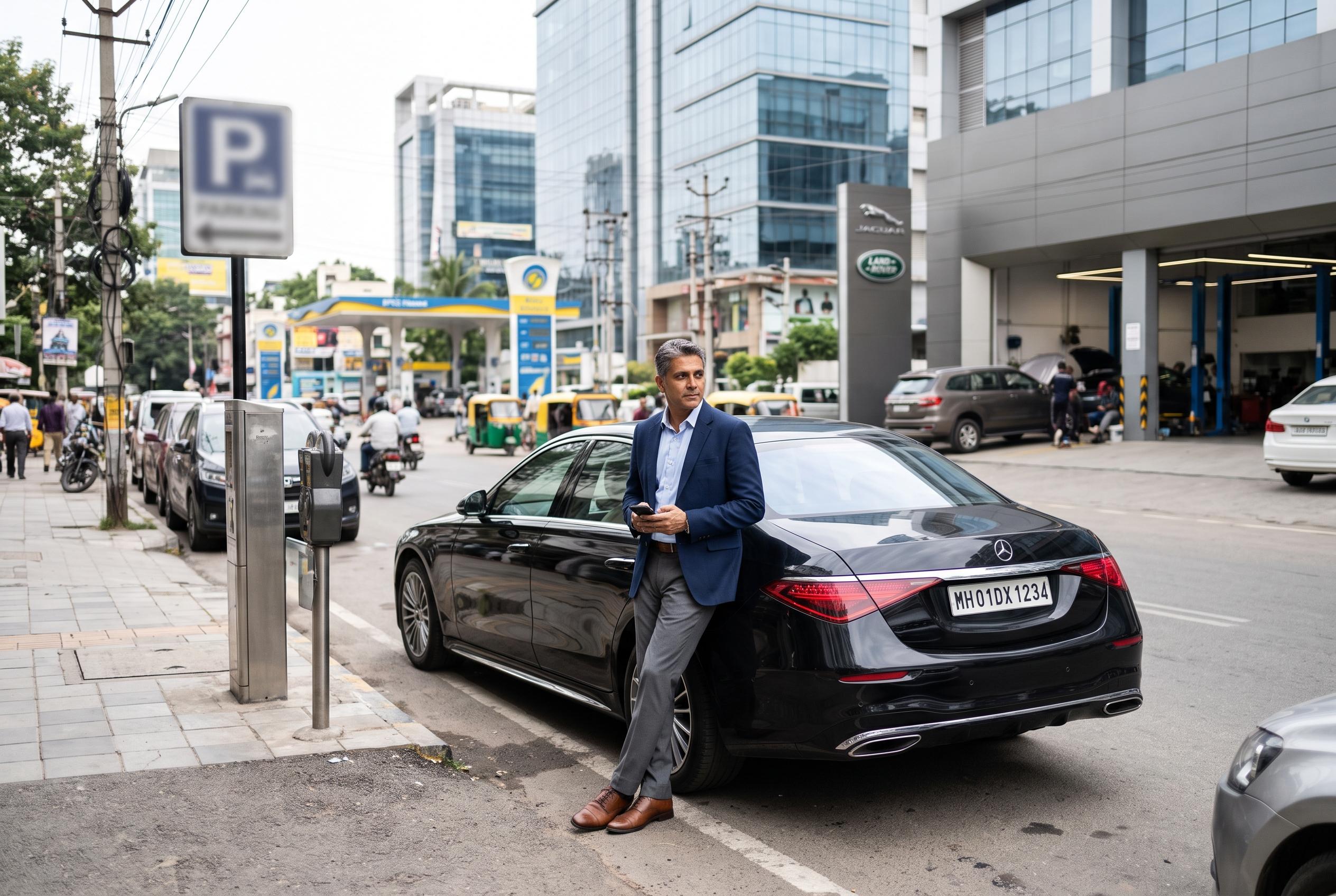

An illustrative Indian ownership budget shows how insurance, fuel, servicing, tyres, parking and repairs can push the annual cost of a luxury car to ₹12.43 lakh, before depreciation and other expenses.
For many buyers, a luxury car looks affordable only when the monthly loan instalment is compared with income. But as Business Today points out, the real test comes after the showroom handover, when insurance, servicing, fuel, tyres, parking and repairs are added to the bill. Using a set of illustrative assumptions, the publication shows how the cost of ownership can quickly rise well beyond the financing payment alone.
In its example, the car loan instalment comes to ₹7.97 lakh a year, or about ₹66,000 a month. Business Today then adds an assumed insurance premium of ₹1.2 lakh, annual fuel spending of ₹1.5 lakh, servicing of ₹60,000, a tyre replacement provision of ₹30,000, parking charges of ₹36,000 and a repair reserve of ₹50,000. On that basis, the annual total reaches ₹12.43 lakh, which works out at roughly ₹1.04 lakh a month before depreciation, tolls, cleaning and other incidental costs are included.
The publication’s calculations underline a broader point echoed by maintenance guides for the Indian market: luxury ownership is usually more expensive not because one item is unusually large, but because several recurring costs are elevated at the same time. Specialist servicing, manufacturer-approved parts, premium synthetic fluids and higher labour charges all push up the bill, while tyres, brake components and batteries can also be materially dearer than on mainstream cars. Zurich Kotak says maintenance on luxury vehicles can be several times higher than on regular cars, especially once scheduled servicing and unplanned repairs are taken into account.
That is why the advice to prospective buyers is not just to compare loan offers, but to study service schedules, warranty terms and insurance quotations before signing. Repair bills can be more unpredictable on high-end models, particularly when they involve imported parts or trained technicians. A model with a lower sticker price may still prove less stressful to own if it has more manageable upkeep and better resale discipline.
The bigger lesson is that affordability should be judged by total ownership, not by EMI alone. Business Today’s example shows how quickly a vehicle that seems within reach can consume far more of a household budget once running costs are fully counted. For buyers weighing an upgrade, the safer approach is to leave room for savings, long-term goals and emergencies before committing to a luxury car.
Disclaimer: This article is intended to inform and educate, not to recommend or endorse any financial product, investment or strategy. Please consider your own financial circumstances and seek professional advice where appropriate before making financial decisions.