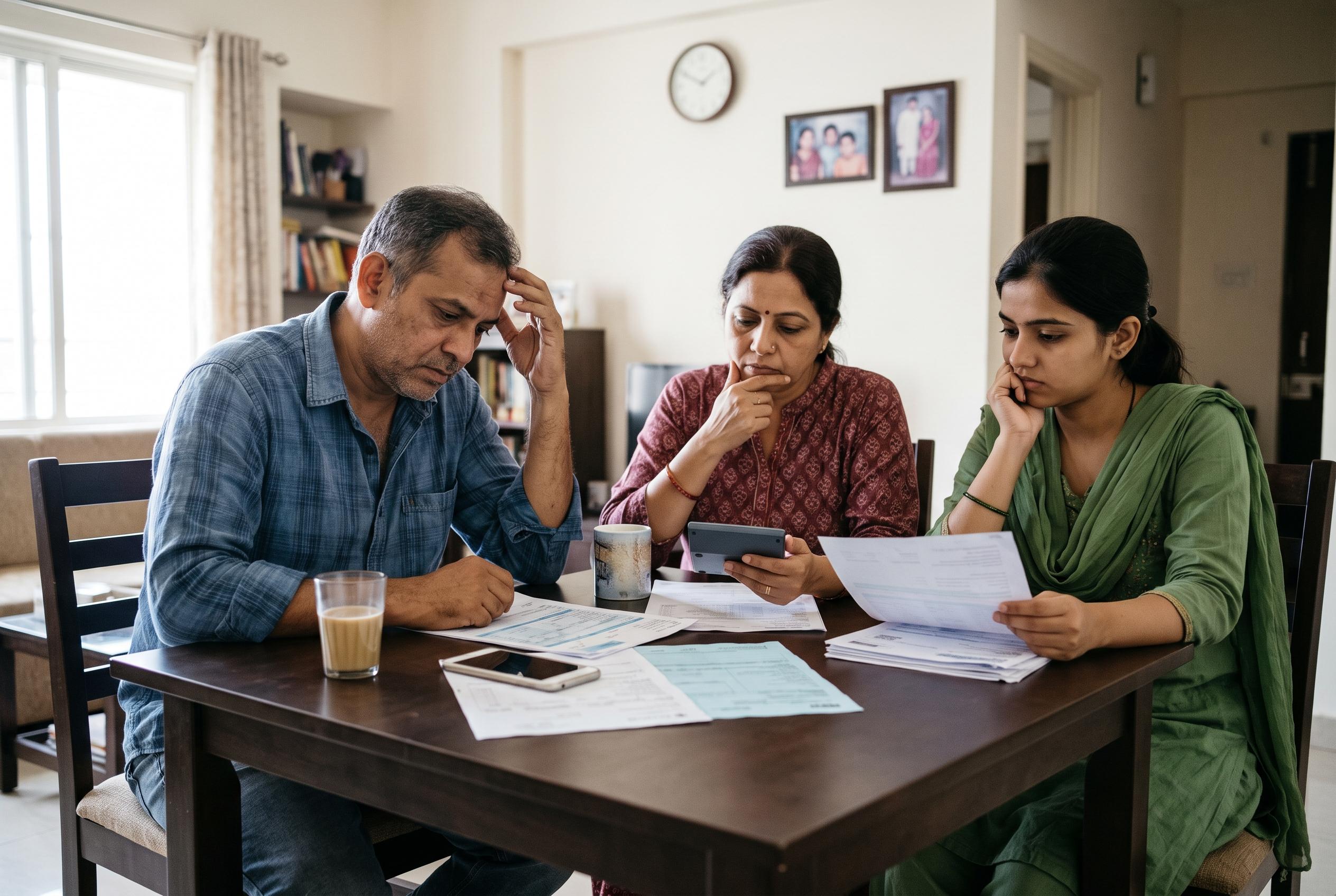

Monthly repayment plans are helping Indian families fund urgent treatment without paying upfront, but interest, fees and penalties can add significantly to already heavy medical bills.
For many families, a sudden health crisis can become a financial crisis almost immediately. In India, where households still pay a significant share of medical costs out of pocket, a major hospital bill can force patients to tap savings, take on debt or put off treatment altogether. That pressure is helping to push medical financing into the mainstream, with some hospitals and lenders now offering repayment plans that spread the cost over monthly instalments.
According to NDTV, CarePay co-founder and chief executive Gaurav Gupta said the lack of health insurance should not mean people delay necessary care simply because they cannot find cash at short notice. He said “Six in 10 patients delay treatments, with 93 per cent of these delays linked to a lack of immediate funds”. The point, he argued, is not always whether a household can eventually pay for treatment, but whether it can raise a large sum at the exact moment it is needed. Medical EMIs, as these repayment plans are often called, are designed to bridge that gap by allowing patients to pay over time rather than upfront.
The appeal is easy to see, but the cost can be substantial. Financial adviser Paramdeep Singh, founder of Long Tail Ventures, told NDTV that the ability to pay in instalments should not be mistaken for the ability to afford the treatment itself. He noted that out-of-pocket spending accounted for 39 per cent of India’s total health expenditure in 2021-22, underscoring how exposed many families remain when illness strikes. For a hospital bill of Rs 5 lakh repaid over 24 months at 15 per cent interest, the monthly instalment would be about Rs 24,200, while total interest would come to roughly Rs 82,000, lifting the repayment burden to nearly Rs 5.82 lakh.
That is why experts say patients should read the fine print before agreeing to any financing plan. Singh warned that people facing urgent treatment often have little time to compare offers, making transparency essential. Borrowers should check the interest rate, processing fees, late-payment penalties and the real cost of any so-called zero-cost EMI offer, including whether a discount on upfront payment is being sacrificed. The key comparison is not the monthly instalment on its own, but the full amount that will be repaid by the end of the term.
LiveMint has reported that several medical loan providers are now competing with low-cost and zero-cost EMI schemes, including offers aimed at patients with modest monthly incomes. That wider market suggests demand is growing, but it also reinforces the need for caution. Medical financing can make treatment more accessible at the point of care, and it may help hospitals avoid cases where patients delay or abandon treatment for lack of immediate cash. Even so, it does not replace health insurance, which remains the more robust protection against large and unexpected medical bills.
Disclaimer: This article is intended to inform and educate, not to recommend or endorse any financial product, investment or strategy. Please consider your own financial circumstances and seek professional advice where appropriate before making financial decisions.