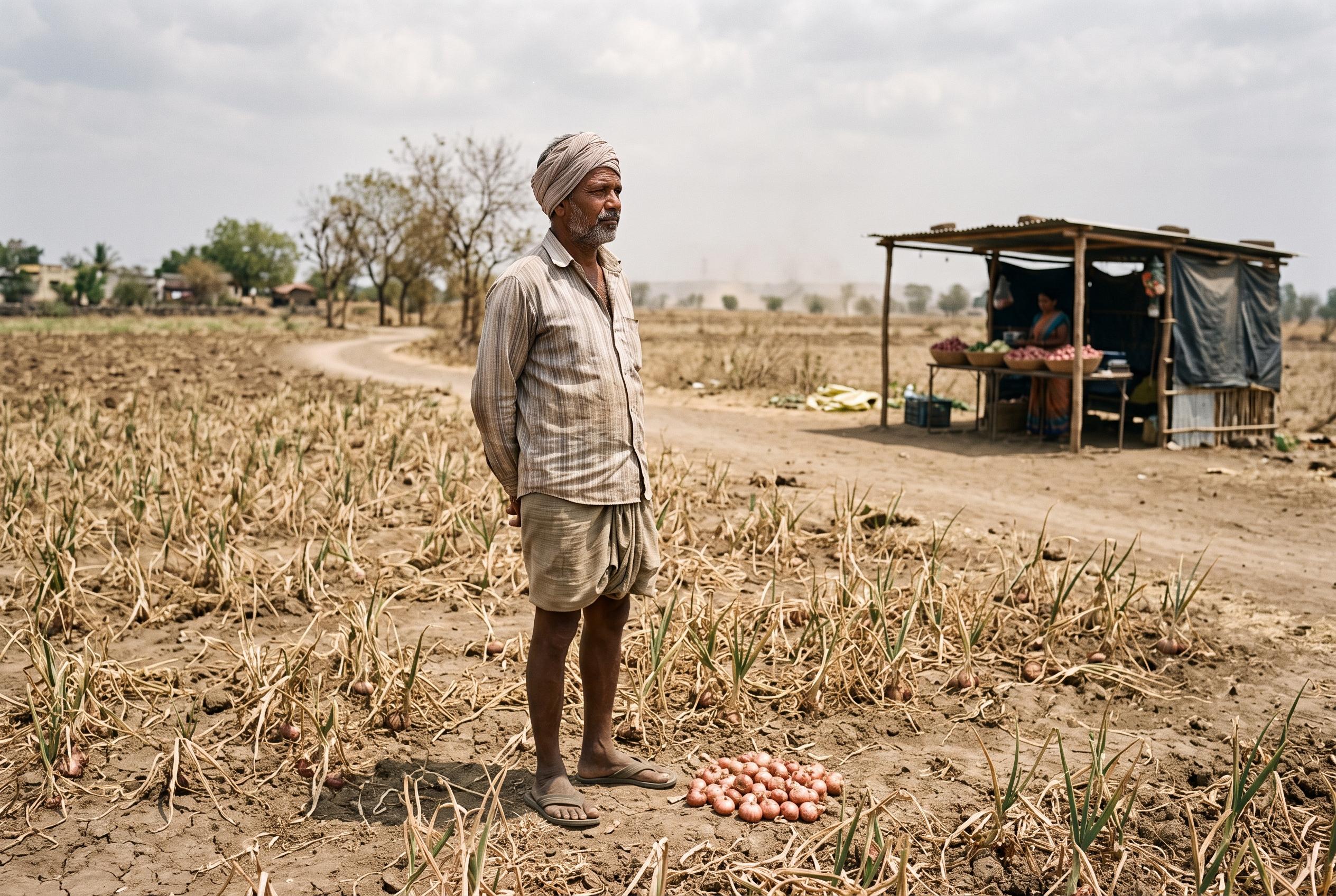

The RBI can contain demand and inflation expectations, but higher borrowing costs cannot resolve food shortages, energy disruptions or the pressures facing small businesses.
Higher interest rates can cool demand, but they cannot bring onions to market, repair a weak harvest or lower the cost of imported oil. That is the central argument running through the debate over how far monetary policy can be asked to do the work of inflation control, especially when the price rise begins with shortages rather than excess spending. In India, where the Reserve Bank of India has just tightened policy again, the issue is not whether rates matter, but what kind of inflation they can actually tackle.
On October 7, the RBI’s Monetary Policy Committee raised the repo rate by 25 basis points to 5.50 per cent and shifted its stance from neutral to calibrated tightening, signalling that further moves will depend on how prices evolve. According to the central bank, retail inflation rose to 4.82 per cent in August, remaining above its 4 per cent target for a fourth straight month. The RBI has also projected headline inflation at close to 5.8 per cent over the next three quarters, while core inflation is expected to average 4.4 per cent this financial year.
That distinction matters because not all inflation is the same. When demand runs ahead of supply, a higher policy rate can help by discouraging borrowing and spending. But when prices rise because food is scarce, energy is disrupted or transport costs jump, tighter money does not fix the shortage. The RBI’s own October assessment pointed to only limited evidence of demand pressure and little sign that supply shocks were becoming embedded in pricing behaviour, which suggests that the present challenge is as much about the origin of inflation as its level.
The point is reinforced by the 2026 Nobel Prize in Economics, awarded to Robert E. Hall and Michael Woodford for work on the microeconomic foundations of macroeconomic stabilisation. The National Bureau of Economic Research said their research helped central banks and governments understand how individual choices by households and firms shape the wider economy. Their work also highlights why expectations matter: when people believe rates will stay high, they borrow, save and set prices differently, which gives central banks more leverage over inflation that is already broadening.
Yet expectations are not a substitute for supply. The Indian Express article notes that the RBI’s October review cited monsoon rainfall about 13 per cent below normal and flagged El Niño as a risk to agriculture. It also pointed to an 85 per cent rise in onion prices between the end of June and the end of September. Those are classic examples of inflation driven by food supply shocks, where policy can at best limit the spillover into the wider economy. Where domestic output falls short, imports, buffer stocks and predictable trade rules become part of the answer, although they must be managed carefully so that farmers are not left worse off in the next planting season.
The strain is felt most sharply by smaller firms. The article describes a bakery facing higher flour and fuel costs, more expensive credit and customers with less to spend. The RBI said bank lending to industrial micro and small enterprises grew 23 per cent year on year in August 2026, partly because firms needed more working capital. That can reflect resilience and expansion, but it also underlines how quickly tighter borrowing conditions can squeeze cash flow, delay investment and make delayed payments more damaging. For businesses with thin margins, rate increases can arrive just as input prices are already rising.
The broader lesson is that price stability cannot be achieved through monetary policy alone. Hall and Woodford’s work is a reminder that policy affects the economy through expectations as well as through current borrowing costs. But if inflation starts with supply disruptions, the government must also address shortages, improve logistics and provide targeted support where necessary. The RBI can slow the spread of inflation and prevent it from becoming entrenched; it cannot restore rainfall, rebuild a disrupted crop or produce more oil by itself.
Disclaimer: This article is intended to inform and educate, not to recommend or endorse any financial product, investment or strategy. Please consider your own financial circumstances and seek professional advice where appropriate before making financial decisions.