

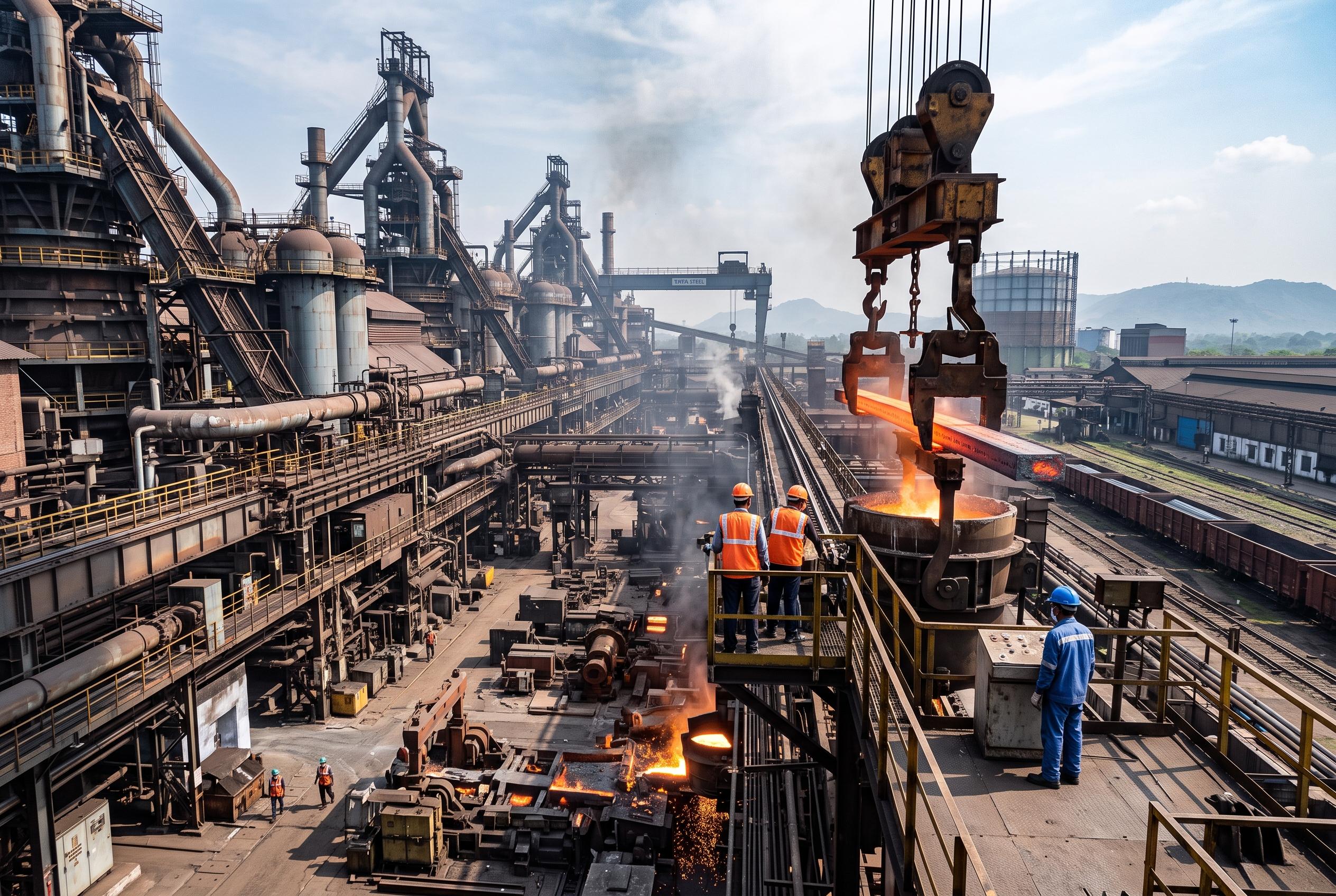

A draft policy sets out a fourfold expansion in India’s steel capacity, alongside plans to cut reliance on imported coking coal and steer one of the country’s most carbon-intensive industries towards net zero by 2070.
India has set out an ambitious long-term blueprint for its steel industry, with a draft policy aiming to lift production capacity to 604 million tonnes a year by 2047 as the government seeks to match industrial growth with cleaner and more secure supply chains. The proposal comes as the sector has already expanded sharply: crude steel output has climbed from about 89 million tonnes in 2014-15 to 170 million tonnes in 2025-26, while finished steel consumption has nearly doubled over the same period, according to the draft.
The scale of that rise has left India firmly among the world’s largest steelmakers. The draft says the country’s share of global crude steel production has increased from 5.2% in 2014 to about 8.9% in 2025, with installed capacity now at 220 million tonnes a year. That growth has been backed by sustained domestic demand. Business Standard reported that finished steel consumption rose 7% in 2025-26 to 164 million tonnes, helped by higher activity in infrastructure, construction, railways and manufacturing.
The policy’s drafters see that demand trend continuing. They point to urbanisation, renewable energy build-out, cleaner transport, digital networks and other emerging technologies as the next major sources of steel use. Construction and infrastructure together account for about 67% of current consumption, while automobiles, engineering goods, appliances and packaging make up another 28%, according to the draft. The OECD’s Steel Outlook 2026 also notes that India has been adding more than 10 million tonnes of crude steel capacity a year on average in recent years, underlining how quickly the sector is still expanding.
A second priority is to reduce exposure to imported raw materials, especially coking coal. The draft says raw materials make up roughly 65% to 70% of steelmaking costs, and while India is largely self-sufficient in iron ore, it still imports nearly 92% of its coking coal needs. To narrow that gap, the policy proposes more domestic mining, additional coal washeries, overseas asset purchases, long-term supply deals and the use of artificial intelligence to improve coal blending. It also seeks to shore up supplies of manganese, limestone and other key inputs.
Decarbonisation is another central element. The steel industry accounts for about 10% to 12% of India’s carbon dioxide emissions, and the draft says its average emission intensity is 2.54 tonnes of CO₂ per tonne of crude steel, above the global average of 1.92 tonnes. The roadmap envisages a gradual transition towards net-zero emissions by 2070 through efficiency gains, more renewable power, greater use of scrap and hydrogen. It also calls for stronger support for specialty and value-added steel, a bigger domestic scrap ecosystem, tighter quality standards and measures to curb imports of substandard steel, including AI-enabled monitoring and other trade remedies.
Disclaimer: This article is intended to inform and educate, not to recommend or endorse any financial product, investment or strategy. Please consider your own financial circumstances and seek professional advice where appropriate before making financial decisions.



