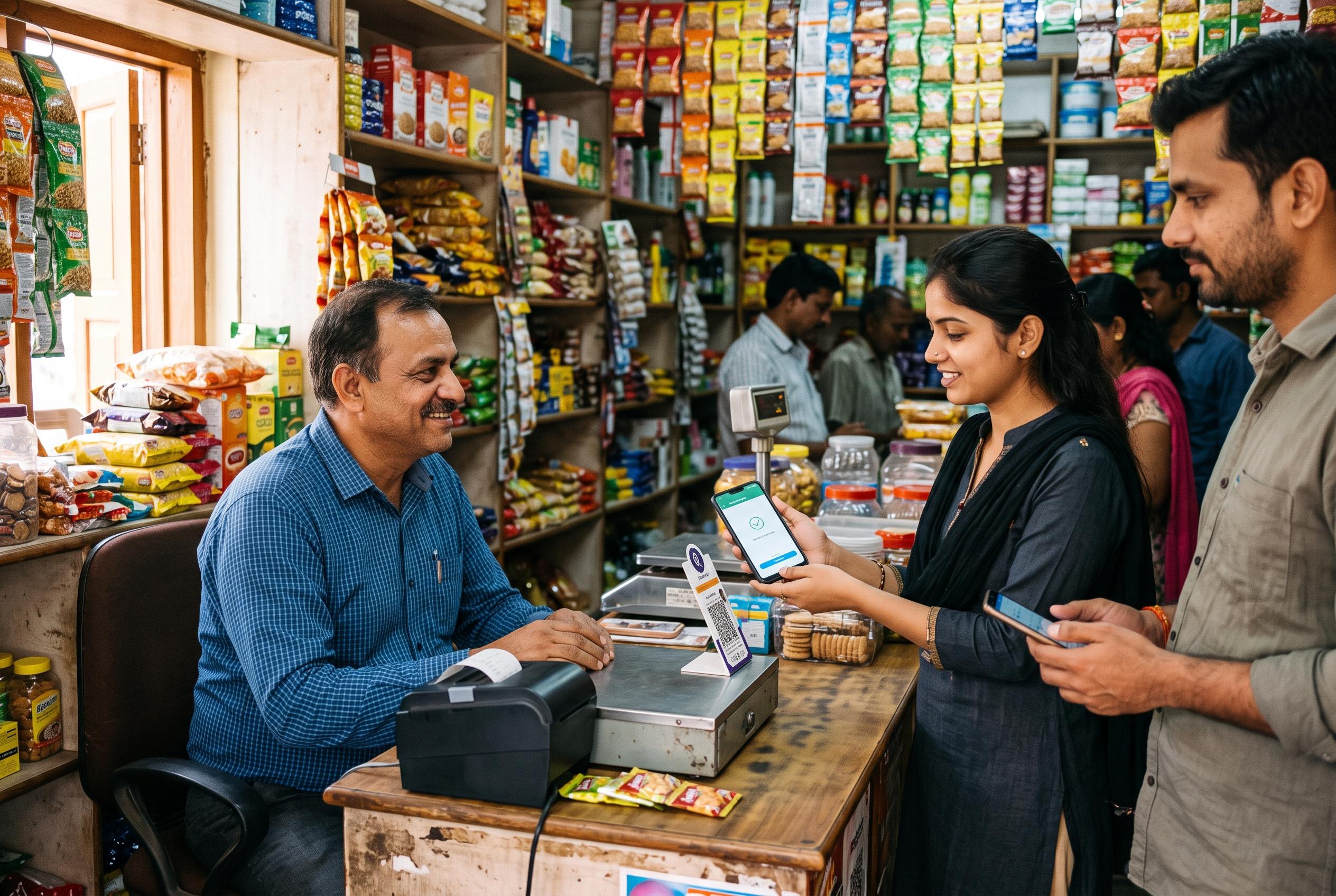

An IIT Bombay report has called for UPI charges to be limited mainly to large merchants, warning that a broad fee structure could undermine confidence in India’s digital payments system.
A new IIT Bombay report has urged policymakers to rethink the proposed merchant discount rate, or MDR, framework for Unified Payments Interface payments, warning that a poorly calibrated fee structure could weaken public trust in India’s most widely used digital payments rail.
The report, titled “UPI at a Crossroads: Reintroducing the MDR”, argues that UPI has delivered major gains in convenience for consumers and productivity for the wider economy, and says those benefits outweigh the incremental revenue that could be raised through merchant transaction fees. According to the report, the risk is not just commercial friction but the possibility that users begin to view UPI less as a public utility and more as a chargeable service.
The National Payments Corporation of India issued a circular on September 15 setting out a 0.4 per cent MDR on person-to-merchant UPI transactions above Rs 2,000, payable by merchants and capped at Rs 300 for payments of Rs 75,000 or more. Person-to-person transfers and most everyday merchant transactions would remain free, while essential services such as railways, telecoms, fuel and insurance would face a flat Rs 5 charge on transactions above Rs 2,000. Capital markets payments, including mutual funds and stockbroking, would attract a lower 0.02 per cent fee, also capped at Rs 300.
The IIT Bombay report said the framework should be narrowed and adjusted so that charges are imposed only on larger merchants, particularly those with annual turnover above Rs 50 crore, who are already required by law to accept UPI payments. It said that approach would capture most of the revenue the National Payments Corporation of India is seeking while better preserving broad public acceptance of the system.
The report also argued that online person-to-merchant transactions are the most defensible place to levy a fee, because digital sellers already operate in a cashless environment and effectively benefit from payment facilitation. It suggested that debt collection and loan-equated monthly instalment payments should be kept outside the MDR net, saying that leaving those transactions free would support financial inclusion and reduce friction for borrowers. The report also said the Reserve Bank of India should decide MDR rules for UPI under the Payment and Settlement Systems Act, 2007.
Disclaimer: This article is intended to inform and educate, not to recommend or endorse any financial product, investment or strategy. Please consider your own financial circumstances and seek professional advice where appropriate before making financial decisions.