

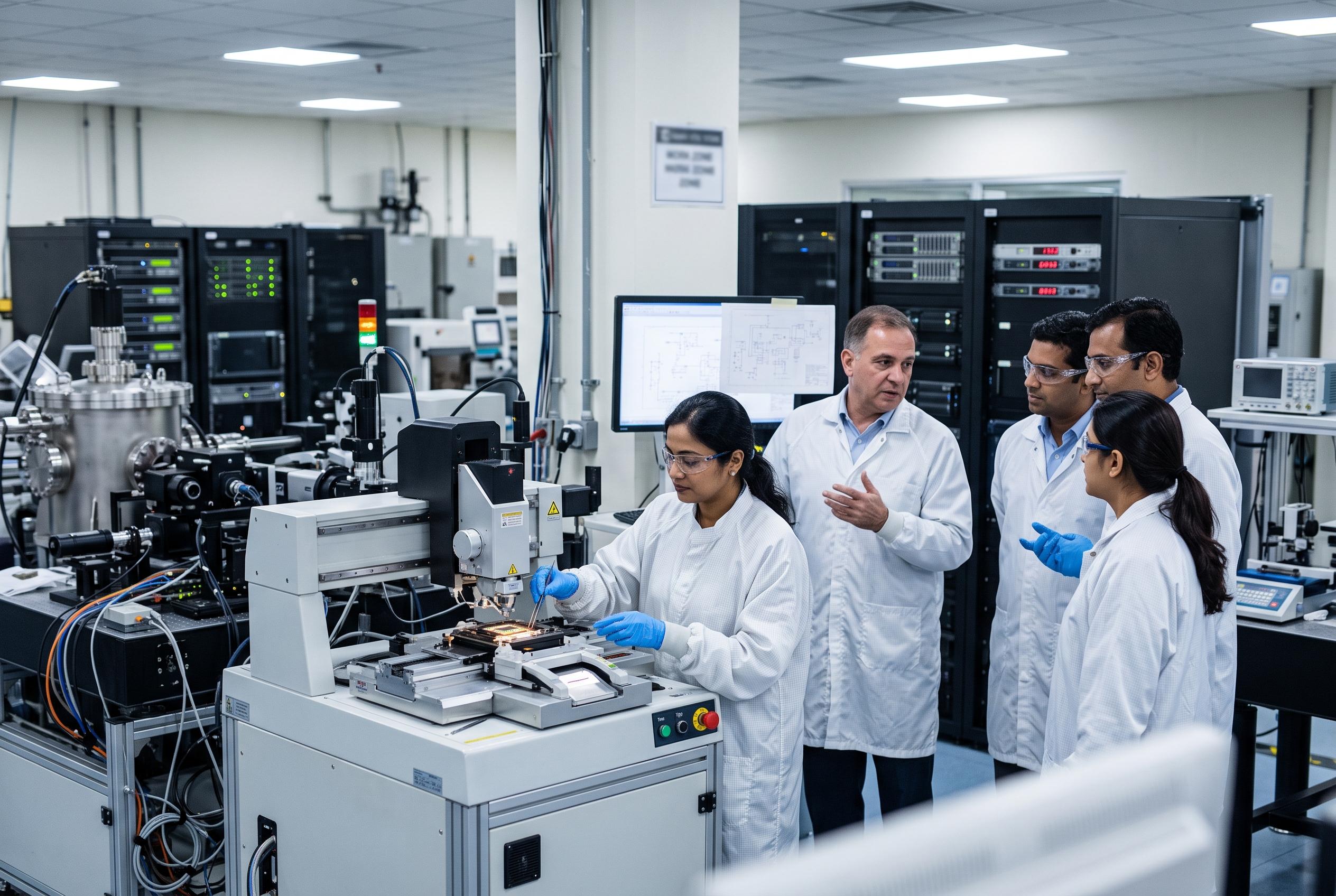

India’s semiconductor build-out is spreading into chip IP, packaging, manufacturing equipment and optical systems as surging AI demand exposes gaps in the country’s data centre infrastructure.
India’s push to build out a wider semiconductor ecosystem is increasingly running alongside a fast-expanding artificial intelligence infrastructure market, with companies now chasing opportunities in chip design, packaging, equipment and the optical systems needed for data centres. The latest signals from the sector suggest the country’s technology build-out is moving beyond headline fabrication plans and into the less visible but commercially important layers that support production and deployment.
One of the clearest examples is Sasken Technologies, which is seeking to turn some of its in-house semiconductor interconnect intellectual property into a licensable asset for multiple customers. The Bengaluru-based engineering company has long positioned itself as a product engineering and embedded software specialist, but the move points to a broader shift from project-by-project design work towards a reusable intellectual property model that could generate recurring revenue if it gains traction with chipmakers.
That ambition fits a wider trend in India’s semiconductor strategy. Rather than focusing only on fabs, the country is now trying to build out design services, research capability, talent, packaging and supply-chain links at the same time. Reports from the sector show that outsourced semiconductor assembly and test facilities in India have already begun shipping product, although the plants remain small and still rely heavily on foreign expertise and partners. The next phase will depend on whether local firms can scale production, strengthen skills and attract more domestic sourcing of materials and components.
Equipment makers are also starting to position themselves for that longer-term opportunity. Canon India has said it sees a chance to supply semiconductor manufacturing tools as domestic chipmaking capacity develops, according to industry reports. The company’s interest underscores how early the market still is: the competitive race among global toolmakers is mainly about establishing an initial foothold rather than booking large orders, even as India’s chip ambitions continue to broaden.
At the same time, India’s data centre market is being reshaped by artificial intelligence. Industry reporting indicates the country is approaching the 2-gigawatt mark in installed data centre capacity, but much of that estate was built for far lower power densities than modern AI hardware demands. That is forcing operators to focus on liquid cooling, stronger electrical infrastructure and high-density designs, rather than simply adding more floor space. The opportunity has also drawn in multinational players, with NTT Data saying India is expected to contribute a larger share of its global AI business than its overall IT services business, and with Indian manufacturers such as Dixon Technologies moving into optical transceivers through new partnerships aimed at the data centre and telecom markets.
Disclaimer: This article is intended to inform and educate, not to recommend or endorse any financial product, investment or strategy. Please consider your own financial circumstances and seek professional advice where appropriate before making financial decisions.



