

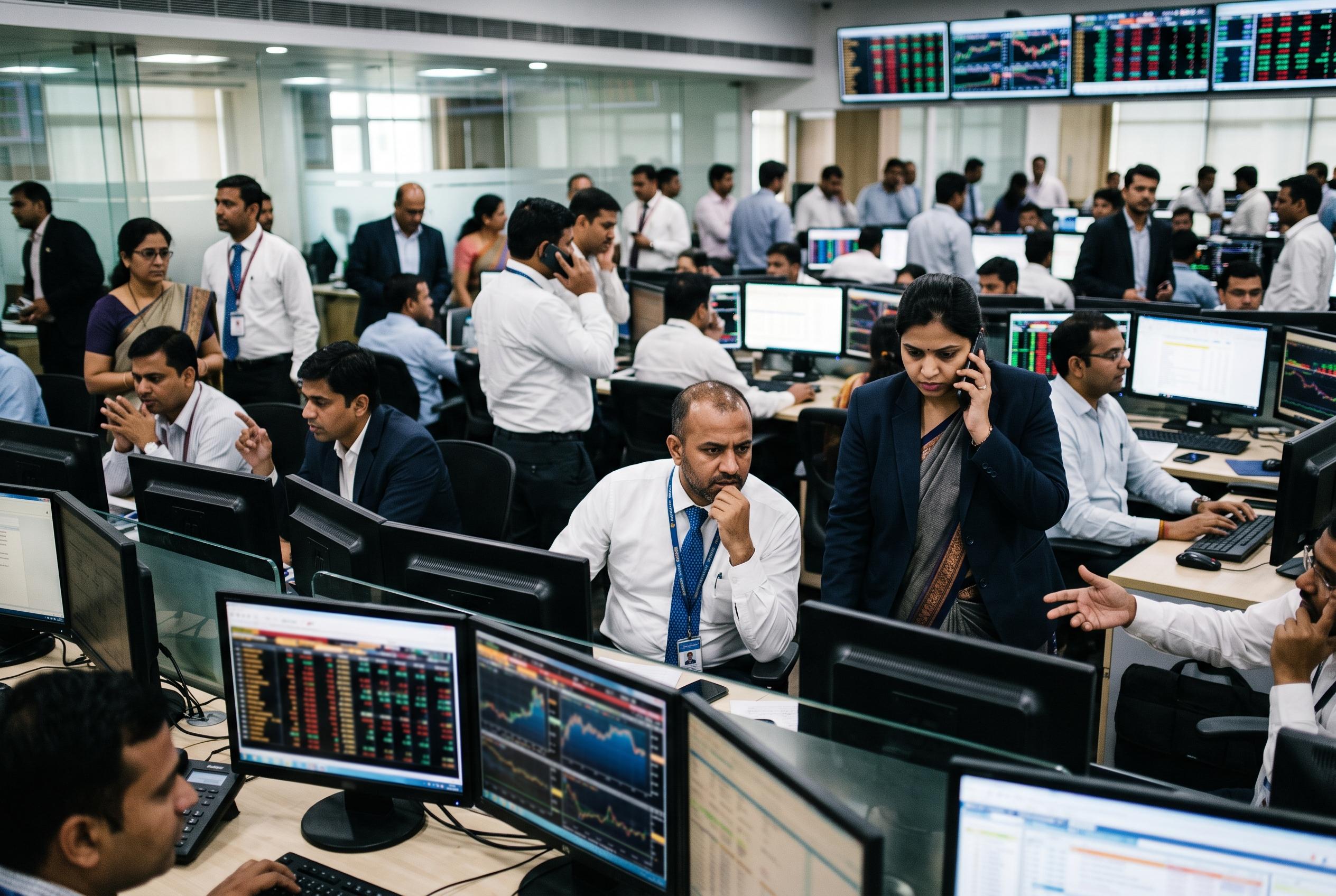

The Sensex plunged more than 1,045 points after the Reserve Bank of India tightened policy, while surging oil prices and sustained foreign selling intensified pressure on Indian equities.
India’s stock market was hit by a sharp sell-off on Thursday, with the Sensex tumbling 1,045.46 points to 71,593.24 and the Nifty 50 slipping 371.25 points to 22,231.80, according to market reports. The fall erased more than INR11 lakh crore from the value of companies listed on the Bombay Stock Exchange and left investors facing a new wave of uncertainty over the direction of the global economy.
The decline came after the Reserve Bank of India raised its policy rate for the first time in nearly four years and shifted its stance from neutral to calibrated tightening, a move that signalled more restraint may follow. Analysts quoted by local financial outlets said the central bank’s decision has revived fears that borrowing costs for companies and households will climb further, slowing spending and investment at a delicate moment for India’s economy.
Global factors added to the pressure. Brent crude moved above $102 a barrel as tensions in the Gulf raised concern about shipments through the Strait of Hormuz, a key route for international oil supplies. Because India imports most of its crude, higher energy costs can quickly feed into transport, manufacturing and household expenses, worsening inflation risks and squeezing margins for businesses.
Foreign investors also remained heavy sellers. Provisional exchange data cited by local reports showed overseas funds sold more than INR6,121 crore of Indian equities on Wednesday, taking their net sales to nearly INR57,000 crore over nine straight sessions. Livemint said foreign portfolio investors sold INR35,860 crore worth of shares in September and a further INR18,513 crore in October, underscoring how sustained outflows have become a major source of weakness for Indian equities.
The pressure was broad-based, with large names such as ITC, Adani Ports, IndiGo, Power Grid and Reliance Industries among the worst performers, while technology stocks including Tech Mahindra, HCL Technologies, Tata Consultancy Services and Infosys offered only limited support. Reports from Rediff and the Indian Express also pointed to elevated US Treasury yields, expectations around the next move by the US Federal Reserve and a firmer dollar as additional headwinds for emerging markets, reinforcing the view that the sell-off was being driven by both domestic policy changes and a far less forgiving global backdrop.
Disclaimer: This article is intended to inform and educate, not to recommend or endorse any financial product, investment or strategy. Please consider your own financial circumstances and seek professional advice where appropriate before making financial decisions.



