

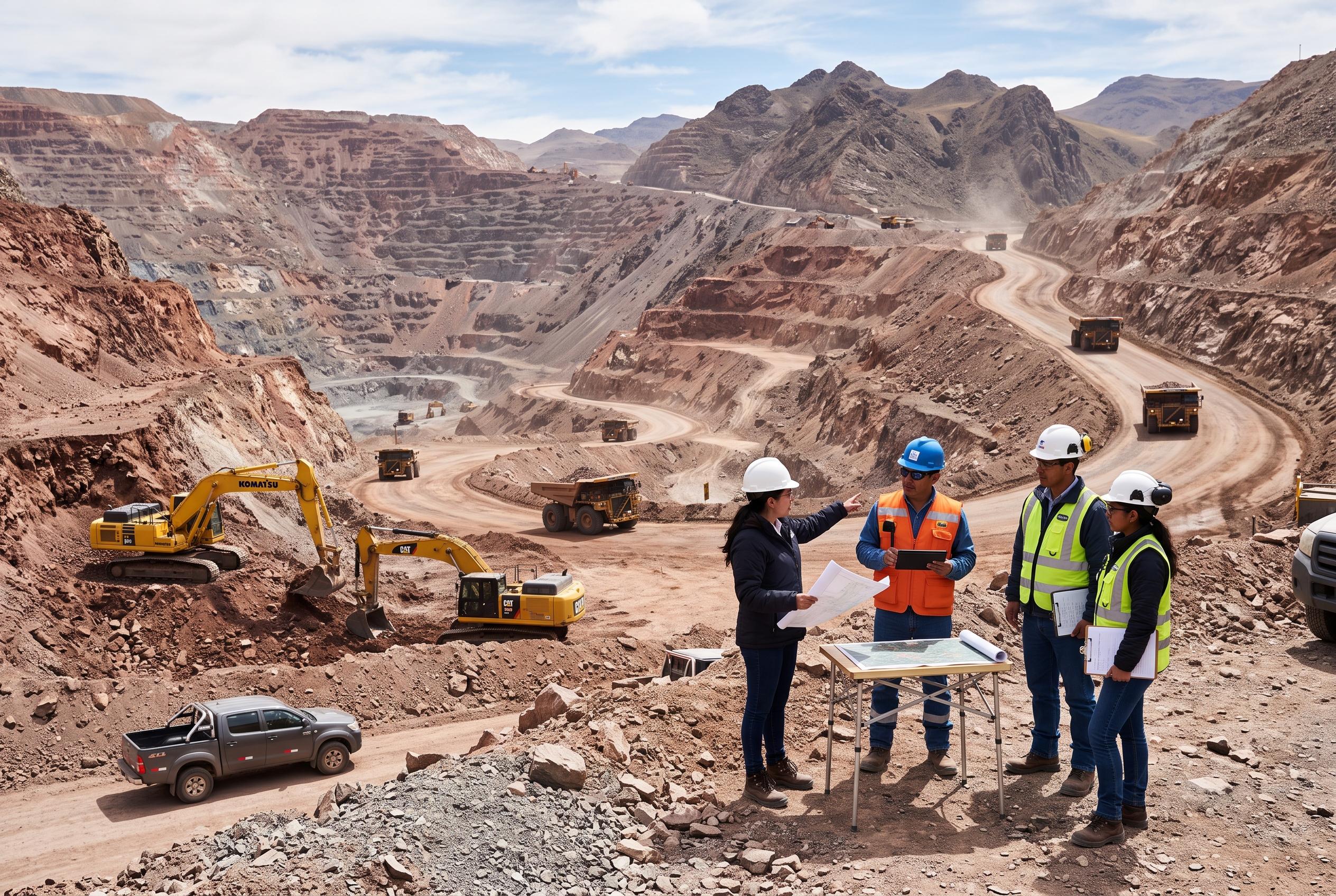

India is securing access to lithium, copper, cobalt and rare earths abroad, but lengthy project timelines, volatile prices and tougher host-country rules mean overseas deals may take years to feed domestic industry.
India’s bid to secure the minerals that underpin its industrial ambitions is moving well beyond speeches and memorandums. The country is now reaching across Latin America, Africa and Australia for lithium, copper, cobalt, rare earths and other strategic inputs, but the evidence so far suggests that turning overseas deals into usable supply will be a slow process. Reuters-style reporting on the issue has repeatedly shown that the gap between signing access rights and actually delivering material to Indian factories remains wide. The latest sign of that challenge came when Steel Authority of India Ltd sent one tonne of Mongolian coking coal to India by air for testing, a reminder that the hard part begins after an agreement is announced. The country’s broader push is being driven by a simple fact: domestic demand is rising faster than local mining, refining and processing capacity can keep up.
Khanij Bidesh India Ltd, or KABIL, has become the main state-backed vehicle for that effort. According to the government and company disclosures, the joint venture of National Aluminium Company, Hindustan Copper and Mineral Exploration and Consultancy is seeking overseas assets in Argentina, Australia and Chile, with a focus on lithium and cobalt. In Argentina, KABIL has secured exclusive rights to explore lithium in Catamarca province. In Australia, it has pursued project identification and due diligence with the Critical Minerals Office, while in Chile it has used an agreement with state-owned ENAMI to examine brine-based lithium blocks. But the pace has been uneven: industry and policy summaries say commercial production from the Argentine project is now expected only around 2030, while some Australian opportunities were lost in competitive bidding and others were judged unsuitable or are still under review.
The slow progress reflects the economics as much as the geology. Lithium prices have been volatile, valuations for overseas assets have remained high, and India still lacks a mature value chain that runs from lithium ore through to battery materials and cells. That makes it harder to justify expensive mining bets abroad when the downstream industrial ecosystem at home is still developing. At the same time, host countries are tightening their own rules. Zimbabwe has moved to curb exports of raw minerals and lithium concentrates, pushing foreign investors towards local processing before material can be shipped out. Lohum, one of India’s more advanced private players, has already had to adapt to that reality: it says it has shipped lithium ore from Zimbabwe and plans further investment there, alongside additional work on battery-material capacity in India and a search for nickel opportunities in Indonesia and the Philippines.
Copper is emerging as the clearest test of India’s overseas mineral strategy because demand is immediate and the import dependence is already severe. The Ministry of Mines has warned that, without major new mine development, India’s reliance on imported copper concentrate could rise to as much as 91% to 97% by 2047. That urgency helps explain why Lloyds Metals and its US partner Virtus moved to acquire Chemaf, a copper and cobalt producer in the Democratic Republic of Congo, in a distressed-asset deal that included mines and processing facilities. Adani Enterprises is taking a different route through its Kutch Copper unit at Mundra, which already has smelting and refining capacity. It has signed a non-binding memorandum with Australia’s Caravel Minerals over possible funding and long-term offtake, and it has also agreed to examine three projects with Chile’s Codelco, while Hindustan Copper is separately working with the Chilean state miner.
Beyond lithium and copper, the wider map of India’s overseas mineral hunt is filling out. Midwest is looking at rare earths in Indonesia, Deccan Gold is examining lithium and other minerals in Mozambique, Sakariya Mines is advancing a graphite project in Tanzania and Coal India has explored lithium in Chile as part of a broader push into global mineral markets. The government’s message is that India must build security of supply before shortages become binding constraints on manufacturing, electric vehicles and clean energy. But the strategic logic is only part of the story. The commercial test will be whether these projects can survive long development cycles, infrastructure gaps, changing local laws and commodity swings, then still deliver ore at a competitive cost. For now, India’s overseas minerals campaign is better understood as a necessary beginning than a quick fix.
Disclaimer: This article is intended to inform and educate, not to recommend or endorse any financial product, investment or strategy. Please consider your own financial circumstances and seek professional advice where appropriate before making financial decisions.



