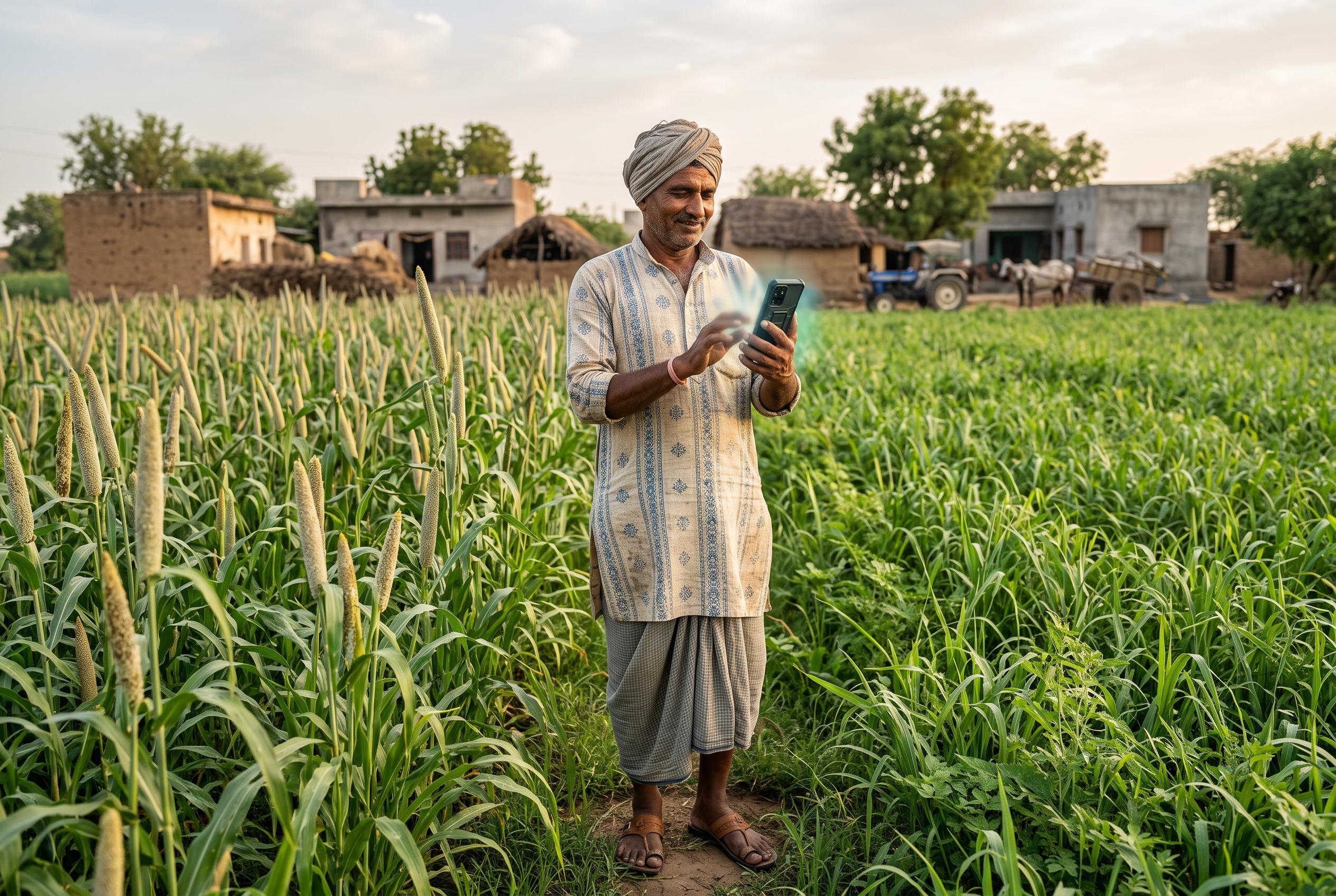

The World Bank says India’s use of AI for monsoon forecasting, farming and healthcare shows how developing countries can adapt existing technology to solve practical problems at scale.
India’s advances in artificial intelligence are offering lessons well beyond its borders, according to Michael Kremer, chief economist and senior vice-president at the World Bank Group, who said the country’s work shows how developing economies can use AI to tackle practical problems at scale. Speaking at the launch in New Delhi of the World Bank’s “World Development Report 2026: The Promise of Artificial Intelligence”, Kremer said successful deployment requires a “full stack” approach that combines software with people and institutions, rather than treating AI as a purely technical fix.
The World Bank report says AI can broaden access to expertise, lift productivity and improve public services in developing countries, particularly in healthcare, agriculture and education. But it also warns that those gains depend on foundations that many countries still lack, including reliable electricity, internet connectivity, computing capacity, high-quality data, digital skills and capable public institutions. The report argues that emerging economies do not need to build frontier AI systems from scratch; instead, they can adapt existing tools to local needs through what it describes as an “adopt, adapt and advance” approach.
India’s monsoon forecasting work was highlighted as a case study in how that model can function in practice. According to the World Bank, Indian government agencies combined several AI models, including open-access systems, to improve weather forecasts and then sent the information to millions of farmers by text, voice and AI-powered advisories. Kremer said the system helped predict the unusual 2025 monsoon and noted that Ethiopia is now following India’s example, suggesting that publicly led AI projects may matter most where commercial incentives are weak but social returns are high.
Ashwini Vaishnaw, India’s information technology minister, also pointed to the country’s efforts to spread the benefits of AI more widely. He said voice-based tools were helping farmers in Baramati improve sugarcane yields while using less water and fertiliser, and that AI-assisted screening had increased tuberculosis detection in healthcare. The government’s IndiaAI Mission is building capacity across compute infrastructure, datasets, indigenous foundation models, applications, skills, startup funding and safe and trusted AI, underscoring New Delhi’s view that the technology should be democratised across citizens, businesses and public institutions.
Disclaimer: This article is intended to inform and educate, not to recommend or endorse any financial product, investment or strategy. Please consider your own financial circumstances and seek professional advice where appropriate before making financial decisions.