

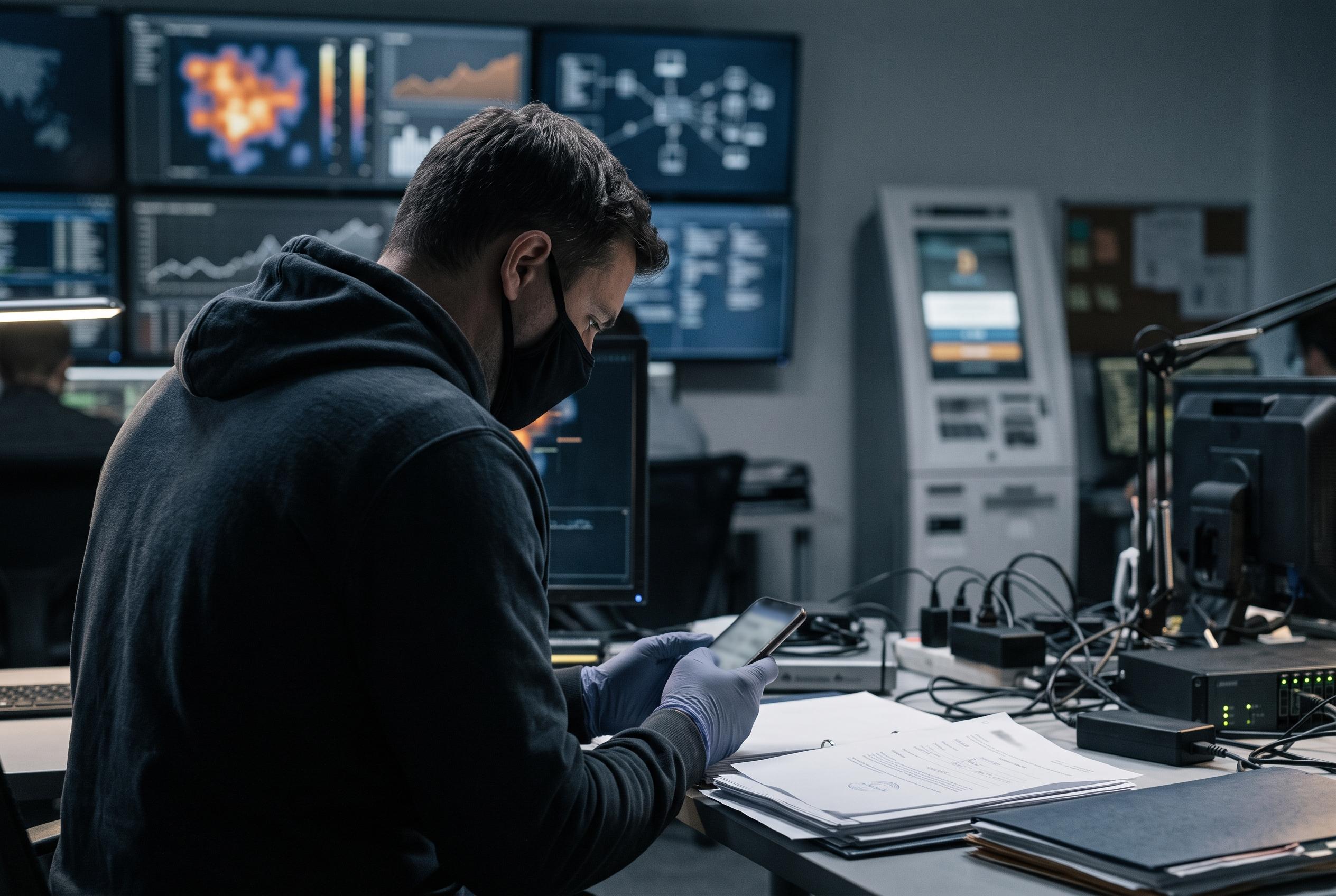

Indian authorities have uncovered a Delhi-based syndicate impersonating Microsoft to siphon money from American seniors through Bitcoin ATM frauds, amid rising cross-border digital scams targeting the elderly.
A Delhi-based cyber fraud syndicate allegedly siphoned money from American senior citizens by posing as Microsoft staff and steering victims towards Bitcoin ATMs, a tactic that has become increasingly common in cryptocurrency-related scams aimed at older adults.
According to the Indian Express, the case dates back to 2022, when elderly people in the United States began receiving calls and emails warning that their computers had been hacked and their bank accounts were at risk. The callers, claiming to be from Microsoft, told victims to buy software at Bitcoin ATMs to fix the supposed breach. In reality, the cash was channelled into a criminal network. The Federal Trade Commission and the FBI have both warned that Bitcoin ATM fraud has surged in recent years, with older adults disproportionately affected and losses continuing to climb sharply.
The Central Bureau of Investigation lodged a first information report on July 27 under criminal conspiracy provisions and Section 66(D) of India’s IT Act, which covers cheating by personation through computer resources. Three suspects, including the alleged mastermind, Saurabh Rana, were arrested in August after searches in Delhi, Ludhiana and Mohali. Investigators said the group operated as an organised syndicate, impersonating technology companies, financial institutions and law-enforcement agencies while targeting American nationals.
The agency says the stolen money was converted into cryptocurrency, moved through a chain of wallets and then routed back into the Indian banking system. During Rana’s bail hearing, the CBI told the court that blockchain tracing linked one victim directly to an account controlled by him. The agency named Joanne Maalouf and said deposits made at a Bitcoin kiosk on December 13, 2022, flowed into an exchange account operated by Rana, creating what it described as a direct connection between the accused and the fraud proceeds. Investigators also alleged that his account, opened with Aadhaar-linked details, received 203.30 bitcoins, valued at about $6.53 million at the time, and that log-ins from Delhi-based internet addresses suggested the fraud was coordinated from the capital.
Additional Chief Judicial Magistrate Jyoti Maheshwari rejected Rana’s plea for bail, saying the alleged operation appeared to have been spearheaded by him and that the digital material recovered from the premises linked to his involvement. The court noted chats on mobile phones that it said exposed the mechanics of the scheme and stressed the cross-border nature of the offence, which affected several senior citizens in the United States. In her order dated September 22, she said the gravity of such cybercrime demanded caution, especially as scams using digital payment systems have become harder to trace and recover once the money has been transferred.
Officials said Rana and another suspect, Jappandeep Singh, were arrested in Ludhiana, while Indermohan Singh was detained in Mohali. Around 30 digital devices, including laptops and mobile phones, were seized from a Mohali flat that investigators said belonged to Rana’s father and was being used for the scam operation. The CBI believes more people were involved and that the full conspiracy is still being mapped, with digital evidence and cryptocurrency wallets under examination. In the wider context, U.S. authorities say Bitcoin ATM fraud has accelerated rapidly: the FBI said Americans lost at least $333 million to such scams in 2025 alone, underscoring how the combination of fear, impersonation and instant crypto transfers continues to make these schemes lucrative for criminals.
Disclaimer: This article is intended to inform and educate, not to recommend or endorse any financial product, investment or strategy. Please consider your own financial circumstances and seek professional advice where appropriate before making financial decisions.



