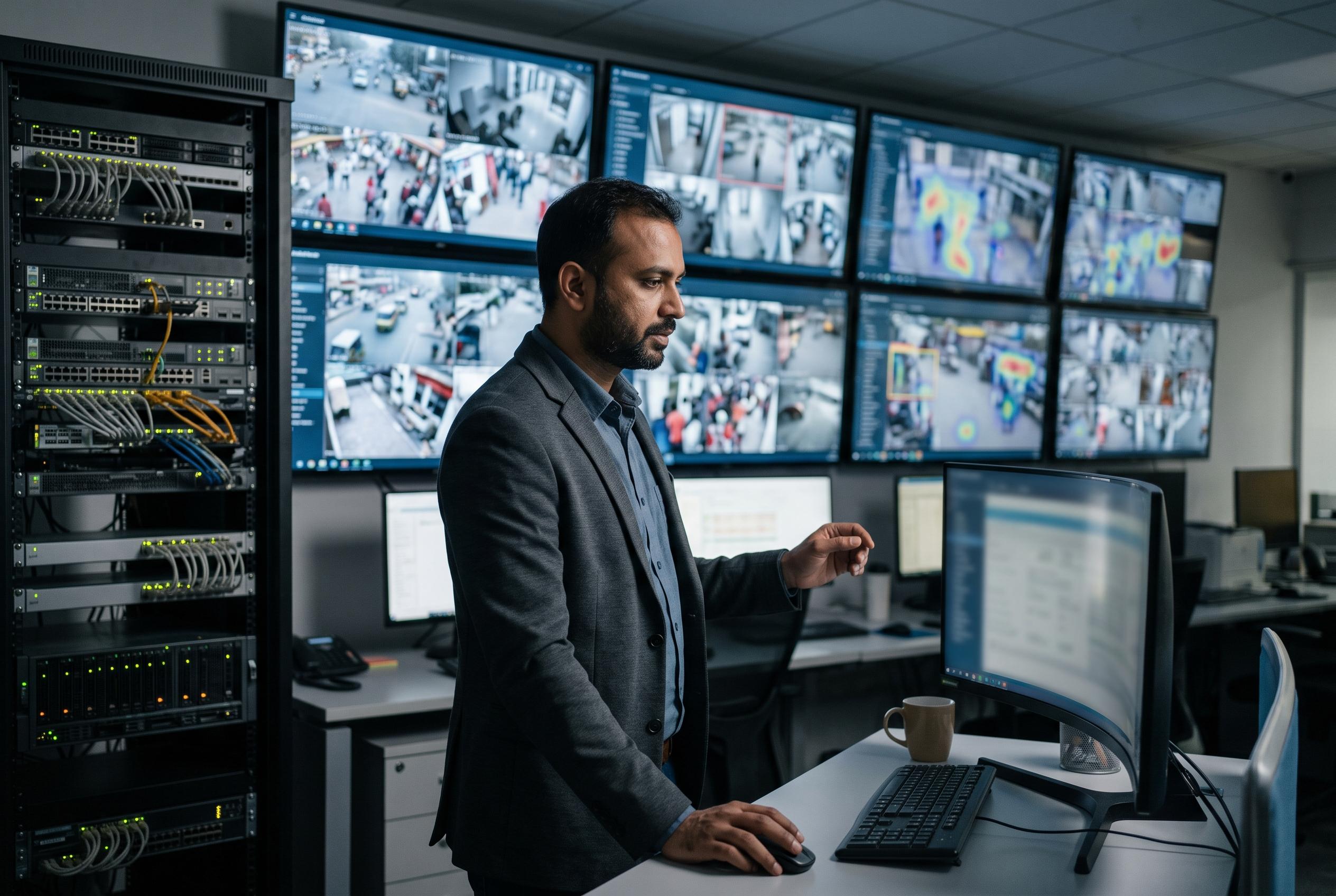

India’s CCTV sector is experiencing a significant shift as AI and computer vision advance from passive recording to active monitoring and analytics, drawing investor enthusiasm and expanding its role beyond perimeter security to retail, public infrastructure, and government applications.
Artificial intelligence is reshaping India’s surveillance market, pushing CCTV makers beyond simple recording into software-driven monitoring, video analytics and computer vision. The shift has helped draw fresh investor attention to the sector, with shares in some listed security technology companies rising over recent sessions as traders bet that AI will widen the commercial uses of camera networks.
Aditya Infotech, the company behind the CP Plus brand, has been among the stand-outs. According to the company’s website, Aditya Infotech was founded in 1994 and supplies a broad range of surveillance products through a nationwide network of channel partners and system integrators. The Hindu BusinessLine reported that the stock rose 5% to ₹3,989 on Monday before slipping marginally the next day after touching a new high, with trading volumes also picking up. The rally underlines how investors are beginning to treat surveillance manufacturers as technology plays, not just hardware businesses.
Prizor Viztech has also benefited from the theme. BusinessLine said the NSE SME-listed stock climbed 5% to ₹1,316, and noted that the company had a market capitalisation of about ₹1,421 crore, alongside a return on capital employed of 39% and a return on equity of 36%. Prizor’s website says it focuses on AI-powered CCTV systems, IP and analogue surveillance equipment, and intelligent analytics, serving customers in retail, banking, transport, education and government. The company also emphasises in-house research and development and domestic manufacturing.
The broader opportunity is extending well beyond perimeter security. AI-enabled computer vision can scan live video for footfall, customer movement, queue lengths, occupancy and unusual activity, giving surveillance systems a role in retail operations, workplace management and public infrastructure. That shift is also creating room for newer entrants such as Transline Technologies, which has filed a draft red herring prospectus and says it builds tools for video analytics, attendance tracking and surveillance. Its website describes it as an AI surveillance and intelligent security company aimed at government, defence and enterprise clients. As surveillance moves from passive recording to active monitoring, AI and computer vision are emerging as the key themes to watch in India’s CCTV sector.
Disclaimer: This article is intended to inform and educate, not to recommend or endorse any financial product, investment or strategy. Please consider your own financial circumstances and seek professional advice where appropriate before making financial decisions.