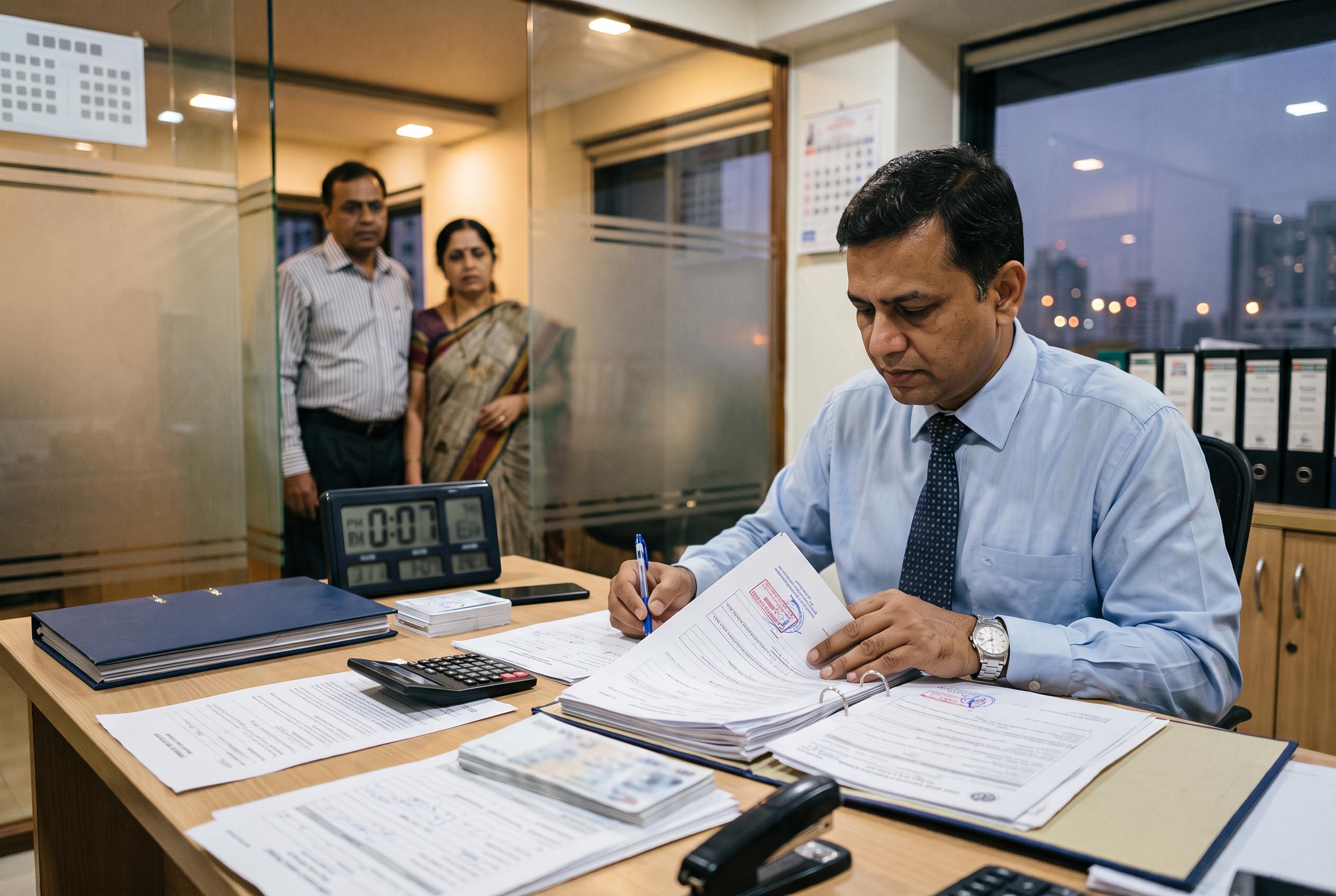

India’s tax authorities have introduced stricter procedures for buyers seeking GST refunds after flat cancellations, focusing on the builder’s ability to issue credit notes and the critical timing of claims under the two-year limit, with new pathways for unregistered persons to claim refunds through temporary registration.
India’s tax authorities have tightened the route for buyers seeking goods and services tax refunds after cancelling flat bookings, with the choice of remedy now depending on whether the builder can still issue a credit note. Where the statutory time limit under Section 34 of the CGST Act is still open, the builder can reverse the tax through a credit note and pass the GST portion back to the buyer. If that window has closed, the buyer may have to pursue a refund directly from the GST system as an unregistered person.
According to guidance circulated through the GST framework and reported by Business Standard, the unregistered-person route was created to help buyers who have borne tax on cancelled contracts but cannot get relief through the supplier. In practice, the buyer must first obtain temporary registration on the GST portal using PAN, complete Aadhaar authentication and then file FORM GST RFD-01 under the “Refund for Unregistered Person” category. The application has to be supported by Statement 8, invoice details, cancellation records and a supplier certificate confirming that the tax burden has not already been adjusted through a credit note.
Tax advisers say timing is critical. Under Section 54 of the CGST Act, refund claims are generally subject to a two-year limitation period from the relevant date. For cancelled flat-construction contracts, CBIC has clarified that the cancellation letter issued by the builder should normally be treated as the point from which that period is counted. That makes the date of cancellation especially important for unregistered buyers, who may otherwise find their claims barred by time.
The refund is also subject to monetary and proportional limits. The law does not permit refunds below ₹1,000, and any claim must stay within the GST actually charged in the builder’s invoices. Where the builder returns only part of the booking amount, the GST refund is limited to the tax linked to the portion refunded, rather than the full amount originally paid. In some cases, separate applications may be needed if invoices were issued by different suppliers or from different states, which can require temporary registration in each relevant jurisdiction.
Recent tribunal and policy developments have also sharpened the distinction between pre-GST and GST-era claims. The Goods and Services Tax Appellate Tribunal has said that service tax paid on flat bookings cancelled before GST came into force cannot be claimed as GST input tax credit, and must instead be dealt with under the earlier service tax regime. At the same time, the finance ministry’s decision to allow unregistered persons to seek refunds through temporary registration shows the system’s effort to give cancelled-contract claims a clearer administrative path, provided the paperwork is complete and the supplier has not already corrected the tax through other means.
Disclaimer: This article is intended to inform and educate, not to recommend or endorse any financial product, investment or strategy. Please consider your own financial circumstances and seek professional advice where appropriate before making financial decisions.