

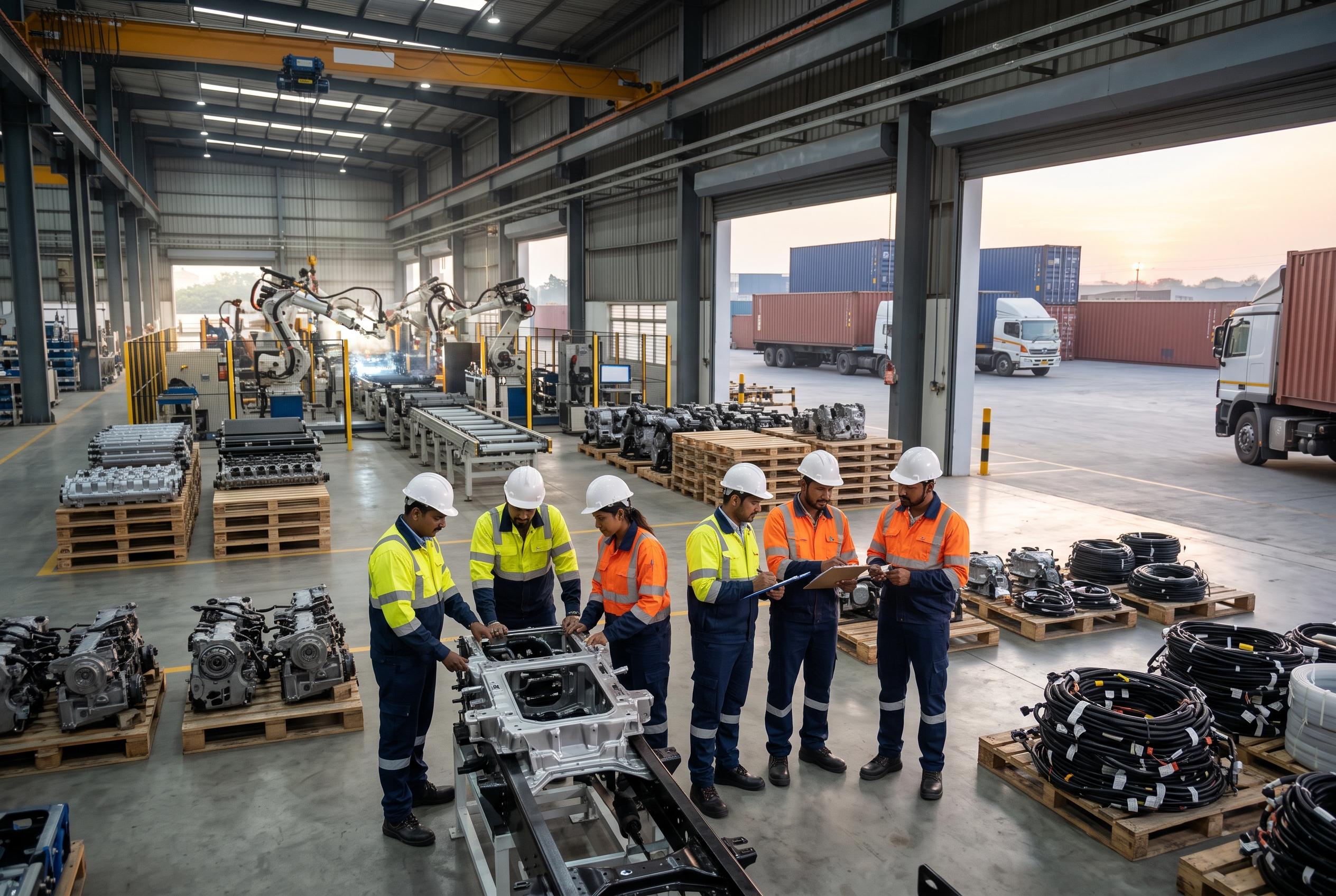

Daimler India Commercial Vehicles is redefining its Chennai facility from a domestic producer to a key hub for engineering, sourcing, and exports, reflecting a broader shift towards supply chain resilience and technological adaptability in the commercial vehicle sector.
Daimler India Commercial Vehicles is recasting its Chennai operation as more than a domestic manufacturing base, using it as a wider industrial hub for engineering, sourcing and exports as the truckmaker adapts to a world where resilience matters as much as cost. The shift reflects a broader change across commercial vehicles, where companies are reworking supply chains to withstand geopolitical shocks, inflation and uneven technology adoption across markets.
Michael Moebius, who leads procurement and supply chain at DICV, argues that the old model of simply chasing the cheapest qualified part no longer works. In a recent interview, he said the company’s task is to make uncertainty more manageable, with resilience now taking priority over price alone. That means weighing political risk, trade links, delivery continuity and supplier stability alongside quality and lead times, rather than treating sourcing as a straightforward cost exercise.
India has become central to that strategy. According to DICV, the Oragadam plant outside Chennai exports vehicles to more than 70 countries and supplies components into the wider Daimler Truck network. Moebius said the company has shipped 300 million parts from India to the world through its consolidation centre over the past decade, a figure he uses to argue that India is now a strategic sourcing and engineering base rather than only a low-cost production location.
The company is also preparing for a more complicated technology future. Daimler Truck is pursuing battery-electric vehicles, fuel-cell systems and hydrogen internal-combustion engines, but Moebius said different markets will move at different speeds because regulations, infrastructure and customer demand vary widely. That creates pressure on procurement teams to identify suppliers well before a programme reaches scale. It also explains why DICV is looking beyond its established vendor base, including start-ups and newer technology specialists, to secure parts for future products.
DICV has recently stepped up that ambition with a proposed investment of about ₹4,000 crore in Tamil Nadu, aimed at strengthening BharatBenz, manufacturing, research and development and future technology readiness. The company says the plan will support around 400 jobs and build on a supplier network of more than 400 local partners, alongside more than 420 dealer and service touchpoints across India. The investment also underscores how closely industrial policy, export strategy and product development are now linked in the commercial vehicle business.
Supplier relationships are becoming more integrated as a result. DICV says it is using programmes such as Q Prime to improve quality, cost efficiency and supply-chain resilience, while recent reporting has pointed to new warehouse and logistics partnerships designed to tighten material flow and inventory control. Moebius said digital visibility is now essential, with automated reporting, traceability and real-time data needed to support just-in-time and just-in-sequence delivery. For him, the ultimate measure is simple: the truck must keep earning for the customer, which means uptime, serviceability and dependable parts support are now as important as the vehicle itself.
Disclaimer: This article is intended to inform and educate, not to recommend or endorse any financial product, investment or strategy. Please consider your own financial circumstances and seek professional advice where appropriate before making financial decisions.



