

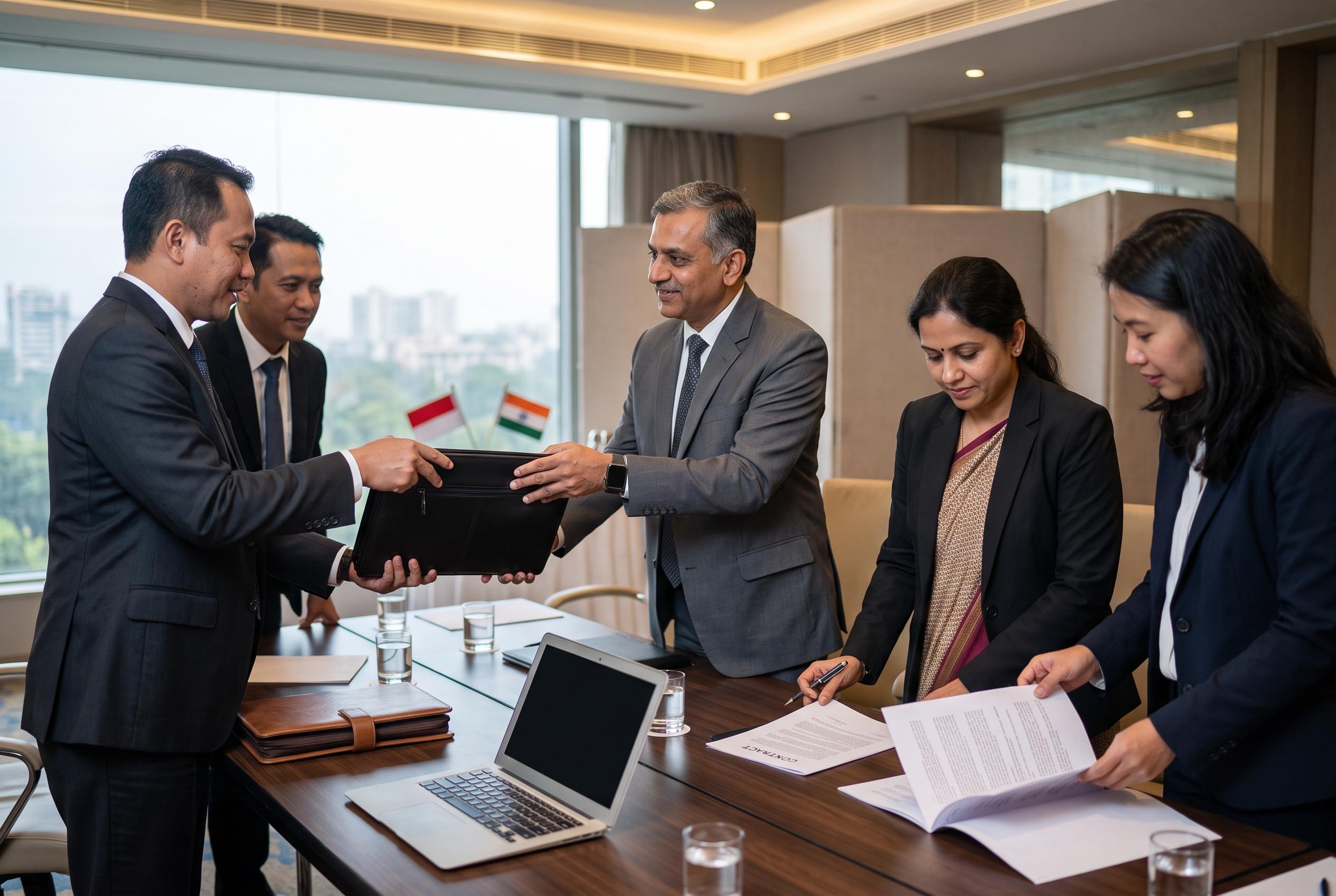

Indonesian special envoy Mari Elka Pangestu highlights significant scope for expanding economic cooperation with India amidst global flux, signalling opportunities to bridge political goodwill with substantial business outcomes during the Kautilya Economic Conclave in New Delhi.
Mari Elka Pangestu, Indonesia’s special envoy for international trade and multilateral cooperation, has said there is still considerable room to expand commercial ties with India, arguing that both trade and investment flows remain well below their potential.
Speaking on the sidelines of the fifth Kautilya Economic Conclave in New Delhi, Pangestu said the present global backdrop makes closer regional partnerships more important, not less. She said the world is in a period of flux and that resilience depends on stronger links between countries in the region, including between India and Indonesia and more broadly between India and Asean.
Her comments come as the conclave, held from October 3 to October 5 under the theme “Resilience in an Age of Flux”, has drawn more than 180 policymakers, economists, academics, financial experts and international thought leaders from around 30 countries. The event, an initiative of the Institute of Economic Growth in partnership with India’s finance ministry, has become a regular forum for debate on global economic uncertainty, investment and policy responses.
The focus on India-Indonesia ties comes against a backdrop of deepening engagement between the two countries. Industry material from the Indian government’s business promotion agency says Indonesia is India’s second-largest trading partner in Asean, while a separate account from the same body says bilateral trade has risen more than nine-fold to $38.84bn, underscoring the scale of the commercial relationship already in place. A joint statement issued during Prime Minister Narendra Modi’s visit to Indonesia in July also described economic and trade cooperation as a central pillar of the broader partnership, spanning trade, investment, the digital economy, science, technology, defence and maritime cooperation. Even so, Pangestu’s remarks suggest both sides still see scope to convert political goodwill into more substantial business outcomes.
Disclaimer: This article is intended to inform and educate, not to recommend or endorse any financial product, investment or strategy. Please consider your own financial circumstances and seek professional advice where appropriate before making financial decisions.



