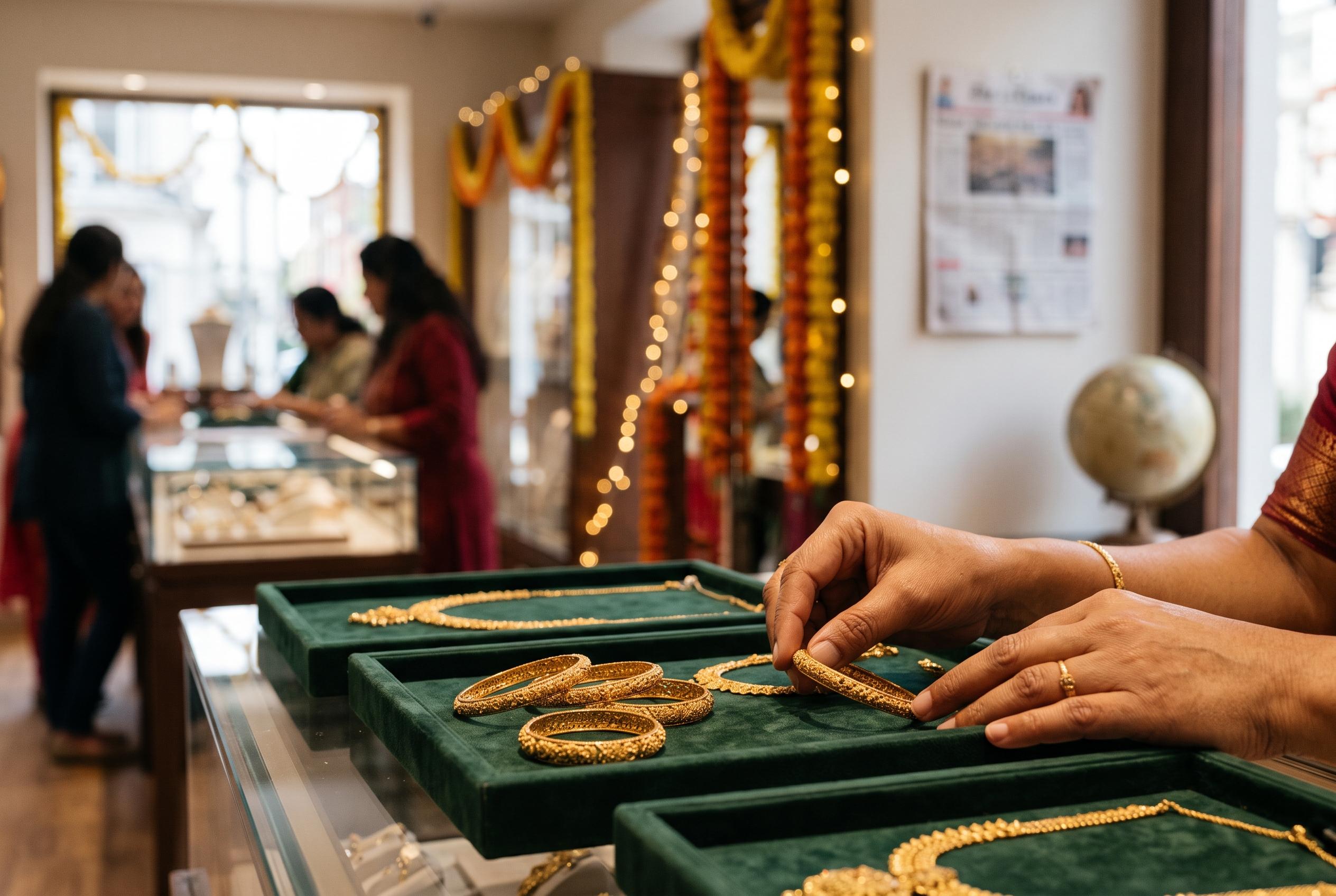

Following a significant ₹3,500 per 10 grams drop over the past week, gold prices in India have largely steadied, leaving jewellers and consumers cautiously optimistic ahead of the festive season amidst global economic uncertainties.
Gold prices in India eased sharply over the past week, with the metal slipping by roughly ₹3,500 per 10 grams as profit-taking, a stronger dollar and shifting bond yields weighed on sentiment. By Sunday, however, rates were largely unchanged across major cities, from Delhi and Mumbai to Patna, Lucknow and Kolkata, as domestic bullion markets stayed quiet and the Multi Commodity Exchange was shut.
The decline has come at a sensitive time for jewellers and households preparing for the festive and wedding season, when demand for bullion usually strengthens. According to market trackers, the drop has been broad-based and reflects the combined effect of investors locking in gains after a long rally and renewed strength in the US currency, which makes dollar-priced gold more expensive for buyers using other currencies. A report by NationPress also pointed to geopolitical tensions and expectations around interest rates as factors shaping trading in precious metals.
In Delhi, NDTV’s gold-rate tracker showed 24-carat gold at ₹14,920 per gram, 22-carat gold at ₹13,679 per gram and 18-carat gold at ₹11,195 per gram, underscoring how quickly local retail prices can move even when the broader market is stable. In Patna, daily rate listings from PaisaOne placed 24-carat gold at ₹14,929 per gram and 22-carat gold at ₹13,685 per gram as of 1 October 2026. These city-specific quotes can vary with transport costs, insurance, taxes and local demand, especially during periods of heavy buying.
For shoppers weighing whether to buy now, the recent correction may be encouraging, but dealers and analysts generally favour a staggered approach rather than committing all at once. That matters because gold often finds support when physical demand rises around Dhanteras, Diwali and weddings, even if global cues remain weak in the short term. Industry observers say the next leg of movement will depend on US economic data, the Federal Reserve’s stance, crude prices and the rupee’s trajectory.
The price slide has also revived interest in the basics of gold buying, particularly the difference between 24-carat and 22-carat metal. Twenty-four-carat gold is the purest form and is generally used for bars, coins and bullion, while 22-carat gold contains a small amount of alloy metal and is more suitable for jewellery. Buyers are being reminded to check for BIS hallmarks, the purity mark and the six-character HUID code, which can be verified through the BIS Care app. A proper invoice should also list weight, purity, making charges and applicable taxes.
For many households, the latest drop is less a signal to rush in than an opportunity to plan purchases more carefully. Gold remains both a cultural staple and a preferred savings vehicle in India, but the market’s recent volatility shows how closely domestic prices now track global currents. With festive buying approaching, the market is likely to remain sensitive to every shift in overseas rates, the dollar and investor mood.
Disclaimer: This article is intended to inform and educate, not to recommend or endorse any financial product, investment or strategy. Please consider your own financial circumstances and seek professional advice where appropriate before making financial decisions.