

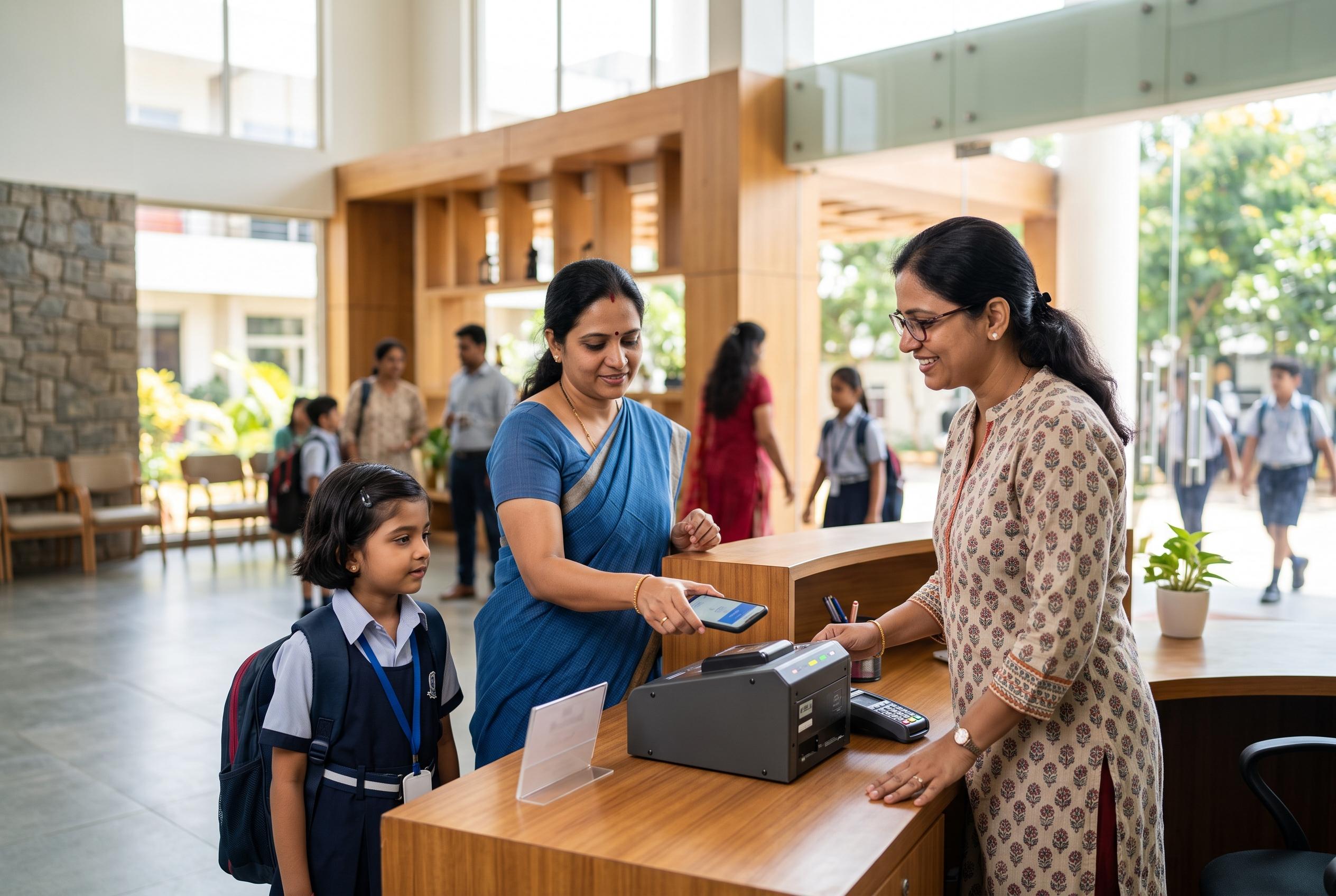

The Central Board of Secondary Education has advised affiliated schools to expand digital payment methods, including UPI, RuPay, and BBPS, to promote secure, transparent, and cashless transactions across campus activities amid government support for wider digital financial inclusion.
The Central Board of Secondary Education has told affiliated schools to widen the use of digital payments across campus transactions, in a move that pushes fee collection, canteen purchases and other routine payments further away from cash. The board’s circular, dated 30 September 2026 and listed in its latest notices on 1 October 2026, says schools should consider adopting systems such as UPI and RuPay cards for everyday financial activity. According to the notice, the aim is to make digital transactions more familiar to students, parents and staff while strengthening safe payment habits across the school ecosystem.
The guidance follows a Digital Payments Promotion Plan drawn up by the Department of Financial Services in the Ministry of Finance. That plan is intended to widen access to digital payments, encourage more frequent use and promote secure practices in educational settings. Reports on the circular say CBSE has framed the change as part of a broader effort to improve financial transparency in schools, while also making it easier for families and staff to pay without handling cash.
CBSE has also encouraged schools to extend digital payment options beyond fee desks. The circular points to payment touchpoints including canteens, libraries and other services, and suggests that schools in areas with weak connectivity consider UPI Lite, UPI LiteX and UPI 123PAY. It also recommends demonstrations and assisted-use models so that parents, teachers and students who are less comfortable with digital tools can make the transition more easily.
Another feature of the notice is the suggestion that schools use the Bharat Bill Payment System, or BBPS, for fee collection. The board says BBPS could help create a standardised, secure and interoperable payment route, and notes that schools may also link it with enterprise resource planning systems to handle recurring payments more efficiently. Separate reporting on the same policy shift highlights that the Ministry of Finance recently moved to exempt RuPay debit card transactions and UPI payments of up to ₹2,000 from direct or indirect charges, a change that could further support the school-level push towards cashless payments.
Disclaimer: This article is intended to inform and educate, not to recommend or endorse any financial product, investment or strategy. Please consider your own financial circumstances and seek professional advice where appropriate before making financial decisions.



