

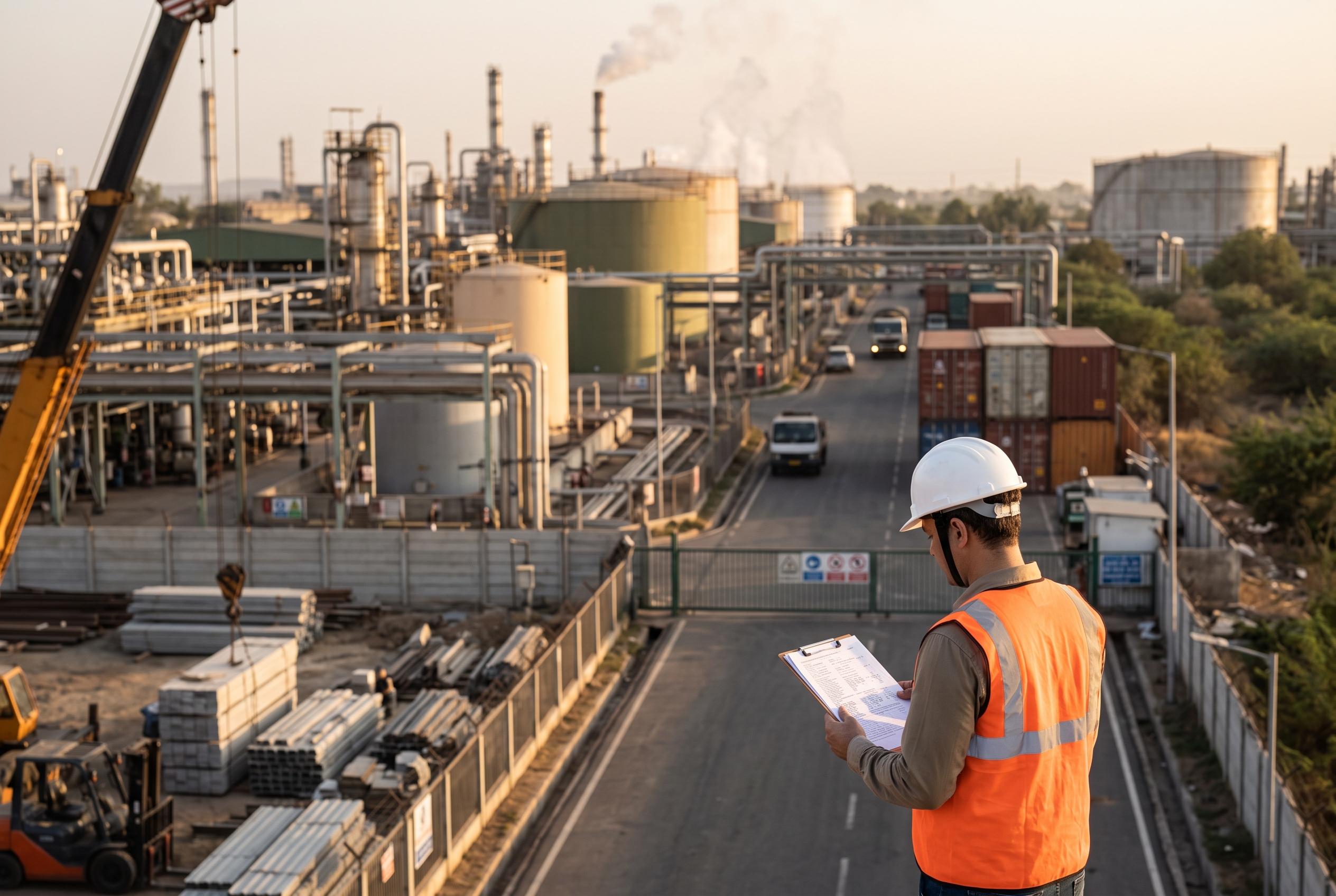

India’s government has approved the Bhavya Rasayan scheme, allocating over ₹3,000 crore to develop three dedicated chemical parks, seeking to enhance domestic production and reduce reliance on imports in a strategic push for industrial self-reliance.
India has approved a new support package for chemical parks, signalling a broader push to deepen domestic production and cut reliance on imports. The BHAVYA Rasayan scheme, short for Bharat Audyogik Vikas Yojana Rasayan, was cleared by the Union Cabinet on 24 July 2026 and later notified by the government on 10 August 2026, according to the Department of Chemicals and Petrochemicals.
The programme will back three dedicated chemical parks through a competitive, challenge-based selection process. Official information from the department says states have been invited to submit proposals by 30 November 2026, with applications required to follow the prescribed format and include supporting material such as drawings, calculations and undertakings.
According to the Prime Minister’s Office, the scheme carries a total outlay of ₹3,030 crore and will run from fiscal 2026-27 to fiscal 2030-31. The Centre will provide grants of up to ₹1,000 crore for each park, while the relevant state government must contribute at least ₹500 crore. The parks are intended to be built on contiguous land of at least 2,000 acres, with common infrastructure designed to lower operating costs for firms that locate there.
The government says the project is meant to address long-standing infrastructure gaps in India’s chemical and petrochemical sector. In practice, that means shared facilities such as utilities, effluent treatment and hazardous-waste management, which can make large industrial clusters more efficient and easier to scale. Industry watchers cited by the India Brand Equity Foundation say the scheme is also meant to strengthen manufacturing across the chemical value chain, including upstream, downstream and ancillary activities.
Beyond industrial planning, the policy has a wider economic aim. By expanding domestic capacity, officials hope to reduce import dependence, raise exports and improve the sector’s price competitiveness. The scheme also fits into the government’s broader industrial agenda, including the push for self-reliance and the longer-term vision for a more globally competitive manufacturing base.
Disclaimer: This article is intended to inform and educate, not to recommend or endorse any financial product, investment or strategy. Please consider your own financial circumstances and seek professional advice where appropriate before making financial decisions.



