

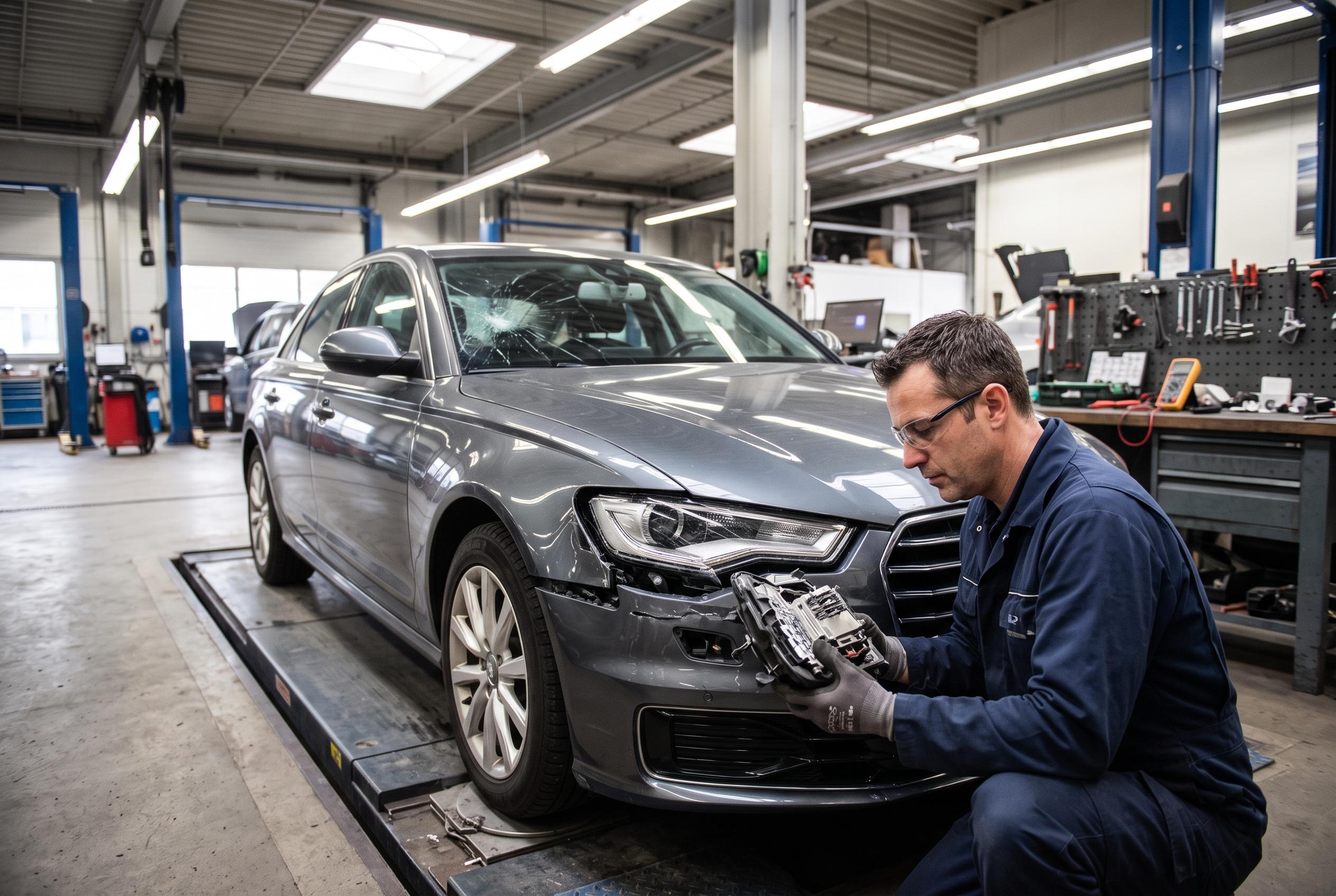

As vehicle technology advances, the cost of repairing damages from accidents rises significantly, with high-tech lighting, glass, wheels, and major component replacements pushing repair bills into six figures, highlighting the importance of understanding insurance coverage.
Minor dents and scratches are common enough, but a serious collision can quickly turn routine bodywork into an expensive repair bill. According to TV9 Hindi, the biggest costs often come when damage reaches parts such as bumpers, doors, bonnets and tailgates, where paintwork, labour and, in some cases, a full replacement can push the bill far higher than many drivers expect.
Lighting systems can also be surprisingly costly. The report notes that headlamps and tail-lamps, especially on newer cars, are no longer simple bulbs in plastic housings. LED units and smarter lighting setups often contain electronic components as well, which means a broken light can mean a much larger invoice than a basic replacement part would suggest.
Glass damage is another area where costs can mount. A cracked windscreen may need to be replaced rather than repaired, and vehicles with cameras or sensors mounted to the glass can incur additional expenses for recalibration afterwards. That extra step is increasingly important in modern cars, where driver-assistance systems depend on accurate alignment.
Wheels and tyres can also take a hit in a crash or when a car slams into a pothole. Alloy wheels may bend or crack, while premium tyres, particularly on higher-end models, can be expensive to replace. As Honest Mechanix and Mechanic Insights both note, the most expensive repairs are often tied to major components such as the engine, transmission, suspension and, in some cases, battery packs in hybrid or electric vehicles.
TV9 Hindi also points out that severe accidents can damage internal mechanical and electronic parts, including the engine, radiator, suspension and airbags. In those cases, repair bills can run from thousands of rupees to well into six figures, depending on the make of the vehicle and the extent of the damage. Insurance can soften the blow, but the payout depends on the policy’s coverage, excess, vehicle age and the type of claim being made.
That is why the fine print matters. Insurance Panda and CarInsurance.com say claims may not always cover original equipment manufacturer parts unless the policy specifically allows for them, and insurers often rely on aftermarket replacements unless an OEM endorsement is in place. For motorists, the lesson is simple: the premium is only part of the story. Understanding what the policy actually covers can make a major difference when an accident happens.
Disclaimer: This article is intended to inform and educate, not to recommend or endorse any financial product, investment or strategy. Please consider your own financial circumstances and seek professional advice where appropriate before making financial decisions.



