

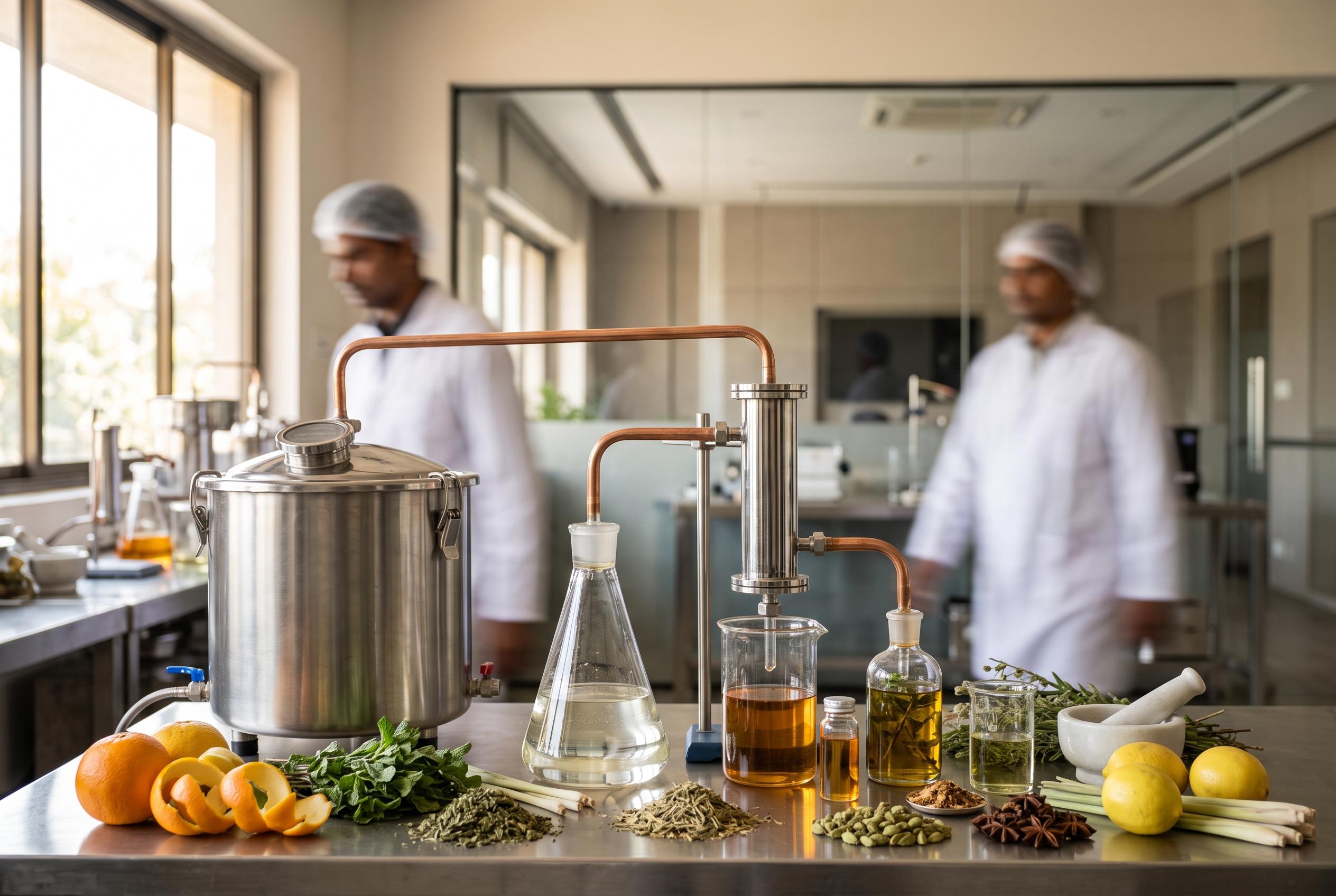

As consumer demand for premium, natural ingredients grows worldwide, Indian companies in the flavours and fragrances industry are showcasing diverse growth stories amid a booming global market, highlighting opportunities and risks for investors.
India’s flavours and fragrances industry is drawing more attention as consumer spending shifts towards packaged food, personal care and convenience products that depend on distinctive taste and scent. Research from Grand View Research puts the global market at about $33.6 billion in 2025, rising to $57.5 billion by 2033, while other industry estimates also point to steady expansion. The common thread is rising demand for natural, clean-label and high-quality ingredients across food, beverage, cosmetics and home-care products.
For investors, that makes a niche but durable theme: the companies that create the scent in a shampoo, the flavour in a biscuit or the aroma chemical in a perfume are becoming increasingly relevant to large consumer brands. In India, the market is still comparatively small, but the growth rate is faster than the global average, helped by the country’s expanding packaged food sector, the spread of quick-service restaurants and a broader premiumisation of everyday consumer products.
Sacheerome stands out as the fastest-growing and cleanest balance-sheet story among the three. The Delhi-based company, which listed on NSE Emerge in June 2025, reported revenue of ₹152.39 crore in FY26, up 42% from ₹107.54 crore a year earlier, while net profit rose nearly 78% to ₹28.44 crore. EBITDA, a measure of operating profit before interest, tax, depreciation and amortisation, came in at ₹40.66 crore, representing a margin of 26.02%. The company also moved from almost no cash to a ₹45.13 crore balance and ended the year debt-free, although its return on capital employed slipped as cash sat idle ahead of a planned new plant in Uttar Pradesh’s YEIDA industrial area.
S H Kelkar offers a different proposition: scale, brand recognition and a much heavier balance sheet. The company, which trades under the Keva name, said consolidated revenue for the quarter ended June 2026 rose 14.1% to ₹662 crore, with EBITDA increasing to ₹89 crore and net profit jumping 77.4% to ₹45 crore. But part of that profit strength came from an exceptional item, and profit before that one-off gain rose at a more modest pace. The more interesting development is in flavours, where revenue climbed 63.2% to ₹112 crore and EBITDA surged to ₹35 crore from ₹14 crore, even as the larger fragrances business grew more slowly. Net debt remained elevated at ₹852 crore, which means the company still has work to do before growth translates into a cleaner financial profile.
Privi Speciality Chemicals sits between the two, with a strong export footprint and a steadily improving leverage position. The company, which makes aroma chemicals and sells to international fragrance and consumer goods groups, reported total income of ₹681.42 crore in the June quarter, up 20.01%, while net profit rose 35.97% to ₹84.21 crore. It also has a strategic joint venture with Givaudan, the world’s largest flavour and fragrance company, and is targeting a much larger revenue and EBITDA base later this decade. A warehouse fire that damaged an export consignment near JNPT caused a ₹2.78 crore hit in the quarter, though the company says it has filed an insurance claim.
Taken together, the three stocks illustrate different ways to play the same long-term theme. Sacheerome offers rapid growth and a debt-free structure, though it remains small and dependent on a single core manufacturing base. S H Kelkar provides scale and a growing flavours business, but carries more financial risk because of its debt load. Privi has global reach, improving leverage and a marquee partnership, but must keep execution tight if it is to deliver on its ambitious medium-term targets. For investors, the sector may be attractive, but these are still businesses that need to prove themselves quarter after quarter.
Disclaimer: This article is intended to inform and educate, not to recommend or endorse any financial product, investment or strategy. Please consider your own financial circumstances and seek professional advice where appropriate before making financial decisions.



