

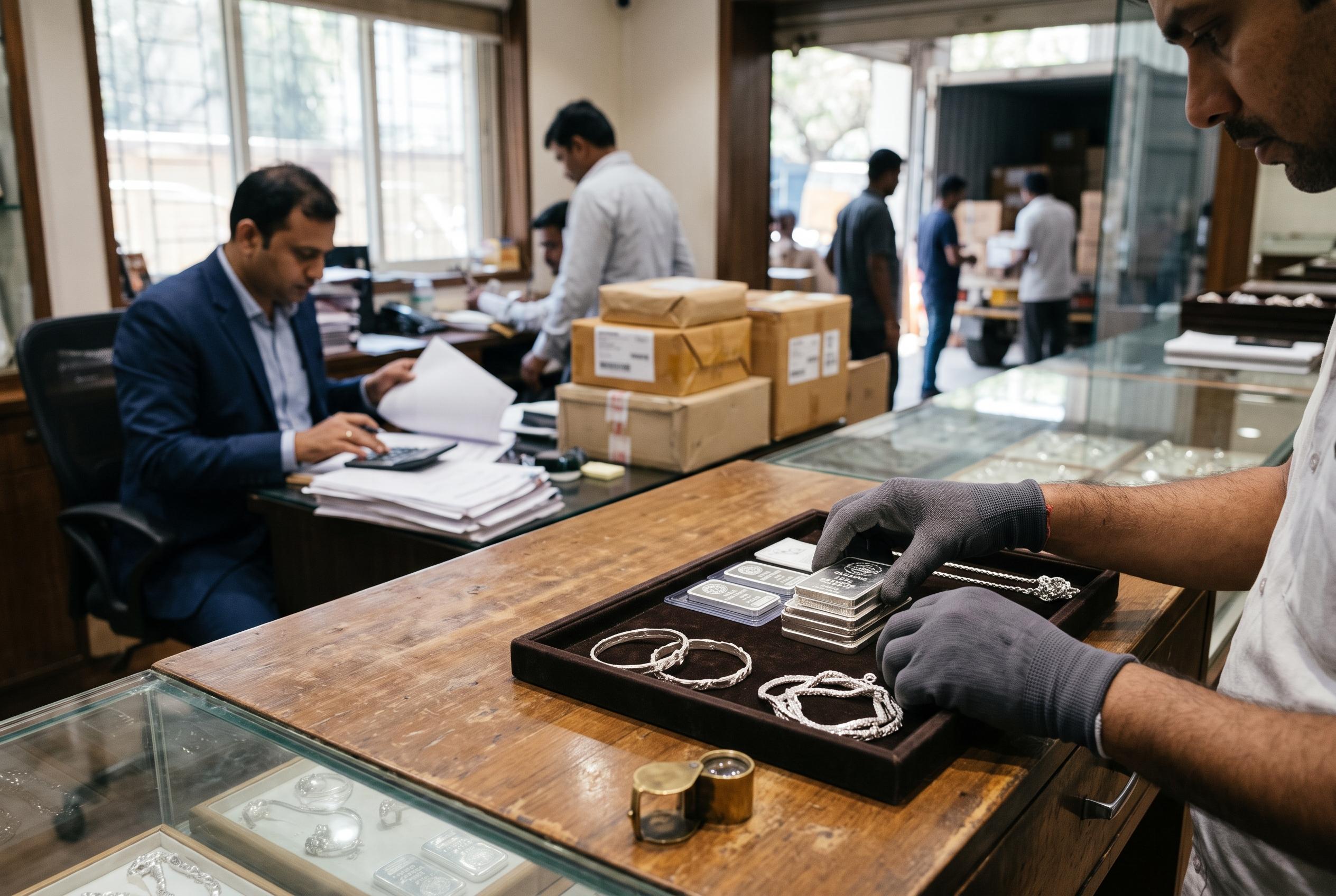

India’s silver imports have rebounded sharply after a policy-induced slump, signalling robust demand ahead of the country’s busiest precious-metals buying season, despite global interest rate pressures.
India’s silver market has not lost its appetite; it has been waiting for the import channels to reopen. After a sharp policy shock in May, when New Delhi raised the duty on silver and brought imports under tighter licensing, shipments slumped. By August, they had rebounded strongly, suggesting that demand from households, jewellers and investors never really went away. The recovery is notable because it comes just as India heads into its busiest precious-metals buying season, which begins with Sharad Navratri on October 11 and runs towards Dhanteras in November.
According to trade data and precious-metals industry estimates cited by Reuters and Heraeus, India’s silver imports fell to about 46.8 tonnes in May, or roughly 1.5 million ounces, before climbing back to around 15.5 million ounces in August. The difference reflects not a collapse in appetite, but a bottleneck created by the new rules. India moved bullion-grade and semi-processed silver into a restricted category in mid-May, requiring prior government approval for shipments, while also lifting the import duty to 15%. That combination made bringing metal in slower and more expensive.
Once licences began to be issued, the flow resumed. Heraeus said August’s imports were the first to move above 10 million ounces since February and were about 36% higher than in August 2025. India’s monthly trade figures do not publish tonnage, but the reported value of August silver imports, at about $1.02 billion, is consistent with a return to the mid-teens of millions of ounces at prevailing prices. One smaller estimate that tracked only a single import route through the India International Bullion Exchange missed much of the market and understated the rebound.
The key signal for traders is that Indian domestic silver prices now sit above the cost of importing the metal. On the MCX commodity exchange, the local price includes the duty but not sales tax, so a premium above the 15% duty gives importers a margin to bring in metal and sell it profitably. That gap widened in late September and remained supportive on October 1, strengthening the case for further arrivals over the next two to three months. Silver has also been under pressure from higher interest rates, with the Federal Reserve having raised rates on September 16 for the first time since 2023, and rising Treasury yields weighing on non-yielding assets such as bullion.
India’s comeback matters because it is one of the world’s largest silver buyers. But the rebound is not yet a broad-based Asian trend. Shanghai prices still trade at a premium largely explained by China’s value-added tax, while exchange stocks in China have risen and exports have remained firm, suggesting no comparable shortage there. For silver investors, that makes India the cleaner story: a market where policy briefly interrupted demand, then released it again. The next checkpoint will be India’s September trade data, due in mid-October. If that report confirms another strong month, the August rebound will look less like a one-off restocking surge and more like the start of a sustained recovery.
Disclaimer: This article is intended to inform and educate, not to recommend or endorse any financial product, investment or strategy. Please consider your own financial circumstances and seek professional advice where appropriate before making financial decisions.



